
The Man Who Wouldn’t Die
The True Story of Michael Malloy

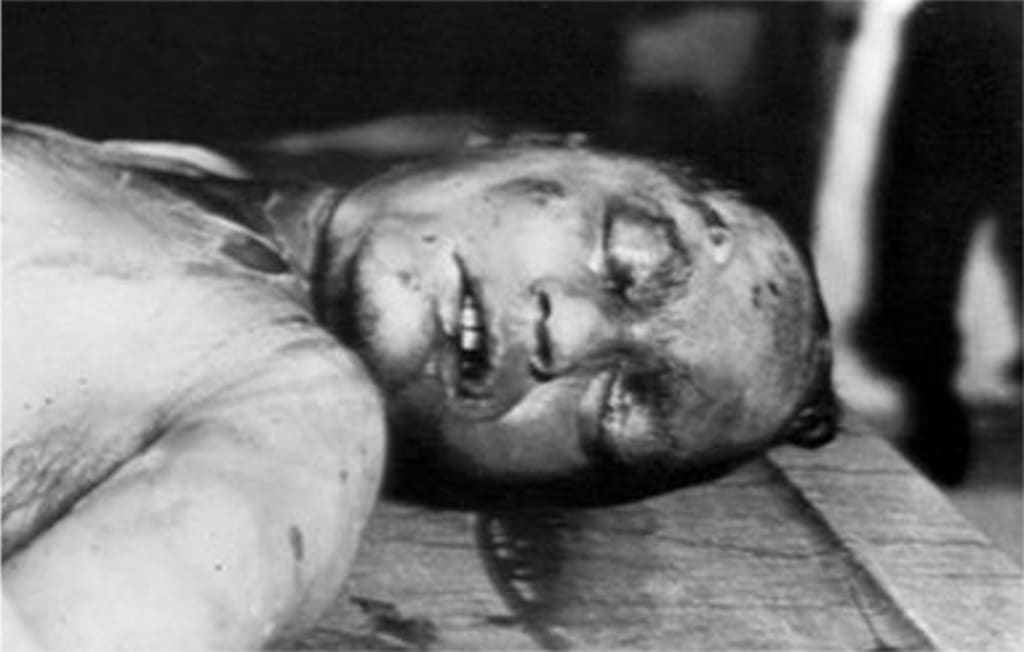
In the early 1930s, New York City was drowning in despair.
The Great Depression had turned its once-bustling streets into corridors of hunger and hopelessness. Soup kitchens snaked around blocks. Children begged on corners. Men who once held steady jobs now wandered the boroughs, hollow-eyed and aimless.
Among the crumbling tenements and rain-slicked alleys of the Bronx roamed a familiar figure: a ragged Irishman named Michael Malloy. Nobody knew much about him—except that he was homeless, always drunk, and always polite. Locals saw him drifting from bar to bar, trading odd jobs or stories for a drink or a warm place to sleep.
He seemed like just another lost soul in a city full of them.
But fate, and the greed of five desperate men, would soon drag him into a story so twisted it would become one of the most infamous true crime tales in American history.
The Scheme
At the center of this plot was a struggling speakeasy owner named Tony Marino. His bar had seen better days, and prohibition wasn’t making business any easier. Alongside Marino were four other conspirators—Joseph “Red” Murphy, Francis Pasqua, Daniel Kriesberg, and a crooked undertaker.
Together, they formed what would later be dubbed “The Murder Trust.”
Their plan was brutally simple: take out several life insurance policies on a man who had no family, no home, and seemingly, no purpose—and then kill him in a way that would appear accidental.
Michael Malloy, always half-drunk and seemingly near death anyway, was the perfect target.
Using fake documents and shady connections, they forged three insurance policies in Malloy’s name and named themselves as the beneficiaries. They got Malloy’s drunken signature in exchange for what he wanted most—unlimited drinks, on the house.
The trap was set.
Death by Drink… or Not
The conspirators believed killing Malloy would be quick, almost effortless.
They began feeding him massive quantities of alcohol. But not just any alcohol—wood alcohol, or methanol, a type of industrial-grade poison used in antifreeze and fuel.
Even a few ounces were known to cause blindness or death.
Malloy drank glass after glass.
And nothing happened.
In fact, not only did he survive—he smiled, thanked them, and asked for another.
Night after night, they increased the dosage. By all medical logic, Malloy should’ve dropped dead within hours. But instead, he stumbled out each night and returned the next morning, cheerful, asking if the "special" whiskey was still on offer.
The men were dumbfounded. Their easy murder had become a riddle.
Food as a Weapon
When poison didn’t work, they turned to food.
They served Malloy spoiled oysters soaked in alcohol, sandwiches stuffed with metal shavings, broken glass, carpet tacks, even nails. Anything that should have shredded his insides or caused internal bleeding.
Malloy devoured the deadly meals like a feast and wiped his mouth clean.
He would then burp, laugh, and fall asleep in the corner of the bar—alive, again.
Nature’s Turn
Desperate and running out of ideas, the gang decided to use the elements against him.
On a freezing winter night, they stripped Malloy of his shirt, soaked him in cold water, dragged him into Crotona Park, and laid him down on a bench in the snow.
They poured ice water on his chest and left him to freeze.
By morning, they assumed nature had done the job.
But to their horror, Malloy walked back into the bar that afternoon, coughing, but still breathing.
Mechanical Murder
Frustrated beyond belief, they tried something violent.
They hired a cab driver to run Malloy down in the street.
They hit him at full speed, throwing his body several feet through the air. He landed hard, bleeding and unconscious. Believing he was dead, the driver fled the scene.
Five days later, as they quietly began preparing a death certificate, the door to Marino’s bar creaked open.
Malloy walked in.
Bandaged. Limping. But alive.
At this point, the Murder Trust was panicking. People were starting to whisper. Their plan, once so neat and foolproof, had spiraled into something that felt supernatural.
The Final Attempt
At last, they tried the most guaranteed method they knew.
One night, after Malloy passed out drunk, they carried him to a room above the bar, stuck a gas pipe into his mouth, and pumped carbon monoxide directly into his lungs.
This time, it worked.
Michael Malloy died.
The Twist
But the group had grown careless.
Their insurance scam raised suspicions. The quick cremation requests. The multiple policies. The witnesses. It all began to unravel under investigation.
Eventually, the police dug up Malloy’s body.
A full autopsy revealed no natural causes of death. The truth came out in bits and pieces—helped along by one of the conspirators, who cracked under pressure.
All five members of the Murder Trust were arrested.
Four were sentenced to death in the electric chair.
One received life in prison.
The Man Who Wouldn’t Die
Michael Malloy became a legend—nicknamed “Iron Mike” or “The Rasputin of the Bronx.” His story spread through newspapers, books, and crime reports as one of the most bizarre cases of resilience in criminal history.
He was a homeless man, forgotten by society. A man whose death was considered inevitable. Yet he withstood poison, freezing, car crashes, and metal shards, as if his body refused to give up—simply out of stubbornness.
In a time when people died from hunger or hopelessness, Michael Malloy survived every murder method thrown at him.
Until the one that finally took him.
Legacy
Today, his story lives on in true crime circles, taught in law classes, and whispered in late-night podcasts. Not because he was a hero or a villain—but because he embodied something far stranger:
A man so forgotten… even death seemed to forget him.

About the Creator
Keep reading
More stories from Jehanzeb Khan and writers in Criminal and other communities.
The Italian Cruise Ship Mysterious Hijacking
On Monday, October 7, 1985, an Italian cruise ship named Achille Lauro docked at Alexandria Port in Egypt. It was the fifth day of the cruise that had begun from Genoa, Italy. The ship carried a total of 748 passengers and 450 crew members. At Alexandria, 651 passengers disembarked to board buses headed toward the Pyramids of Giza.
By Jehanzeb Khan6 months ago in Criminal
Was His Abduction Caused by His Support for the Palestinian Cause or the Theft of Oil?
Was His Abduction Caused by His Support for the Palestinian Cause or the Theft of Oil?** The controversy surrounding the alleged targeting or attempted abduction of Venezuela’s president has sparked intense debate across political and media circles. At the center of this debate lies a critical question: was he targeted because of his outspoken support for the Palestinian cause, or was the real motive an effort to seize control of Venezuela’s vast oil wealth? To understand this issue, it is necessary to examine how ideology and economic interests intersect in modern geopolitics.
By America today 6 days ago in Criminal
Geronimo Bank Robbery
There is a little town in Oklahoma called Geronimo. Just like the Indian Warrior. Yes, I know. I either find ones I cannot pronounce, or I find ones that sound like they were made up for a 1970’s cop show. I can assure you that Geronimo is a real town. Just a little southeast of Lawton, Oklahoma. Oklahoma is rich in these little towns and odd histories.
By Cassie Moore4 days ago in Criminal
'20/20'
"Do It Again" the track that would ultimately open the Beach Boys final album on Capitol Records which was released on February 10th 1969 had originally been released as a single in August of 1968. The track was the first of many post-Pet Sounds era throwbacks to the early Beach Boys sound which would become continually more cliched and eventually lead the Beach Boys to the level of self-parody they would eventually succumb to in the 1980s while their closest contemporaries The Beatles nearing the end of their run in 1969 would go on to be viewed as the most influential band of all time. However, the song itself is not bad on its surface, and it opens with a futuristic sounding (for 1969) drumbeat captured by then-Beach Boys engineer Stephen Desper using tape delays on the drums performed by Dennis Wilson and John Guerin. The song has been re-recorded numerous times over the years on various Beach Boys-related projects most notably the 2011 re-recording at Capitol studios featuring the five surviving Beach Boys at the time backed instrumentally by various members of both the Brian Wilson Band and Mike Loves touring "Beach Boys" to promote the then upcoming Beach Boys 50th Anniversary reunion tour in 2012. The hammering and power drill sound at the end of the song was an excerpt from a track called "Workshop" that was to be a part of the uncompleted "SMiLE" album.
By Sean Callaghan7 days ago in Beat



Comments (2)
good bro
What a wild, unbelievable story—told with perfect pacing and punch. Michael Malloy didn’t just cheat death… he humiliated it. One of the most bizarre and fascinating true crime tales I’ve ever read.