
The Yorkshire Ripper: A Tale of Terror, Tenacity, and Triump
The story of Peter Sutcliffe, known as the Yorkshire Ripper, is one of relentless terror and eventual triumph. Between 1975 and 1980, Sutcliffe's brutal attacks claimed the lives of 13 women and left a community in fear. His capture in 1981, after years of tireless investigation, marked a significant victory for law enforcement. The resilience of the victims' families and the dedication of police officers showcase the power of tenacity and the enduring human spirit. The case not only brought a notorious killer to justice but also led to advancements in forensic science and investigative techniques, leaving a lasting legacy of vigilance and perseverance.

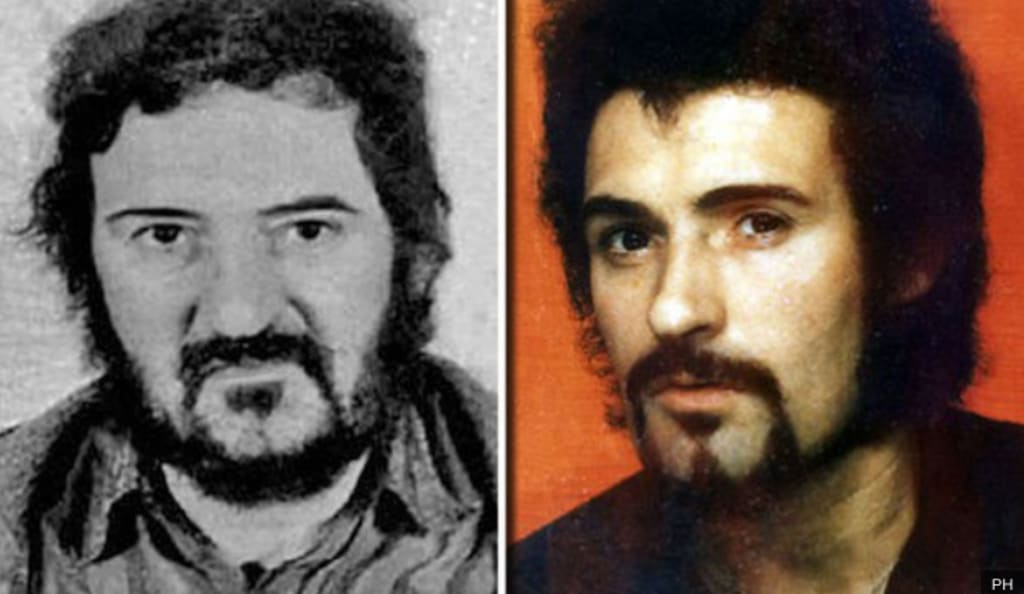
Peter Sutcliffe, infamously known as the Yorkshire Ripper, is one of the most notorious serial killers in British history. His brutal crimes terrorized Northern England between 1975 and 1980, resulting in a gripping manhunt and a landmark investigation that ultimately led to his capture. This story not only highlights the horrors inflicted by Sutcliffe but also showcases the resilience and determination of the victims' families, law enforcement, and society. Through terror and tenacity, justice was finally served, offering a powerful narrative of human strength and perseverance.
The Reign of Terror
Peter Sutcliffe's reign of terror began in July 1975, when he attacked and killed 28-year-old Wilma McCann in Leeds. Over the next five years, Sutcliffe would go on to murder 13 women and attempt to kill seven others. His victims were often vulnerable women, including sex workers, whom he lured into secluded areas before attacking them with a hammer and stabbing them repeatedly. The brutality of his methods and the seemingly random selection of his victims spread fear across Northern England.
Sutcliffe's ability to evade capture for so long was partly due to his nondescript appearance and his meticulous efforts to avoid leaving evidence. His attacks often took place in the dark, in isolated locations, making it difficult for witnesses to provide useful information. The lack of a clear pattern in his victim selection further complicated the investigation, leading to widespread panic and frustration.
The Manhunt
The hunt for the Yorkshire Ripper was one of the largest and most challenging investigations in British history. The West Yorkshire Police, under immense public pressure, faced numerous obstacles, including limited forensic technology and the sheer volume of tips and leads. At its peak, the investigation involved over 200,000 interviews and 250,000 police reports.
One of the most significant setbacks in the investigation was the infamous "Wearside Jack" hoax. In 1979, a man sent letters and an audio tape to the police, claiming to be the Yorkshire Ripper. The hoaxer had a distinctive Wearside accent, which led the police to focus their efforts in the wrong area, allowing Sutcliffe to continue his killing spree.
Despite these challenges, the police remained relentless in their pursuit. Advances in forensic science and the dedication of law enforcement eventually led to a breakthrough. In January 1981, Sutcliffe was arrested for driving with false license plates. During questioning, he confessed to being the Yorkshire Ripper, providing detailed accounts of his crimes and the locations of his victims' bodies.
The Trial and Justice
Peter Sutcliffe's trial began in May 1981, capturing the attention of the nation. He initially pleaded not guilty to the murders on the grounds of diminished responsibility, claiming that he was on a mission from God to kill prostitutes. However, the jury rejected his defense, and he was found guilty of 13 counts of murder and seven counts of attempted murder. Sutcliffe was sentenced to 20 concurrent life sentences, later converted to a whole life order, ensuring he would never be released.
The trial provided a sense of closure for the victims' families, who had endured years of pain and uncertainty. It also highlighted the resilience of the human spirit, as families and communities came together to support one another and advocate for justice.
Resilience and Recovery
The story of the Yorkshire Ripper is not just about the terror inflicted by Peter Sutcliffe but also about the resilience and determination of those who sought justice. The victims' families displayed incredible strength, turning their grief into advocacy and ensuring that the memory of their loved ones was honored. Their efforts have led to significant changes in how law enforcement handles serial crimes, emphasizing the importance of victim support and community involvement.
Law enforcement officials demonstrated unwavering dedication, learning from the setbacks and continuously striving to improve their investigative techniques. The Yorkshire Ripper case served as a catalyst for advancements in forensic science and police procedures, leading to more effective and coordinated efforts in future investigations.
A Legacy of Lessons
The Yorkshire Ripper case has left a lasting impact on British society and law enforcement. It underscored the importance of technological advancements in solving crimes and the need for effective communication and collaboration among police forces. The case also highlighted the critical role of public awareness and community engagement in preventing and solving serial crimes.
Furthermore, the story serves as a reminder of the human capacity for resilience and the power of collective action. The perseverance of law enforcement, the strength of the victims' families, and the support of the community ultimately led to the capture and conviction of one of Britain's most notorious serial killers.
To conclude, the tale of Peter Sutcliffe, the Yorkshire Ripper, is a chilling reminder of the darkness that can lurk within individuals. Yet, it is also a story of tenacity, resilience, and the triumph of justice. The relentless efforts of law enforcement, the courage of the victims' families, and the advancements in forensic technology ensured that Sutcliffe's reign of terror was brought to an end. This case stands as a powerful testament to the enduring human spirit and the capacity for justice to prevail in the face of evil.
Through the story of the Yorkshire Ripper, we are reminded of the importance of vigilance, the strength of communities, and the relentless pursuit of justice. It is a narrative that continues to resonate, offering lessons and inspiration for future generations.
About the Creator
Jane Doe
As a passionate storyteller, I captivate readers with engaging, well-researched articles across genres from criminality and poems to lifestyle and more....
Join me for insights, tips, and narratives that inform and entertain.
The Global Power Struggle in 2026: Why Are Tensions Rising Between the United States, Russia, China, and Venezuela?
f tensions between the United States and each of Russia, China, and Venezuela. These tensions cannot be understood as isolated events or temporary crises; rather, they are a direct reflection of a deeper struggle over global influence, strategic resources, and the future shape of the international order. At the center of this complex scene, Venezuela has emerged as a major flashpoint, while Russia and China play the role of supporters and counterweights to U.S. actions.
By America today 7 days ago in Criminal
Two Teens, One Bus, and a Nation Watching
Hello, and welcome to “The True Crime Reader,” where we dig beneath the headlines to unravel the stories that shape our understanding of crime, justice, and society. Today’s episode takes us to Oakland, California, for the story behind Dashka Slater’s powerful nonfiction book, “The 57 Bus”—a case that stunned the Bay Area and reverberated across the country.
By Kristen Barenthaler5 days ago in Criminal



Comments
There are no comments for this story
Be the first to respond and start the conversation.