
The Witness Window
She saw something she shouldn't have—and now someone wants her to forget.
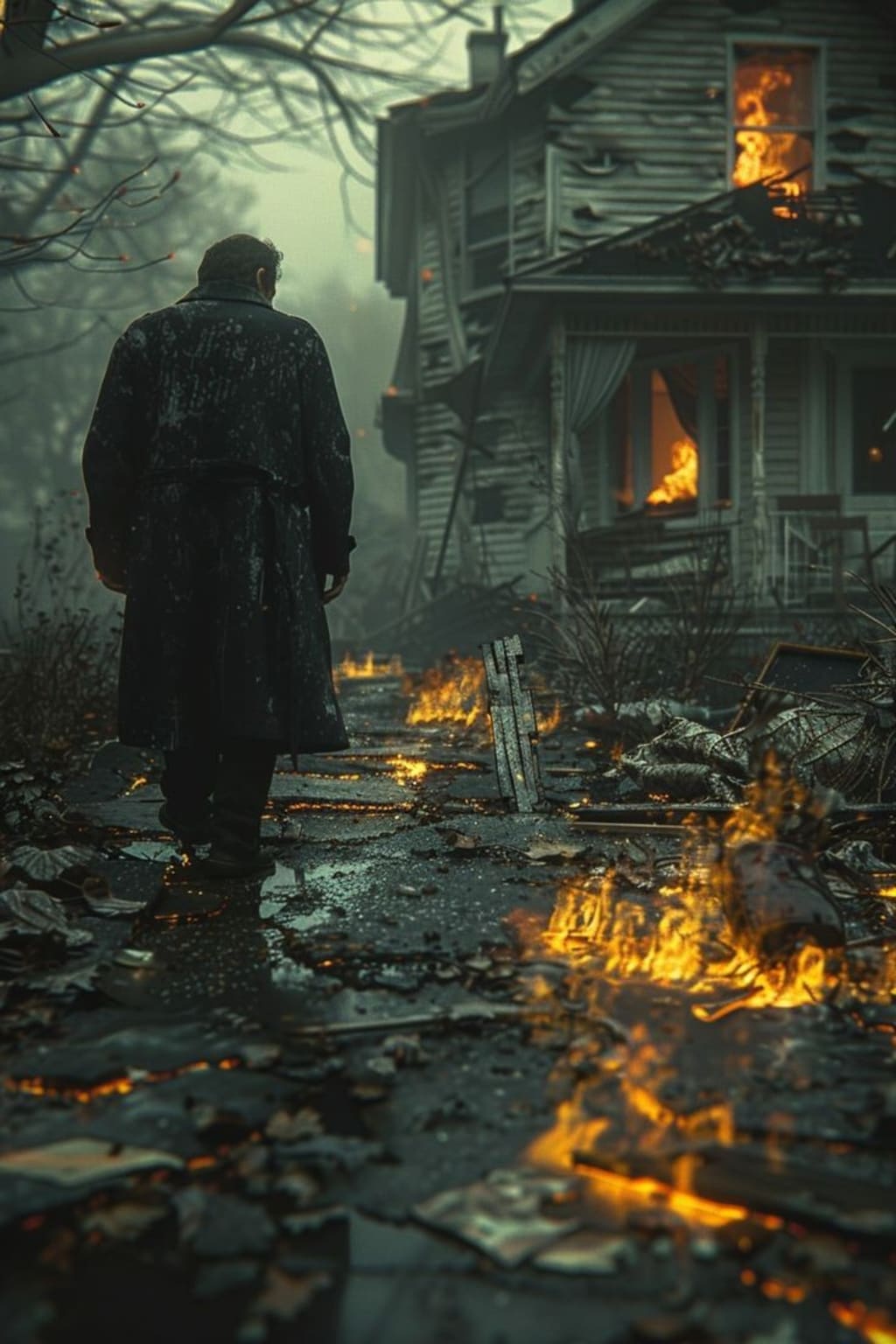
The scream woke Mia Rivers at 2:13 a.m.
Sharp. Muffled. Cut short.
She sat up in bed, heart hammering, and stared out the window of her sixth-floor apartment. The building across the street, quiet as always. Nothing unusual.
Until a flicker of movement in the far-right window on the fifth floor.
Mia leaned forward.
A shadow moved inside the apartment—a man pacing slowly, holding what looked like a knife.
She squinted.
He bent over a shape on the floor.
Still. Unmoving.
Mia’s breath caught.
She fumbled for her phone and dialed 911.
“I think someone’s been attacked,” she whispered. “Fifth floor, apartment 507 in the building across from mine. There’s a man with a weapon—”
“We’re dispatching units,” the operator said. “Please stay on the line.”
But the lights across the street went out.
Everything disappeared into blackness.
Police arrived within ten minutes.
Mia watched them knock on the door, flashlights cutting across the dark hallway.
She counted two officers enter.
Then three.
Five minutes passed.
Ten.
Then: one of the officers emerged and looked up directly at her window.
He spoke into his radio.
Moments later, her buzzer rang.
Mia opened the door, wrapped in a robe.
“Ms. Rivers?” the taller officer asked.
She nodded. “Did you find someone? I swear I saw—”
The other officer shook his head. “Apartment 507 is vacant. Has been for months. No furniture. No signs of forced entry. No body. No man.”
Mia blinked. “No… that can’t be. I saw him! A man. Something on the floor. A knife!”
They exchanged a glance.
“You’ve been under a lot of stress recently, Ms. Rivers?”
“No,” she snapped. “I know what I saw.”
The taller officer smiled tightly. “If anything changes, call us.”
She didn’t sleep.
By morning, she convinced herself she’d imagined it.
Until she checked her phone.
A new photo was in her camera roll—taken at 2:14 a.m.
A zoomed-in image of the apartment across the street.
In the frame: the window.
And the man inside.
Staring directly at her.
Mia turned the photo in to the police.
They reviewed it.
The officers exchanged nervous glances.
“This looks edited,” one said. “Are you sure you didn’t… create this?”
“I didn’t! Why would I?”
They didn’t press charges, but the message was clear: Drop it.
The next night, Mia didn’t look out the window.
She closed the blinds, locked the doors, and tried to sleep.
At 3:03 a.m., her phone buzzed.
An unknown number.
No caller ID.
She ignored it.
It rang again.
And again.
Then came the message.
A voice clip.
She played it.
Breathing.
Then a whisper: “Why did you tell them?”
She called the police again.
No response.
She went to the station—waited two hours to speak to someone.
Same result.
“No evidence of a crime. Please go home, ma'am.”
She returned to her apartment feeling like a ghost.
Until she saw the door.
It was slightly open.
She never left it unlocked.
Inside, nothing seemed missing.
No mess. No signs of forced entry.
Until she reached the kitchen.
A single item sat on her table:
A knife.
Clean.
Identical to the one in the window.
Beside it: a Polaroid photo.
It showed her sleeping.
Taken from inside the room.
She didn’t sleep that night.
She didn’t call the police again.
She packed a bag and booked a hotel two towns away.
By morning, she was gone.
A week passed.
She didn’t tell anyone where she went. She didn’t post on social media. Her phone stayed off.
But one night, at 3:17 a.m., her hotel phone rang.
She answered, trembling.
A familiar voice.
“There are no windows here, Mia.”
“But I can still see you.”
She hung up and checked out by dawn.
She drove without a destination for hours, eventually pulling into a small coastal town. Quiet. Empty. Safe.
She rented a room at a bed and breakfast run by an old couple who didn’t ask questions. She left her phone turned off. Burned the old SIM card in the fireplace.
For three days, there was silence.
Then, while walking the beach at dusk, she spotted it.
A figure in the distance.
Just far enough to blur the face.
But still.
Still.
Watching her.
She ran back to the inn, heart pounding, locked her door, shut the blinds.
She turned on the TV for background noise.
A breaking news story:
"Unsolved murder in Westbridge apartment complex: body discovered in abandoned Unit 507. Police baffled."
The victim? Unnamed.
The cause? Multiple stab wounds.
Time of death?
2:13 a.m.
The same night she made the call.
She stared at the screen.
She had been right.
Someone had died.
Someone had tried to erase it.
But who?
And why?
Her hands shook as she turned the volume down.
A knock on her door.
She didn’t move.
Another knock.
Then a note slid under the door.
She opened it.
Four words, typed in bold:
"Stop remembering. Start forgetting."
She fled again that night.
No destination.
No plan.
Just motion.
But each town, each motel, each attempt at silence—the phone would ring.
The voice would whisper.
The same face in mirrors, in crowds, at the edge of sight.
She couldn’t run from memory.
Or whatever was using it.
And now, wherever she looked...
Every window looked back.
About the Creator
The Murder Sheet Podcast links TX killing To KY Cold Case
At a time when violent crimes are at historical lows (despite what the current administration claims), there are more true-crime podcasts, books, TV shows, and general interest in the genre. True-crime podcasts are extremely expensive to make because of research costs, public records requests, potential investigator fees, out-of-studio recording costs, and production expenses.
By Frank Racioppia day ago in Criminal
Donald Trump Threatens to Strike Mexico: A New Escalation in Political Rhetoric
Donald Trump Threatens to Strike Mexico: A New Escalation in Political Rhetoric Recent statements attributed to former US President Donald Trump have sparked widespread debate after he suggested the possibility of military action against Mexico. The comments, framed around combating drug cartels and cross-border crime, immediately drew attention from media outlets, political analysts, and the public. While such remarks are not entirely new in Trump’s political style, the idea of striking a neighboring sovereign nation has raised serious concerns about diplomacy, international law, and regional stability.
By America today 7 days ago in Criminal



Comments
There are no comments for this story
Be the first to respond and start the conversation.