
The Will to Live
Sometimes Good Deeds Do Come Back to You
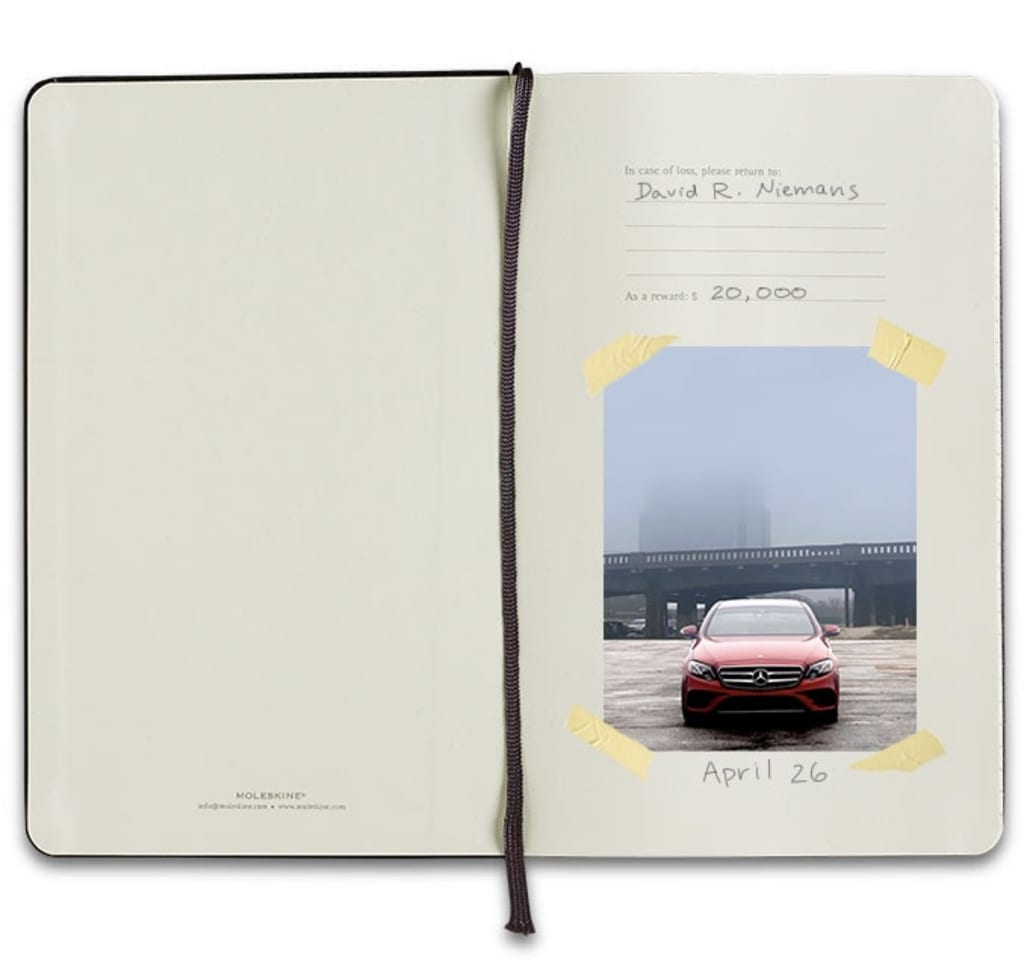
David clutched the wheel with his left hand, his right gripping the gear shift. It was a foggy morning, and the clouds seemed to stretch down from the heavens all the way to the earth, creating a sheer curtain of moisture that penetrated the city. His ears yearning for a noise to drown out the honking horns and revving engines around him, he released the clutch for a moment and flipped on the radio to the local news station. As his fingers, frigid from the frost outside, turned up the dial, the dynamic voice of the local weatherman crackled through the speakers. David listened passively, nudging a lever to awaken his turn signal and merging onto the toll road he always took to work, leaving behind the soaring metal giants of downtown. He edged the pedal further, and the car was soon shooting down the highway with a steady hum. Having three miles to traverse in this lane, David released the gear shift and ran his right hand through his graying but abundant hair. His ears perked up at every tick of his wristwatch, and his jaw clenched with every glance he snuck at it, trying to keep his eyes devoted to the traffic as long as possible. He had consistently been late to work for the last couple of weeks, and his boss had warned him of the consequences that would inevitably follow if he didn’t get his schedule together. David wasn’t only stressed about being late to work. Every time he closed his eyes to blink, the film of the past months seemed to continue rolling through his head on repeat, the back of his eyelids acting as the screen. He let out a weary sigh and flipped on his blinker again, changing lanes toward the exit on the right. As his car sped down the ramp and slowed to rejoin the flow of traffic under the soaring skyscrapers, David turned his head to check his blindspot. A flash of gray blurred by in his periphery, a blink of red flashed brightly, and a sudden pounding emerged in his ears as the blood rushed to his head. His seatbelt sliced to the bone as he lurched forward, banging his head on the steering wheel, and soon the pounding in his ears was accompanied by a sharp hot ache behind his eyes. His stomach dropped into his legs as though he were free falling for a moment. There was a deafening ringing in his ears, and the last thing David saw was a male figure donned in a suit approaching hurriedly, before his eyelids became leaden and everything went dark.
* * *
The sound of wheels screeching along tile welcomes me back to consciousness. The hum of a radiator buzzes dully in my ears, and though my eyelids are closed, I can discern bright white lights glaring down at me. My mouth feels like sandpaper, and my throat is so dry it chafes. I part my lips to speak, but no words emerge. I can’t even raise my arm—it feels like an anchor, tying me to the surface I am on, which seems to be steadily rolling backwards with the efforts of the people surrounding me, off of whom radiates a warmth. Voices around me seem to jumble together, and all I can discern is a word here and there. “Coma,” a deep male voice frets, while a feminine one throws out the term “vegetative state,” and yet another claims, “it’s not too late to,” and then the voices seem to melt into the background, and my vision gradually dulls to black once again, just before I can begin to question who the voices were speaking about.
* * *
The patient was rolled into a room on the left, and just as I approached, a nurse shooed me off and swiftly shut the door in my face. From what I had understood of the conversation, which was not much, seeing as it consisted of a thick slice of medical jargon, if the man were not immediately operated on, he could have deadly, incurable spine and brain trauma. If he were operated on, there was still a likely chance that he would end up in a coma or a vegetative state. I strode to the bathroom and folded up the sleeves of my black suit jacket, followed by those of the dress shirt underneath, thoroughly scrubbing the blood off of my forearms. Pulling down my sleeves, I exited the restroom and bided my time in the waiting room, determined to stay and learn of the man’s condition. Exhausted from the adrenaline of the morning’s events, I nodded off within moments of slouching into a chair.
“Sir,” I heard a soft but assertive voice bring me to and turned my head to see a finger tapping my shoulder. “You can now visit the patient,” a nurse informed me with a half grimace, half smile.
Nodding, I pushed my hands against the armrests and dragged my body to stand, swiftly following her to the recovery unit. I entered the room just in time to see her disappear through a side door next to the hospital bed, upon which rested the man, whose name, according to the brass name tag that gleamed against the pale wall just outside the door, was David Niemans. The nurse soon reemerged with a small cardboard box, which she placed in my hands. I knit my eyebrows together, and the nurse answered my implied question.
“You’re the only one here to visit him, and he doesn’t have any emergency contacts or family members listed in his insurance paperwork or his wallet.”
I lent a glance to the hospital bed where I could discern David’s chest rising up and deflating at tempo. Returning my attention to the box in my hands, I held the bottom with my left palm and pulled at the lid with my fingers, peeling it off. Inside rested a wallet, week-old receipts from Target, a collection of several ballpoint pens, and a small black notebook. I picked up the wallet and flipped through it, identifying his drivers license, some change, and a few wrinkled dollar bills, before grasping the dark leather bound journal between my fingers and lifting it out of the receptacle. Flipping through the pages, I could tell it was well-used, as the pages were slightly crinkled and some of the entries seemed to have been visited often, with the journal instinctively unfolding to one particular leaf.
* * *
The room smells sterile, as though it is lifeless, and the intermittent beeping of what I assume to be a heart rate monitor steadily sounds throughout the space, breaking the monotony of the silence. My eyes gradually squint open, my eyelids still feeling much too heavy to hold open for long. After a moment, my ears can discern the quiet rustling of pages coming from my right. Tenderly tilting my head in the direction of the noises, I see the tip of a narrow nose and follow it back to its owner, who is dressed in a familiar black suit. Following his line of vision, I notice my black leatherbound notebook resting in his hands, open to an entry I had written two months ago on February 26th. The strokes of ink on the paper seem to float off of the page towards me, and I can feel my eyes droop as I drift off into a dream of memory.
February 26th. My keys jangled as I chose my brass house key and twisted it in the keyhole, pushing open the dark oak door with an indiscernible creak. I had unexpectedly gotten off of work early, which was a rare blessing. Setting one foot down on the wooden floors and cocking my head inside, my eyes widened as I laid eyes on the state of my living room. Papers were strewn about along the sideboard, ground, and furniture. A picture of my late wife was crooked as though someone had knocked past it in a hurry. Someone had been here looking for something, but I wasn’t sure what. I cautiously checked all the windows and doors for any sign of forced entry, but found none. I had locked the door this morning; I was sure of it. The only person who had a key to this house was my daughter, my only child. Silently approaching my home office, I noticed the door had been nearly closed, leaving a slim crack through which a warm light beam escaped from the office into the hallway. Pushing the door open, I caught a glimpse of my daughter’s strawberry hair over the edge of the desk. She was feverishly shuffling through my drawers; everything in that desk had always been personal, so I wondered what reason she could provide for this invasion of privacy. I knocked against the wood, and her head jerked up in alarm.
“Oh! Dad. You aren’t supposed to be back from work yet,” she breathed worriedly.
“What are you doing here?” She seemed to contemplate lying for a moment but remembered how the living room looked. I noticed she gripped a maroon folder with golden brackets. The details to my bank account. “Why do you have that?”
She averted her green eyes to the ground shamefully, but she was sorry for having been caught, not for her actions. “I need the money. We’re not doing very well,” she spoke solemnly, referring to her family.
“Why didn’t you come to me? I could have helped you. You know I’ve been saving for retirement for years.” I shook my head in disappointment. “Did you even think about what I would do if you went through with this?”
“Dad, I’m sorry, but Arthur’s income isn’t enough for us, and this is the only way.”
“Were you ever going to tell me?”
“You were going to find out sooner or later that someone took the money, weren’t you?” She seemed to have dropped any facade of guilt and now adopted the hope that I would forgive her for doing what she felt she must.
“Please go. Maybe if you had spoken to me about it, I would’ve given it to you.” I rubbed my temples with my thumb and middle finger, trying to soothe the ache that had developed there.
She set the folder down on the table and slipped past me into the hallway and out of the back door.
Dragging my feet around to the desk to inspect the now disheveled folders, I caught sight of one drawer that had stayed closed. Pulling the brass handle, my fingers found my will in the dark. Sighing heavyheartedly, I removed my daughter, my sole recipient, from my last will and testament. How could I trust her to carry on my legacy if she was willing to do anything for money?
* * *
Continuing to flip through the pages of his life, I saw a small note flutter out. It had been tucked into the crease between the last page and the back cover of the journal. On it were scrawled a few words:
If you are reading this, I leave my last will and testament, amounting to 20,000 dollars, to you.
Signed, David R. Niemans
I inhaled sharply with wide eyes. Did he have no other family he could list as recipients? Perhaps he would explain the situation when he awoke again. The nurse returned and studied the patient for a moment, seemingly pitying his situation. Confirming that everything was in order, she turned and hurried out of the room. Deciding to process the note later, I sat down for a moment, and my vision seemed to turn to haze as I unfocused my eyes, tired from the day's events. Just as I was about to nod off with David’s will and notebook in my hands, my ears perked up as the steady beeping of the heart-rate monitor turned into one flat line of noise—the last noise Mr. Niemans would ever hear.
About the Creator
Keep reading
More stories from writers in Criminal and other communities.
The Ephrata Man Who Collected Death: A Profile of Jonathan Gerlach
The Mask of Normalcy To the residents of Ephrata Borough, Jonathan Christ Gerlach was just the guy at 100 Washington Avenue. He was 34 years old. He drove a silver Toyota RAV4. He paid his taxes. There were no red flags on the exterior of his property. The lawn was cut. The siding was clean. In a town obsessed with "curb appeal," Gerlach was a model citizen.
By Sunshine Firecracker4 days ago in Criminal
For Survivors of Assault and Battery: When to Call the Police and Why It Matters
Calling the police in a moment of danger can be one of the most important decisions a person makes. Although it doesn't solve every problem and may not be the right choice in every situation, when safety is at risk, involving law enforcement can be the most effective way to prevent further harm and create the legal foundation needed for restraining orders, criminal charges, and civil claims.
By jason escotoa day ago in Criminal




Comments
There are no comments for this story
Be the first to respond and start the conversation.