
The USA-Mexico Border and the Persistent Battle against Drug Trafficking
The endless battle

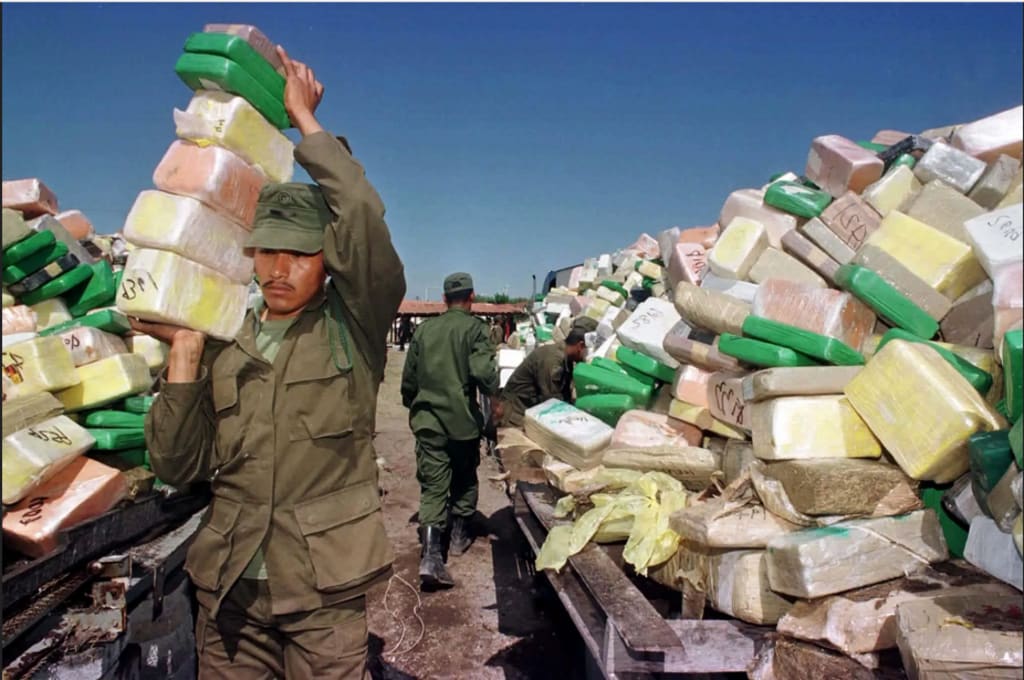
The USA-Mexico border has long been a hotspot for drug trafficking due to its strategic location, porous nature, and powerful drug cartels operating in Mexico. This essay explores the historical context, key challenges, efforts taken by both countries to combat drug trafficking, and the impact on society. As of my last update, the situation may have evolved, and I will attempt to provide a comprehensive analysis within the given scope.
Historical Context:
The drug trade between the USA and Mexico can be traced back to the early 20th century when marijuana and opium began crossing the border. However, it wasn't until the 1980s and 1990s that drug trafficking significantly escalated with the rise of powerful Mexican drug cartels like the Sinaloa, Jalisco New Generation, and Gulf Cartels. The demand for illicit drugs in the USA fueled the growth of these cartels, which have become major players in the international drug trade.
Key Challenges:
Several factors contribute to the challenges faced in controlling drug trafficking along the USA-Mexico border:
Geographic Terrain: The vast and rugged terrain along the border makes it difficult for law enforcement to patrol effectively. Cartels exploit this geography to their advantage, using remote areas to smuggle drugs undetected.
Corruption: Corruption within Mexican law enforcement and government agencies has plagued the efforts to tackle drug trafficking. Cartels often bribe officials, undermining enforcement efforts and allowing drugs to flow across the border.
Violence and Intimidation: Drug cartels resort to extreme violence to maintain control over their territories and intimidate rivals and authorities. This has resulted in countless casualties and instability in border regions.
Drug Demand: The high demand for drugs in the USA continues to drive trafficking. As long as there is a market for illicit substances, cartels will find ways to supply them.
Efforts to Combat Drug Trafficking:
Both the USA and Mexico have taken various measures to combat drug trafficking along the border:
Enhanced Border Security: The USA has invested heavily in strengthening border security through increased surveillance, additional personnel, and advanced technology to detect illegal crossings.
Bilateral Cooperation: The USA and Mexico have engaged in joint efforts to share intelligence and coordinate operations against drug cartels. Initiatives such as the Merida Initiative have facilitated collaboration on security issues.
Targeting Cartel Leadership: Both countries have targeted the top leadership of drug cartels, leading to the arrest or elimination of key figures. However, this has also resulted in increased violence as cartels vie for control.
Disruption of Trafficking Routes: Law enforcement agencies on both sides have worked to identify and disrupt drug trafficking routes, seizing large quantities of drugs before they reach their final destinations.
Demand Reduction: The USA has also emphasized demand reduction strategies, such as drug prevention programs, treatment for addicts, and public awareness campaigns highlighting the consequences of drug abuse.
Impact on Society:
The impact of drug trafficking along the USA-Mexico border is far-reaching and multi-faceted:
Violence and Instability: The presence of powerful drug cartels has led to increased violence, with communities near the border experiencing higher crime rates and insecurity.
Human Trafficking: Drug trafficking is often intertwined with human trafficking, as criminal organizations exploit vulnerable individuals to transport drugs or as victims of forced labor and sex trafficking.
Public Health Crisis: The influx of drugs has contributed to a public health crisis in the USA, with substance abuse and addiction rates soaring. Opioid overdoses, in particular, have reached alarming levels.
Economic Consequences: Drug trafficking negatively impacts the legitimate economy, diverting resources from legal industries and undermining the rule of law.
Conclusion:
The USA-Mexico border remains a critical battleground in the fight against drug trafficking. Despite the joint efforts of both countries, the complex challenges of geography, corruption, and demand continue to fuel this illicit trade. To address the issue effectively, a comprehensive approach involving law enforcement, social programs, economic development, and international cooperation is necessary. Additionally, ongoing efforts to reduce demand for drugs within the USA are equally vital to tackling this enduring issue at its roots.
About the Creator
Keep reading
More stories from suman dewan and writers in Criminal and other communities.
The most dangerous travel destinations in the world
In the vast expanse of the Atlantic Ocean, about 35 kilometers off the coast of Brazil, lies an island shrouded in mystery and fear. This place is Cue Mata Grande, better known as Snake Island, and it has earned a reputation as one of the most dangerous travel destinations in the world. This article delves deep into the enigmatic world of Snake Island, unraveling its dark secrets, its deadly inhabitants, and the reasons why it remains an untouched and forbidden place for tourists..
By suman dewan3 years ago in Earth
The Man Who Reported His Own Murder
M Mehran At exactly 11:59 p.m., the emergency line received a call that should not have existed. “I’ve been murdered,” the voice said calmly. “My name is Kamran Yousaf. You’ll find my body in twelve hours.” The call disconnected. Inspector Rehan Qureshi listened to the recording three times. It wasn’t a prank. The caller’s voice was steady, intelligent—almost relieved. Criminal investigations begin with chaos. This one began with certainty. A Body Right on Time At noon the next day, police found Kamran Yousaf’s body in a locked apartment downtown. No signs of forced entry. No struggle. The cause of death: a gunshot wound to the chest. Time of death matched the call. Rehan felt something cold settle in his stomach. Criminals don’t predict their own deaths—not unless they already know how the story ends. A Life Carefully Erased Kamran Yousaf was a data analyst for a private security firm. No criminal history. No enemies on record. No obvious motive for suicide—and the angle of the shot ruled that out anyway. Even stranger, Kamran had deleted most of his digital footprint in the week before his death. Emails wiped. Social media gone. Bank accounts emptied and donated anonymously to multiple charities. People who plan escape do that. People who plan death usually don’t. The First Lie Rehan questioned Kamran’s colleagues. One name surfaced again and again—Naveed Iqbal, Kamran’s former business partner. They had launched a cybersecurity startup years ago. It failed. Naveed disappeared. Kamran rebuilt his life quietly. When Naveed was finally located, his hands shook as he lit a cigarette. “I hated him,” Naveed admitted. “But I didn’t kill him.” Naveed revealed the truth Kamran had uncovered recently—his security firm wasn’t protecting people. It was selling surveillance data to criminal networks, enabling blackmail, extortion, and disappearances. Kamran had found proof. And once you find something like that, you don’t get to unknow it. The Second Phone Call Rehan received another call that night. Same voice. Same calm. “You’re close,” Kamran said. “But you’re looking in the wrong direction.” Rehan froze. “You’re dead,” he whispered. “Yes,” Kamran replied. “But my murder isn’t over yet.” The call ended. Phone trace led nowhere. In twenty years of criminal investigations, Rehan had chased killers. Never a ghost. The Woman in the Photograph Hidden in Kamran’s old apartment files was a single photograph: Kamran with a woman named Areeba Khan, a freelance journalist declared missing six months earlier. Rehan found her last article draft. Unpublished. It exposed the same security firm. Same data trafficking. Same names. Areeba hadn’t vanished. She’d been silenced. Kamran knew he was next. A Death Designed as Evidence The truth unfolded piece by piece. Kamran didn’t call the police to save himself. He called to trap them. He had recorded every threat. Every illegal transaction. He had scheduled files to be released only after his death. The call, the timing, the locked room—it was all designed to force a real investigation. Because if he disappeared quietly, no one would look. If he died loudly, everyone would. The gun that killed Kamran was traced to the security firm’s head of operations, Fahad Mirza. Surveillance footage—previously “corrupted”—was recovered. Payments surfaced. The murder was clean. The cover-up was not. The Final Truth Fahad Mirza was arrested three days later. During interrogation, he said only one thing: “He wanted to die a hero.” Rehan corrected him. “He wanted the truth to live.” The public fallout was massive. Arrests followed. The firm collapsed. International investigations began. And Areeba Khan’s name was finally cleared. The Last Message Weeks later, Rehan received a scheduled email. Inspector Rehan, If you’re reading this, it means the system worked. I didn’t report my murder because I wanted attention. I reported it because silence is the real weapon criminals use. Thank you for listening. Rehan closed the file and stared at the city lights. In criminal history, there are killers. There are victims. And then there are people who turn their own death into a confession— not of guilt, but of truth.
By Muhammad Mehran3 days ago in Criminal
JUSTICE FOR ALEX PRETTI
PUBLIC STATEMENT DEMANDING JUSTICE FOR ALEX PRETTI We come together today to demand truth, accountability, and justice for Alex Jeffrey Pretti, a 37‑year‑old VA nurse, U.S. citizen, and licensed concealed‑carry permit holder, who was shot and killed by federal agents on January 24, 2026, in Minneapolis. Verified witness videos and multiple investigative reports make one thing unmistakably clear: the official narrative surrounding his death does not match the evidence.
By Organic Products 6 days ago in Criminal


Comments
There are no comments for this story
Be the first to respond and start the conversation.