
The US military successfully neutralizes four Houthi drones aimed at an American warship and coalition vessel.
U.S. Forces Neutralize Houthi Drone Threat in Red Sea.


The ongoing clashes between the U.S. military and Houthi rebels underscore the complexities of the broader regional dynamics in the Middle East. Beyond the immediate threat to maritime security, these incidents highlight the interconnectedness of various conflicts and interests in the region.
At the heart of the Yemeni conflict is the power struggle between the internationally recognized government, backed by a Saudi-led coalition, and the Houthi rebels, who control significant parts of the country, including the capital, Sanaa. However, this conflict is not isolated, but rather intertwined with broader regional rivalries, particularly between Saudi Arabia and Iran.
Iran's support for the Houthis is viewed by Saudi Arabia and its allies as part of Tehran's broader strategy to expand its influence in the region. The use of drones by the Houthis, which the U.S. military alleges are supplied and possibly even operated by Iran, exacerbates tensions between Iran and the United States, as well as its Gulf allies.
The Red Sea, through which a significant portion of global trade flows, has become a focal point in this struggle for influence. The recent attempts to target American and coalition vessels in these strategic waters demonstrate the potential for escalation and the risks posed to international shipping lanes.
Efforts to resolve the Yemeni conflict have been stymied by entrenched interests, deep-seated grievances, and external interventions. Achieving a lasting solution will require a comprehensive approach that addresses both the political and humanitarian dimensions of the crisis, while also addressing the broader regional rivalries that fuel the conflict.
In the meantime, the U.S. military will likely continue to take measures to protect its interests and ensure the security of maritime routes in the Red Sea and beyond. However, the risk of unintended escalation remains high, underscoring the need for diplomatic engagement and conflict resolution efforts to prevent further destabilization in the region.

The day prior, CENTCOM reported neutralizing four long-range unmanned aerial systems (UAS) launched by Iranian-backed Houthi militants in Yemen. The drones were targeted at a U.S. warship and were intercepted in self-defense over the Red Sea.
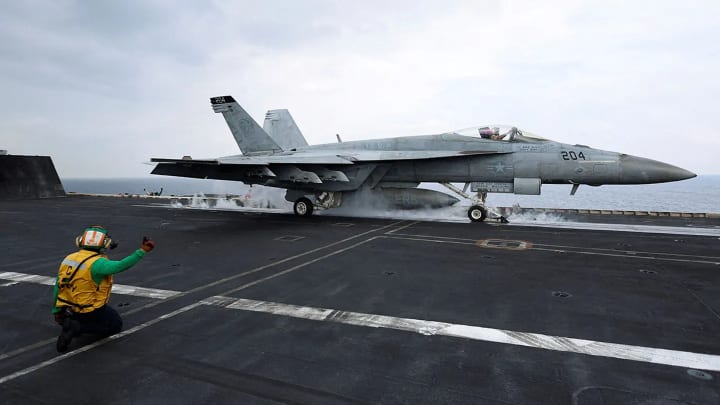
The recent actions by the U.S. military, including strikes against Houthi underground storage facilities in Yemen, come in response to ongoing threats posed by the militant group in the region. Just a week prior, U.S. Central Command had already conducted similar strikes targeting three Houthi storage sites.
The Houthi rebels' attacks on ships navigating the Red Sea and the Gulf of Aden have intensified since the outbreak of the Israel-Hamas conflict in October last year. These attacks have disrupted maritime traffic and raised concerns about the safety of shipping lanes in the area.
The escalation of hostilities between the Houthis and the U.S. military underscores the volatile nature of the Yemeni conflict and its broader regional implications. It also highlights the challenges in achieving a peaceful resolution to the conflict amidst ongoing violence and instability in Yemen. Efforts to address the root causes of the conflict and promote dialogue remain essential for restoring stability and ensuring the safety of maritime navigation in the region.

CENTCOM's statement underscores the devastating impact of illegal Houthi attacks on multiple fronts. Beyond the loss of life, which tragically claimed three mariners, the sinking of a commercial vessel disrupts lawful transit through the Red Sea, a vital maritime route crucial for global trade. Moreover, these attacks impede humanitarian aid efforts destined for Yemen, exacerbating the already dire humanitarian situation in the war-torn country.
The repercussions extend further, as disruptions in maritime commerce reverberate across the economies of the Middle East, affecting industries, livelihoods, and regional stability. Additionally, environmental damage resulting from such attacks compounds the already significant challenges facing marine ecosystems in the region, underscoring the far-reaching consequences of these acts of aggression.
Addressing these challenges requires concerted international efforts to hold accountable those responsible for such attacks, while also working towards sustainable solutions that promote peace, security, and stability in the region.
About the Creator
Keep reading
More stories from Afeef Khan and writers in Criminal and other communities.
The Houthi rebels of Yemen have asserted responsibility for the assaults on Israel.
Yemen's Houthi rebels asserted responsibility on Tuesday for missile and drone strikes aimed at Israel, marking the first instance of such attacks. This development has effectively involved their primary supporter, Iran, in the ongoing Israel-Hamas conflict in the Gaza Strip, thereby heightening the potential for a regional confrontation. Previously, the Houthis were suspected of launching an assault on Israel by deploying missiles and drones across the strategically significant Red Sea shipping route. Consequently, the U.S. Navy intercepted and neutralized the projectiles.
By Afeef Khan2 years ago in Criminal
Inside the House of Skulls: The Full Timeline of the Jonathan Gerlach Investigation
INVESTIGATION TARGET: JONATHAN C. GERLACH INCIDENT LOCATION: 100 WASHINGTON AVENUE, EPHRATA PA CHARGES: ABUSE OF CORPSE (x100), THEFT, DESECRATION STATUS: INCARCERATED ($1M BAIL) KEYWORDS: #HouseOfSkulls #JonathanGerlach #EphrataCrime #MountMoriah
By Sunshine Firecracker2 days ago in Criminal
Don’t Ask. Don’t Tell. Until Someone Lives To Tell.
By an independent investigative researcher ⸻ A note to the reader This article relies exclusively on public records, court filings, sworn testimony, and contemporaneous reporting. It does not allege criminal coordination beyond what has been established in court. Its purpose is to examine patterns, parallels, and institutional blind spots that emerge when timelines are placed side by side. Patterns are not accusations. But patterns ignored become policy.
By SunshineChristina2 days ago in Criminal



Comments
There are no comments for this story
Be the first to respond and start the conversation.