
The Taman Shud Case: The Mystery of the Somerton Man
A mysterious man was found dead on an Australian beach, with a cryptic note in his pocket and no identity.

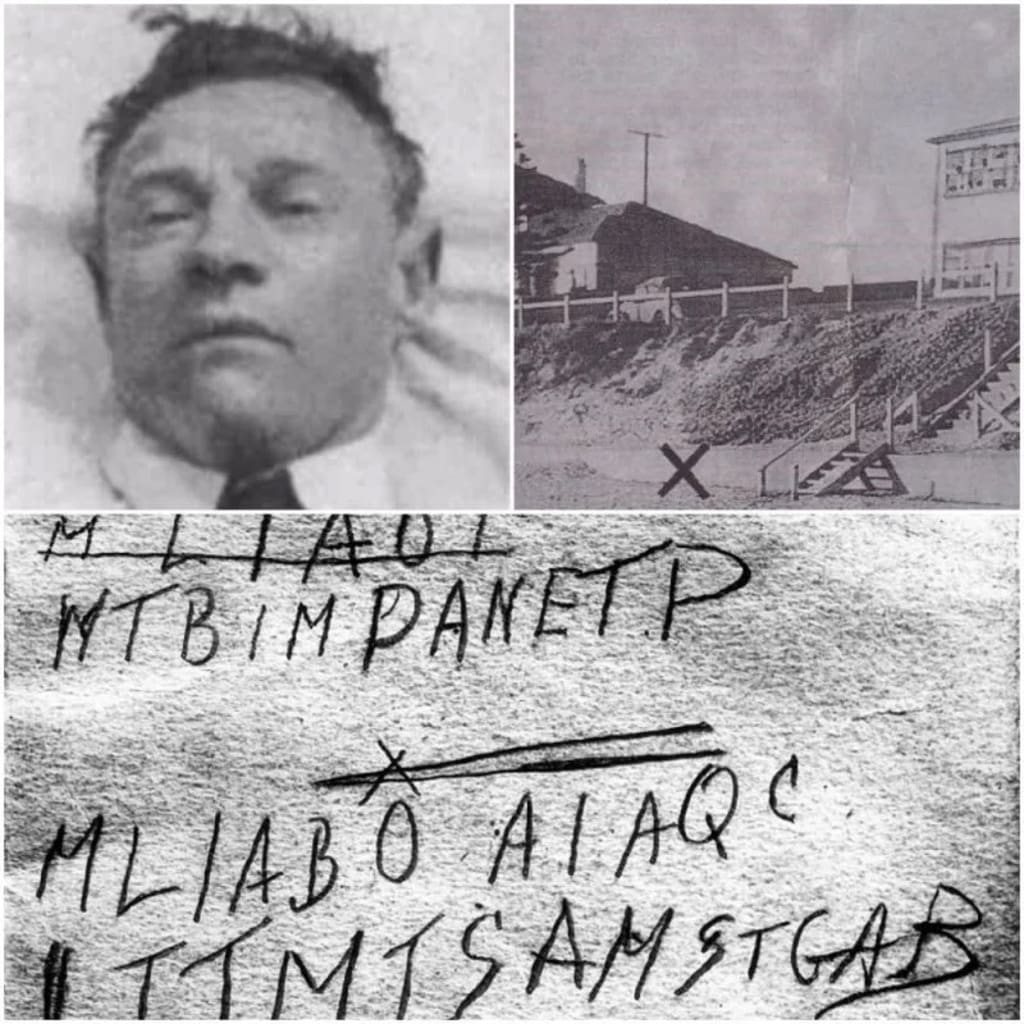
It was a quiet morning on December 1, 1948, when a man walking along Somerton Beach, just south of Adelaide, Australia, spotted something unusual. Lying near the seawall was a man in a suit, his head propped against the embankment, his legs stretched out in front of him. At first glance, he appeared to be sleeping. But as the morning sun rose higher, it became evident — this man was dead.
What followed was one of the strangest and most enduring mysteries in Australian history: the case of the “Somerton Man,” often referred to as the “Taman Shud Case.” Over 75 years later, the identity of this man, how he died, and what he was doing in Adelaide remain unanswered questions, wrapped in layers of cryptic clues and dead ends.
The Discovery
The body was found by passersby at around 6:30 a.m. on Somerton Beach. The man appeared well-dressed for summer, wearing a suit and polished shoes but with no hat — a common accessory for men of that era. His arms were positioned strangely, slightly bent, and his fists were clenched. There was no sign of a struggle, no blood, no visible wounds. It was as if he had simply lain down and died.
When authorities examined him, they found a half-smoked cigarette resting on his collar, as if it had fallen from his mouth at the moment of death. In his pockets were a used bus ticket, an unused train ticket to Henley Beach, a comb, chewing gum, cigarettes, and a box of matches. Oddly, there was no wallet, no money, and most importantly, no identification. Even the tags from his clothing had been deliberately removed.
The Autopsy
The post-mortem report added more layers of mystery. The coroner found signs of internal bleeding in the stomach and liver, but no obvious cause of death. The heart was in good condition, there were no signs of violence, and no traces of poison were found in the body — though toxicology tests at the time were far from comprehensive.
A leading theory was that the man had been poisoned, possibly with a rare or untraceable substance. The absence of vomiting or convulsions, however, was unusual for most known poisons of the time. The coroner’s report ultimately listed the cause of death as “unknown.”
The Suitcase and the Book
A breakthrough seemed possible when a brown suitcase, believed to belong to the man, was discovered in the cloakroom at Adelaide Railway Station. It had been checked in the day before his death, on November 30. Inside were a few clothes, a pair of slippers, a screwdriver, some stenciling tools, and a small knife. Like his clothing, the suitcase’s contents had no identifying marks, except for the name “T. Keane” on a tie — yet no missing person by that name matched the man’s description.
Then came the most baffling clue of all. Hidden in a fob pocket in the man’s pants was a tiny rolled-up scrap of paper with two printed words: “Taman Shud.”
Investigators soon traced the phrase to the final page of a rare book of Persian poetry, The Rubaiyat of Omar Khayyam. The words meant “ended” or “finished” in Persian — an eerie message that fueled speculation of suicide, assassination, or espionage.
Even stranger, the exact book from which the page had been torn was eventually found. A local man had discovered it in the back seat of his car, parked near the beach. The last page was missing, and in the back of the book, someone had scribbled a series of letters and numbers that appeared to be a code. The sequence read:
WRGOABABD MLIAOI WTBIMPANETP MLIABOAIAQC ITTMTSAMSTGAB
To this day, cryptographers and amateur sleuths have tried — and failed — to decipher its meaning.
The Jessica Thompson Connection
Another twist came when police traced a telephone number written inside the book. It belonged to a woman named Jessica Thompson, who lived just a few minutes from where the body was found. When questioned, she seemed visibly shaken and claimed she didn’t know the man. However, she later admitted owning a copy of The Rubaiyat and even gifted one to a man named Alf Boxall during World War II.
At first, investigators thought the Somerton Man might be Boxall, but he was later found alive — with his copy of the book intact, its last page still in place.
Jessica refused to speak further on the matter, and some speculate she knew more than she admitted. Her son, Robin Thompson, later became a focal point in the case, as some experts suggested he bore a striking resemblance to the Somerton Man, possibly indicating a familial link.
Theories and Speculation
Over the decades, theories have ranged from espionage to secret lovers, and even to unknown medical conditions. Some believe the Somerton Man was a Cold War spy, possibly poisoned to prevent him from revealing sensitive information. Others argue he was a heartbroken lover who took his own life after being rejected by Jessica Thompson.
A DNA analysis conducted in 2022 revealed the most promising lead yet: the Somerton Man was likely Carl “Charles” Webb, an electrical engineer from Melbourne who disappeared in the 1940s. However, why he ended up in Adelaide, how he died, and what the cryptic note meant remain unsolved.
The Enduring Mystery
The Taman Shud case remains one of Australia’s most perplexing mysteries. Despite modern advances in forensic science, key questions linger. Who exactly was the Somerton Man? Was he a spy, a fugitive, or simply an unfortunate victim of untraceable poisoning? Why did he have no ID, and why was his clothing stripped of labels? And most intriguingly, what did the cryptic letters in the Rubaiyat mean?
It is a story of an unknown man, a mysterious death, a torn page, and a possible hidden message — one that continues to baffle investigators and true crime enthusiasts alike. Whether the full truth will ever be uncovered remains uncertain, but one thing is for sure: the Somerton Man has achieved a kind of immortality, his story still captivating minds long after his death on that warm Australian morning in 1948.
Thank you for reading!
If you find this piece interesting, please leave a clap, comment, or even subscribe! Your support means a lot to me as a writer!
About the Creator
Victoria Velkova
With a passion for words and a love of storytelling.
Keep reading
More stories from Victoria Velkova and writers in Criminal and other communities.
Katherine Knight: Australia’s Cannibal Killer
Katherine Knight’s story is one that chills you to the bone — not just because of the horrific murder she committed, but because of how deeply she was shaped by her traumatic, disturbing upbringing. To understand the horrific crime she committed in 2000, we need to take a look at the twisted, often violent life that led her to become Australia’s most infamous female killer.
By Victoria Velkova11 months ago in Criminal
The Facebook Marketplace of Horrors: Inside the groups where bones are traded like baseball cards.
It Wasn't the Dark Web When we hear about the illegal sale of human body parts, we imagine the "Dark Web"—encrypted Tor browsers, Bitcoin wallets, and shadowy Russian servers. The terrifying reality of the Jonathan Gerlach case is that he wasn't hiding in the digital shadows. He was hiding in plain sight.
By Sunshine Firecracker4 days ago in Criminal
What DHS Secretary Kristi Noem said vs. what the videos show
NBC News and PBS recapped the competinBelow is a structured, evidence-backed analysis of the Minneapolis ICE shooting and the claims made by DHS Secretary Kristi Noem—including the applicable federal laws/policies and how intent vs. recklessness factor into a potential case. I’ll keep this clear, precise, and grounded in the video evidence and governing law.
By Organic Products 6 days ago in Criminal


Comments (1)
Fascinating mystery! This was very mysterious mystery! Great work