
The Tales of the Blue and White Shield
-
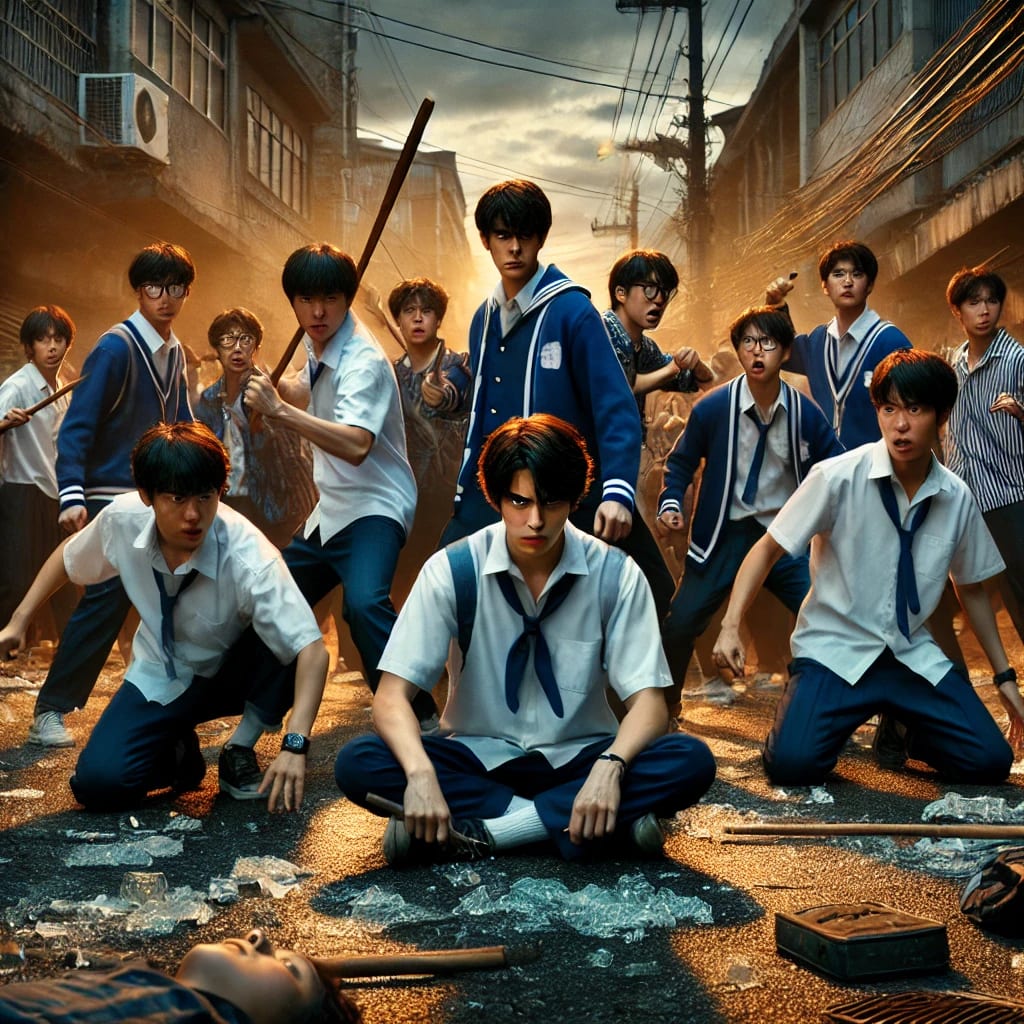
Three years ago, my life revolved around the infamous blue-and-white shield—the middle school uniform. Why a "shield"? Because it was what we wore as we plunged into the chaotic whirl of street brawls. Yes, brawls—the rebellious signature of Indonesian students, from metropolitan cities to small towns.
This is my story. Not a fictionalized account, but a glimpse into my shadowy past as a student of SMP PGRI 6 Bogor—a tale of loyalty, conflict, and redemption that unfolded behind school walls and on the asphalt streets.
Chapter 1: The Bond of Six
Monday Morning Blues
Ah, Monday mornings—didn’t you just hate them? Standing under the scorching sun for school assemblies, listening to monotonous speeches from principals and teachers. But we had our ways to escape the heat. Some hid in classrooms, others in bathrooms puffing away on cigarettes. As for me, I had my own unique strategy: being late.
At SMP PGRI 6, the assembly ground was one floor below the entrance. Latecomers couldn’t disrupt the solemnity, so my friend Dimas and I would "accidentally" arrive 20 minutes late. It was our ritual, one that set the stage for a bond that would withstand battles—both physical and emotional.
Dimas and I were part of a "basis"—a group of students traveling together for safety from rival schools. Mondays always began with the same routine: meeting Dimas, hopping on a half-empty miniarta (a minibus), and sharing nervous glances at every intersection, ready for ambushes.
Chapter 2: When Class Wars Ignite
The first recorded class-to-class brawl at our school started innocently. A prank spiraled out of control, and soon we were embroiled in a battlefield on the assembly grounds. My class, 8F, earned the nickname "8 Fighters" because we were only eight misfits against two entire classes.
What began with teasing escalated to kidnappings. Students were "taken hostage" between classes, dragged into rival classrooms, and humiliated. By the third day, the brawls turned savage. Broken desks, makeshift weapons, and bruised bodies filled the air with tension.
I remember gripping my belt, the cold metal of its buckle reassuring me as I faced down three opponents. The chaos was overwhelming. Shouts of "8F! 8F!" roared in unison as we charged. We didn't stop until a teacher intervened. The aftermath? Suspensions, threats of expulsion, and promises—false promises—not to repeat history.
Chapter 3: The Bloodstained Friday
Of all the battles, none was more terrifying than the “Friday Massacre.” That day, six of us—Hasbi, Ramjek, Bagas, Dimas, BS, and me—found ourselves surrounded by three rival schools on a bus.
The tension started the moment the bus entered Cibinong, infamous for its dangerous streets. Rival gangs armed with machetes, iron pipes, and wooden sticks lined the roads. Despite our best efforts to avoid confrontation, the bus became a cage.
Glass shattered. Screams echoed. I held my belt buckle tight, a flimsy weapon against blades. Yet somehow, amidst the chaos, we fought back. The driver, surprisingly, sided with us, ramming the bus into rival bikes to clear a path.
When we finally reached safety, we were bloodied but alive. It wasn’t heroism but sheer survival instinct that had gotten us through.
A Reflection
I write this not to glorify what we did, but to ensure no one follows in our footsteps. The blue-and-white shield protected us physically, but it also trapped us in cycles of violence.
Today, I hope for a future where students unite instead of divide, where the streets of Bogor echo with laughter rather than battle cries. Let this story serve as both a warning and a hope.
About the Creator
Keep reading
More stories from writers in Criminal and other communities.
Why Khloé Kardashian’s Ex Lamar Odom Was Arrested in Vegas
Lamar Odom, former NBA player and ex-husband of Khloé Kardashian, was arrested on Saturday morning in Las Vegas, Nevada. Lamar, who won the 2009 and 2010 championships with the Los Angeles Lakers, was previously arrested in 2013.
By Dena Falken Esq7 days ago in Criminal
The House voted separately on DHS funding
Why Thomas Massie Can Thwart Trump With Impunity A small group of House Democrats joined Republicans on Thursday to approve a funding bill for the Department of Homeland Security (DHS), defying pressure from within their party as criticism mounts over the Trump administration’s immigration enforcement policies.
By Organic Products 3 days ago in Criminal


Comments
There are no comments for this story
Be the first to respond and start the conversation.