
The Strange Mystery of a Young Girl's Tragic Murder in the Country
The story of Bella Wright

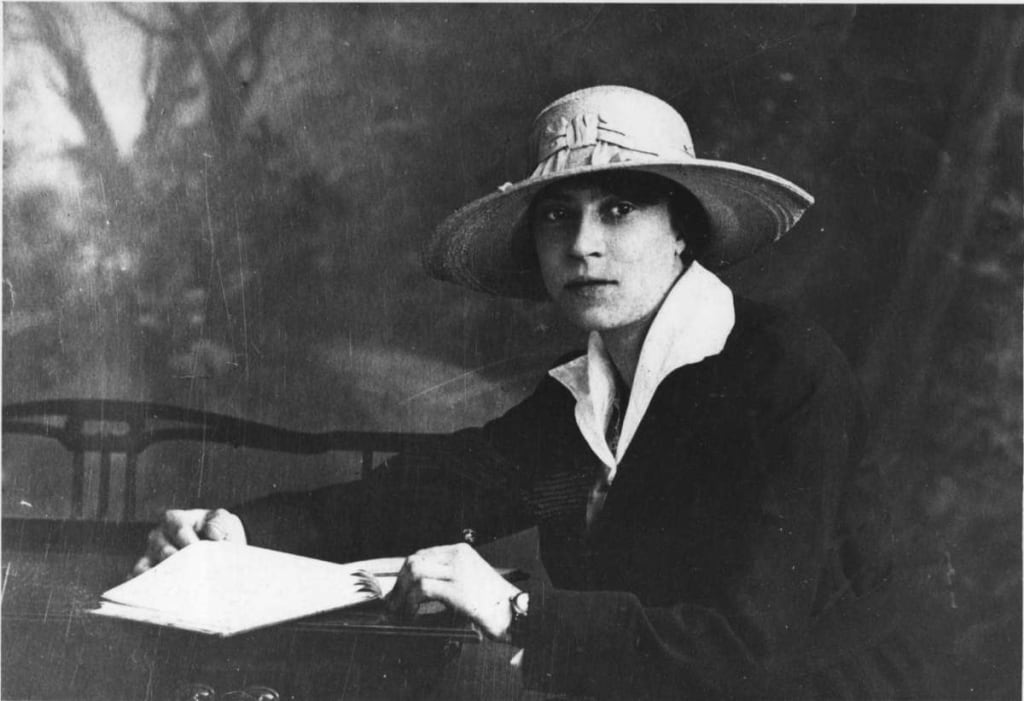
On 5th July 1919, a farmer from Stratton discovered the dead body of a young twenty-one-year-old girl. First appearances showed that she had a small hole below her left eye.
Beside her lay her bicycle, a bloody trail of bird tracks led from the body to the top of a wooden gate. A dead crow lay in the meadow beyond, along with a track of flattened grass.
At first, the farmer reported a tragic road accident, but when the police arrived, the incident became much more sinister.
Annie' Bella' Wright
Known as Bella to her friends, Annie Wright was born to a farming family in Leicestershire. Her parents were not very rich but were a close family. Bella was described as a young, charming, beautiful woman who was engaged to marry a soldier.
During World War 1, like so many other females, she filled the shortage of male workers by taking on a more physical job. Bella worked at the local tyre factory; when the war finished, she continued to work at the factory, biking five miles a day.
In 1919 she lived with her family in a cramped cottage in Stoughton. Her extended family lived around her in different villages.
Day of the Murder
On the day of her murder, she awoke late as she had been working the night shift. She wrote a letter to her boyfriend Archie Ward, who was stationed on HMS Diadem in Portsmouth waiting to be demobbed.
Having completed the letter, she said goodbye to her mother and rode to the post office. On the way, she met the postmistress; she gave her the letter and money for the postage deciding to go and visit her uncle.
Her uncle lived in the village of Gautly, seven miles east of Leicester. When Bella arrived at her uncle's, she was not alone; with her was a man who claimed he had stopped to help her fix her bike and continue with her.
Bella went into her uncle's house alone, the stranger remaining outside. When she emerged sometime later, the man was still there. When asked by her uncle who the man was, she told him he was a stranger who she had met on the road. Stating he was not really bothering her.
Her relatives, although they thought it odd, were not overly concerned. Her cousin commented that the man used Bella's name, and the pair seemed familiar. Whether this was true or not has never been discovered.
She left her uncle's house with the man riding beside her; this was the last time she was seen alive.
Investigation
PC Hall was the first to arrive at the site of the incident. When he moved Bella, he discovered that the hole was a bullet hole which had exited out of the back of her head - the hat she had been wearing hiding this from initial view.
The body was moved to a nearby derelict building, and as the dark settled, the crime scene was left. PC Hall, though could not rest, and the first sign of light the next day, he was back at the scene carrying out a detailed search.
Five metres from Bella's body, he discovered a shell casing. It was here he also observed the footprints, dead crow and flattened grass. They also had a detailed description of the man who had been with Bella and the fact he was riding a unique green bicycle.
One of the major questions that needed answering was why Bella was on this road, as it was not the shortest route home from her uncles. Unfortunately, despite many questions and a suspect description, the case went dead for seven months.
On the 23rd February 1920, the Enoch Whitehouse barge snagged on something at the bottom of the Leicester Canal. Leaning over the side, they hauled up the chassis of a green bicycle that matched the one the police were looking for.
The police dragged the rest of the canal and found a leather holster with bullets of the same calibre as the murder weapon. Although this evidence was not as easy as first thought, the holster did not contain a gun, and the bike's identification number had been filed off.
This did not stop the police, and when an expert reconstructed the identification number, they identified the shop it was bought from and from there a name, soldier Ronald Light.
Ronald Light
Unlike Bella, Light was born into a life of privilege, his father being a wealthy engineer and inventor. Ronald was the only one to make it past infancy of the couple's children. This meant that he was spoilt and indulged throughout life.
In his teens, he was expelled for removing a young girl's clothes; despite this, he obtained a degree from Birmingham University and gained employment as a draughtsman for a railway company.
This employment did not last long, and in 1914, he was sacked for setting fire to a cupboard and writing offensive graffiti on a wall. A few months later, he was in trouble again for setting light to a haystack.
Not long after this, Light entered the army to fight in World War 1. A few months after joining the army, he received the news that his father had been killed in a freak accident where he had fallen from a balcony. Some would speculate that this was suicide rather than an accident.
Living in the army did not last long, as he was sent home from the front line with hearing loss and shell shock. He had already been disciplined several times. Unable to gain employment, he moved in with his mother. Shortly after Bella's death, he worked as a school teacher.
Initially, when arrested, Light denied owning the distinctive green bike until it was shown that they had proof that he had purchased it. He then changed his story to say he had sold it to an unknown person.
When asked about the gun, he clarified that he had not left the army possessing his weapon, although many soldiers illegally brought their guns home. He also strangely sold or threw away all the clothes he had worn the night he met Bella.
Trial
Light's trial started in June 1920; he admitted to owning the bike by this point and meeting and riding with her, but he denied murdering her. Instead, he said he had thrown the bike and the holster into the water because he knew he was considered the only suspect.
The prosecution presented evidence that Light had approached two young schoolgirls on a bicycle earlier that day. He had intimidated them and attempted to separate them. Yet, surprisingly, they did not present evidence of Light's past sexual harassment.
People were called to the witness box that, easily identified Light as the man seen with Bella. His mother's domestic took the stand and revealed that he had not returned home until late on the day in question, saying his bike had broken down. They summarised that they believed Bella had refused Light's advances, so he had killed her.
Light's mother being of considerable financial means, hired the best defence lawyer she could find, Sir Edward Marshall Hall.
He let Light take the stand, explaining why he had hidden evidence and failed to come forward.
I did not give information, because I was absolutely dazed about the whole thing…What I saw in the newspapers was certainly the first intimation to me of the murder…I did not give information because apparently everyone had jumped to the conclusion that the man on the green bicycle had murdered the girl - Light
He claimed that he had stopped to help her as she had a problem with her bike and then ridden with her to ensure she was safe.
The money spent on his defence was worth every penny when the jury acquitted Light of all charges.
The death remains unsolved; the gun was never recovered. Light changed his name and moved to Kent to marry a war widow. He died at the age of eighty-nine in 1975. He had two other brushes with the law involving inappropriate conduct towards a woman and child.
The end of the case
This should have been the end of the case, had not two separate theories later on. The first was the shooting crows theory.
The fields near where she was found were a popular spot for shooting crows and other scavenger birds. So was Bella accidentally killed by one of the youths shooting crows at the nearby gate.
A youth could lay in the field shooting crows, unaware that one of his shots went through the bird and into Bella. This would explain the dead crow near the body, the bloody bird tracks, and the dent in the grass.
The second theory has been talked about recently and involves a signed confession that was said to come from a police safe. Light admits to killing Bella on the confession but states it was an accident.
During their ride home, Bella had asked Light to show her his service revolver. They had stopped, and it accidentally shot Bella whilst he removed it from his pocket. Light then hid the evidence to avoid a charge.
Whether Bella was murdered or killed by accident, a young woman was killed at the prime of her life, with no justice being served.
What do you think happened?
About the Creator
Sam H Arnold
Fiction and parenting writer exploring the dynamics of family life, supporting children with additional needs. I also delve into the darker narratives that shape our world, specialising in history and crime.
Keep reading
More stories from Sam H Arnold and writers in Criminal and other communities.
The Lake Bodom Murders, a Horrific Mystery of Brutality and Murder
The Lake Bodom Murders are one of the most perplexing and unsolved crimes in the history of Finland. The incident occurred on 5th June 1960, when four teenagers went camping at Lake Bodom, about 22 kilometres from Helsinki. They set up their tent on the lakeside and enjoyed a carefree evening until the early hours of the next day when an unknown assailant attacked them with a knife, leaving three of them dead and one seriously injured.
By Sam H Arnold3 years ago in Criminal
“Daddy’s Girl” Scandal Erupts: Arizona Courts Protect Kristyn Alcott Despite Mounting Evidence of Alleged Misconduct, Deception, and Child‑Safety Failures
Maricopa County, AZ — January 13, 2026 — ”Daddy’s Girl” Scandal Explodes: Arizona Family Courts Let Disgraced Supervisor Kristyn Alcott Keep Working Amid Credible Allegations of Perjury, Impersonation, Fraud, and Child Endangerment.
By Anna Justice6 days ago in Criminal
The Global Power Struggle in 2026: Why Are Tensions Rising Between the United States, Russia, China, and Venezuela?
f tensions between the United States and each of Russia, China, and Venezuela. These tensions cannot be understood as isolated events or temporary crises; rather, they are a direct reflection of a deeper struggle over global influence, strategic resources, and the future shape of the international order. At the center of this complex scene, Venezuela has emerged as a major flashpoint, while Russia and China play the role of supporters and counterweights to U.S. actions.
By America today 7 days ago in Criminal


Comments
There are no comments for this story
Be the first to respond and start the conversation.