
The Silent Criminal
Detective Elena Rivera hated quiet streets. They looked innocent, but in her experience, silence hid the darkest secrets

M Mehran
Detective Elena Rivera hated quiet streets. They looked innocent, but in her experience, silence hid the darkest secrets.
That night, she stood outside a small bakery on the corner of Maple and Third. The shop’s lights were still on, though it had closed hours ago. Inside, she found the owner, Mr. Keller, tied to a chair, trembling. The register was open, cash missing.
Before Elena could speak, he whispered: “It was her. The girl with the violin.”
The case baffled the precinct. The suspect wasn’t a gang member, not a desperate thief, not even someone with a record. It was Clara Voss, twenty-two years old, a gifted street musician who often played on that very corner.
Witnesses described her as quiet, polite, almost invisible. Yet over the next month, crimes began to form a pattern—small businesses robbed, safes cracked, alarms bypassed. And always, someone swore they saw the same thing: a young woman carrying a violin case.
Her nickname spread through the city like smoke. The Silent Criminal.
Elena’s captain dismissed it. “Urban legend,” he grunted. “People see what they want. A violin case doesn’t make someone guilty.”
But Elena couldn’t ignore the pattern. Every robbery was clean, efficient, no fingerprints. It reminded her of something—music. Each crime unfolded like a score, notes precise, timing flawless.
She dove into Clara’s past. A conservatory dropout. Brilliant with strings, but her scholarship vanished after her father’s medical bills drained the family. Clara worked odd jobs, none stable. Somewhere between lost auditions and eviction notices, the gifted musician had disappeared into shadows.
Elena knew one thing: talent like that doesn’t vanish. It transforms.
One rainy night, Elena set a trap. She convinced the owner of a pawn shop rumored to be next on the list to cooperate. They left the register full, cameras hidden. Then Elena waited in the alley, watching raindrops dance under the streetlights.
At 2:14 a.m., she heard it—a faint melody, soft, haunting, carried through the night. A violin.
And there she was. Clara, slim figure wrapped in a dark coat, violin case slung over her shoulder. She moved with quiet confidence, slipping inside the shop as though the locks had been waiting for her.
Elena followed, heart racing. She expected chaos. Instead, she found Clara kneeling at the safe, fingers moving in rhythm, as if playing invisible strings. Within minutes, the lock clicked open.
“Clara Voss,” Elena said firmly.
Clara froze. Slowly, she turned. Her eyes were tired, but calm. She didn’t run. She didn’t beg. She simply placed the money back into the safe, closed it, and whispered, “You’re too late.”
The arrest shook the city. Newspapers printed her photo: a delicate young woman with the face of a violinist, not a criminal. People argued in coffee shops, in buses, on corners. Some called her a thief. Others called her a hero who robbed only from businesses known for exploitation—landlords, pawn shops, corrupt suppliers.
Clara said little. During questioning, she remained polite, her answers clipped.
“Why do it?” Elena pressed. “You’re gifted. You could’ve had a career.”
Clara looked at her hands. “Music doesn’t pay hospital bills. It doesn’t stop landlords from locking the door. But crime… crime has rhythm. And once you learn the notes, it plays itself.”
Elena leaned closer. “But you hurt people.”
Clara’s gaze flickered. “I hurt systems. The people were collateral.”
At trial, her defense painted her as a modern-day Robin Hood. They brought in professors who spoke of her genius, neighbors who swore she bought groceries for the elderly, children who remembered her lullabies on the street.
But the evidence was undeniable—videos, fingerprints finally traced, money trails uncovered. Clara Voss was sentenced to ten years.
The day she was taken away, the courthouse was packed. Some jeered, some cried, some even played violins in protest. Clara walked silently between guards, her case left behind.
Elena watched from the back, unsettled. She should’ve felt satisfaction. Instead, she felt the same thing she’d felt the night she heard Clara play: the haunting knowledge that silence hides more than noise ever could.
Months later, on her commute home, Elena passed the corner of Maple and Third. A young boy stood there, struggling with an old violin. His notes were clumsy, but beneath them, Elena recognized a familiar rhythm.
She froze. The song wasn’t just music. It was a pattern—a sequence of notes Clara had hummed during questioning, the same pattern that matched the safe codes she used.
And suddenly, Elena understood. Clara hadn’t stopped playing. She had simply changed the audience.
For the first time, Elena wondered: had they truly caught the Silent Criminal? Or had Clara composed something larger, a symphony of crime that would play on long after her cell door shut?
The boy lifted his bow again, eyes glinting. The melody rose, and the city’s silence deepened.
About the Creator
Keep reading
More stories from Muhammad Mehran and writers in Criminal and other communities.
The Criminal’s Confession
M Mehran Detective Harris had been chasing Adrian Cole for seven years. Seven years of robberies with no fingerprints, escapes with no traces, and heists so clean they were studied like art. Adrian wasn’t just a thief—he was a ghost. Banks called him a criminal. The media called him The Gentleman. Harris called him an obsession.
By Muhammad Mehran6 months ago in Criminal
He Confessed to Murder in My DMs: The Dark Side of Going Viral
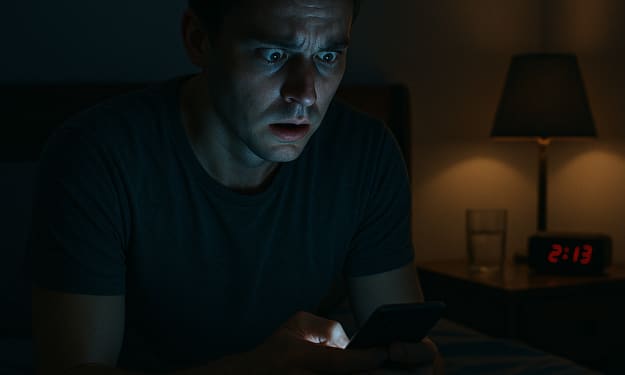
When your most-liked story becomes someone else's confession booth The message came in at 2:13 a.m. I saw the notification glow on my nightstand, that soft blue light that usually means spam, or a heart emoji, or someone asking, “Did this really happen?”
By abualyaanart6 days ago in Criminal
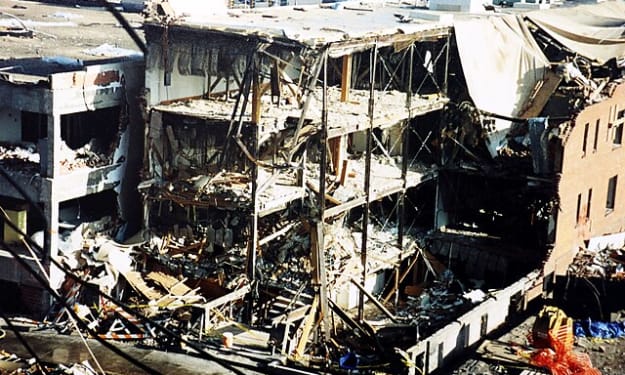
The 1995 Oklahoma City Bombing
Terrorism and mass shootings no longer shock most Americans. We've heard and seen it all before, more than a few times. Nowadays, we scroll past the post or flip the TV channel without much thought. Perhaps terror attacks are so common that we expect them. We aren't surprised. It hasn't always been this way. There was a time when terror attacks and mass shootings rarely happened. Those rare events shocked people to their core. It left them fearful, yet communal, ready to come together for the betterment of our country.
By Criminal Matters6 days ago in Criminal
A Planetary Alignment will coincide with Mercury Retrograde
Double phenomena in the heavens Some people say in jest that the planets have aligned in their favor when life works the way they desire. Were you aware that there are seasons when things do line up in the heavens? There will be a planetary alignment AKA a planet parade, on February 28, 2026.
By Cheryl E Preston6 days ago in FYI


Comments
There are no comments for this story
Be the first to respond and start the conversation.