
The Scientist Who Disappeared with His Secrets
The Unsolved Disappearance of the Father of Acid Rain Research Svante Odén who mysteriously disappeared at the Baltic Sea


It was a warm, golden evening on July 29, 1986, when Svante Odén, a celebrated Swedish scientist, steered his 11-meter fishing boat out of Grisslehamn marina into the shimmering waters of the Baltic Sea.
Known to the world as the father of acid rain research, Odén had spent decades exposing how industrial pollution scarred landscapes far beyond its source.
But now, at 62, he was chasing a different kind of breakthrough, a top-secret device to track submarines by detecting the faintest ripples in the water.
That night, under the glow of a high summer sky, he set out toward the Understen lighthouse in the Stockholm archipelago, his boat loaded with underwater sensors, a Hitachi printer, cables, and car batteries. He told friends he was off to fish and test his invention. No one could have guessed it would be his final trip.
Odén was last seen just before midnight by the lighthouse keeper at Understen. For about 20 minutes, the keeper watched as the scientist’s boat bobbed in Norrskrubban bay, struggling to anchor. Then, it slipped away into the dark.

Two days later, on August 1, the boat was spotted drifting in the Åland Sea by the crew of the Esso Finlandia. A rescue cruiser arrived to find it tangled in a fishing net, its tanks nearly full, and its condition otherwise pristine.
But Odén was gone. So was his equipment: the sensors, the printer, the batteries, and a black briefcase he always carried, stuffed with research notes and data.

The police swooped in, but their investigation was done in extreme secrecy, almost in a sinister way. Later on, Sweden’s security service, SÄPO, got involved, and they threatened the family and friends of Mr. Oden to stay silent.
What happened to Svante Odén? Nearly 40 years later, the question still remains answered.
The easiest answer is that Odén fell overboard. Maybe he leaned too far while wrestling the net from the propeller, and drowned in the sea. The Baltic is vast and frightening. Bodies do vanish all the time.

But if it was just a mishap, why was his equipment missing too? The boat had no indication of any altercation. There were no overturned gears, no spots of blood, simply put: no signs of struggle.
The vanishing briefcase, in particular, complicates this version of the story. His sister, Angelica von Hoffsten, said he never went anywhere without it. Was it swept away by chance, or swept away with premeditation?
Suicide?
Another theory hints at darker possibilities: suicide. According to many accounts, Odén was under strain that summer. He’d confided in his best friend, Robert H., that he was very paranoid of abduction by “the East”—the Soviet Union—while testing his device. “If I don’t come back, tell my mother,” he’d said hours before leaving.
His tenant, Pia, remembered him muttering about death threats and surveillance, maybe by Swedish authorities, maybe by foreigners. Engineer Gösta Björklund, who supplied Odén’s gear through ABR Ekberg, recalled a slurred phone call days earlier.
Odén sounded drunk, asking for new documents or equipment for a meeting set for August 4 at the Swedish Defense Material Administration.
Did the weight of his work, bridging science and military secrets, push him to the edge? Did he sink his invention and himself to keep it from falling into the wrong hands? Those who saw him off that day swore he was cheerful, not a man ready to disappear or cause self infliction.
Cold War had its part?
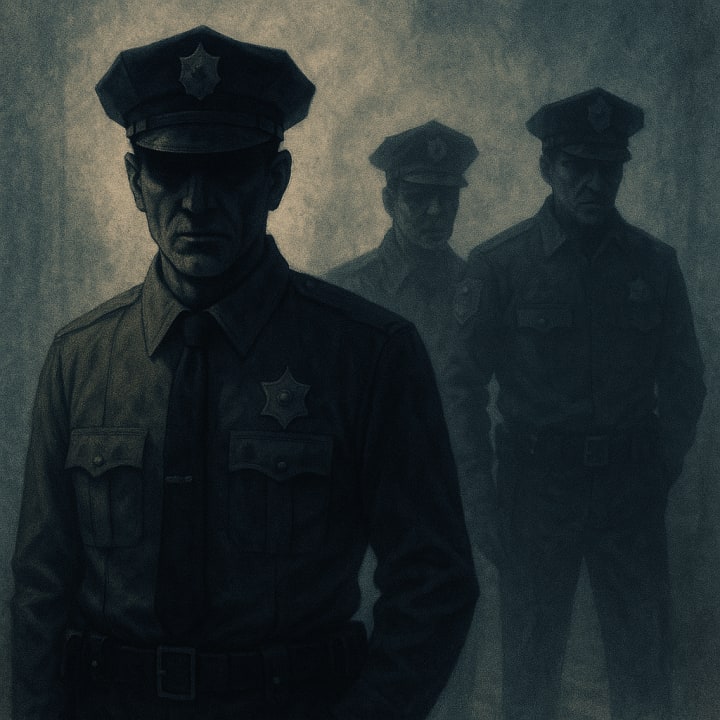
Then there’s the theory that mutters of Odén being a victim of the Cold War. In 1986, Sweden was in an uneven position between NATO and the Warsaw Pact, its neutral waters buzzing with unseen submarines. Just months earlier, a periscope had surfaced near Gotland, and mysterious tracks scarred the seabed.
Odén’s device was reportedly capable of unmasking those silent intruders. It was perhaps a prize too tempting to ignore? The United States and the Soviet Union both reportedly coveted it, according to the Swedish daily Svenska Dagbladet.
Odén had ties to the Swedish military and ABR Ekberg, and modes of contact with NASA, or was it NATO? These notions floated around him. He’d turned down invitations to Russia, too scared to go.
On the day of his disappearance, odd details swirl. He’d been seen with a mysterious woman on his boat, after an earlier outing with a man named Benny Andersson and two other women sparked some argument.
Who were they? Hours before, he’d told Robert H. his fears of abduction. When the boat was found, the police report listed missing items: the printer, the briefcase, the sensors.
Yet an Associated Press story quoted police saying there was no proof he’d even brought the gear aboard, which is a baffling and sinister contradiction.
Did someone board his boat that night, take him and his secrets, and leave it drifting as a ghost ship?
An unfortunate cold trail

For over a year, the Norrtälje police and SÄPO chased shadows. They questioned Angelica, who confirmed the briefcase’s importance; Gösta, who hinted at military stakes; Pia, who spoke of Odén’s paranoia; and Robert, who relayed his friend’s last words.
The lighthouse keeper, Mariana Brus, offered the final sighting. But the case was dormant. In 1987, Odén’s family had him declared dead, his body lost to the sea, or to history.
Was he a victim of his own ingenious, caught in a game bigger than he knew? Did he slip away by accident, or choose to vanish?
The Baltic keeps its silence, and Svante Odén’s story remains a sordid mystery that ushers disdain for geopolitics: the malapropos law enforcement actions, and overall governance regardless of the place on the map.
NB: You can check out some police investigation reports and other interesting documents on this blog post by Anders Jallai.
References
- Jallai, Anders. "Swede Working on Sub-Tracking Device Disappears." Blog post, translated from Swedish, originally published in Los Angeles Times, December 4, 1986. http://articles.latimes.com/1986-12-04/news/mn-1436_1_tracking-working-disappears.
- "Svante Odén (29 April 1924 – disappeared July 1986)." Biographical entry, sourced from Encyclopedia.com and related archives.
- "Svante Odén is known because of his efforts in the 1960s." Document on Odén’s acid rain research, referencing publications in Dagens Nyheter (October 24, 1967) and Ecology Community Bulletin No. 1 (1968).
- "Der Fall Svante Odén – Unfall, Selbstmord oder Opfer im Kalten Krieg?" Translated German document, including police interview excerpts compiled by Anders Jallai, originally posted on his blog, detailing witness statements and investigation details, 2016.
About the Creator
Keep reading
More stories from Shoaib Rahman and writers in Criminal and other communities.
The Forgotten Story of Germany's First Supermodel
Back in the 1930s and 1950s, when German fashion was at its peak, one woman stood out as an unwavering star. She defied conformism, broke new ground in the industry, all at a time when women just received the right to vote only several years ago, and her stunning looks and effortless charm landed her on the covers of magazines everywhere.
By Shoaib Rahman11 months ago in Viva
The True Fight against Crime Begins in the Human Conscience
Every society searches for ways to fight crime through laws, institutions, and systems of justice. Yet one essential truth is often overlooked: the real battle against crime begins long before a courtroom or a police investigation.
By A.Petrovskiabout 5 hours ago in Criminal
The Impossible Prison Break - Alcatraz Escape
FBI officers were stunned. This was a prison where even if a prisoner was left out in the open, escape seemed impossible. Yet somehow, right under the noses of the authorities, three inmates managed to break out. What was even more shocking was that for nearly 10 hours, the prison authorities had no idea they were missing.
By Imran Ali Shah3 days ago in Criminal
"Scream 7" (2026): Running out of Fresh Screams
This is the seventh time we’ve had a Ghostface crisis. Scream 7 is the latest edition of the Scream franchise. Sydney Prescott and her family are under attack by another anonymous killer dressed in a Ghostface costume. While having issues with her daughter, Tatum, they run from the bloody murders, trying to determine who is behind it all.
By Marielle Sabbag5 days ago in Horror




Comments
There are no comments for this story
Be the first to respond and start the conversation.