
The Forgotten Story of Germany's First Supermodel
Karin Stilke always saw herself as a "Sunday child," someone with a knack for good luck

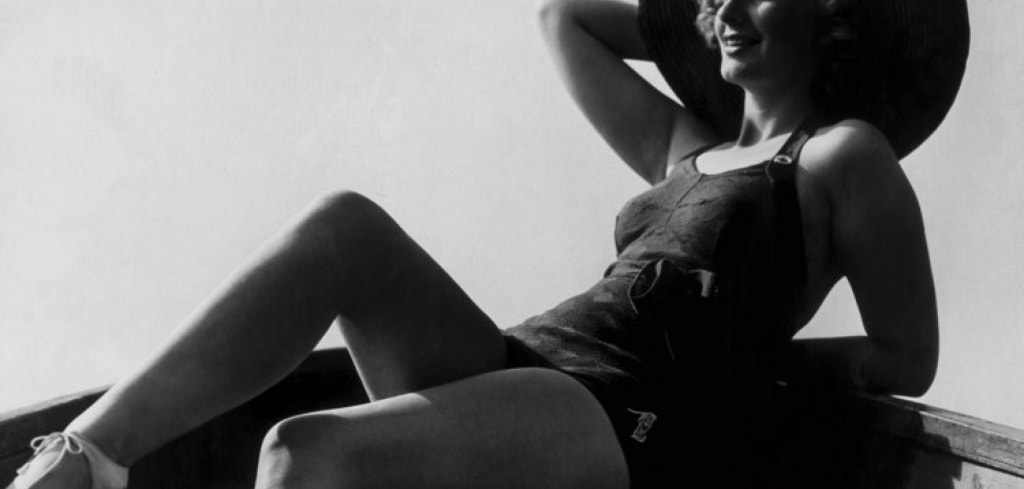
Back in the 1930s and 1950s, when German fashion was at its peak, one woman stood out as an unwavering star. She defied conformism, broke new ground in the industry, all at a time when women just received the right to vote only several years ago, and her stunning looks and effortless charm landed her on the covers of magazines everywhere.
People called her Germany’s first supermodel, and she got to work with the top photographers of her era. But over time, her story faded into the bygone.
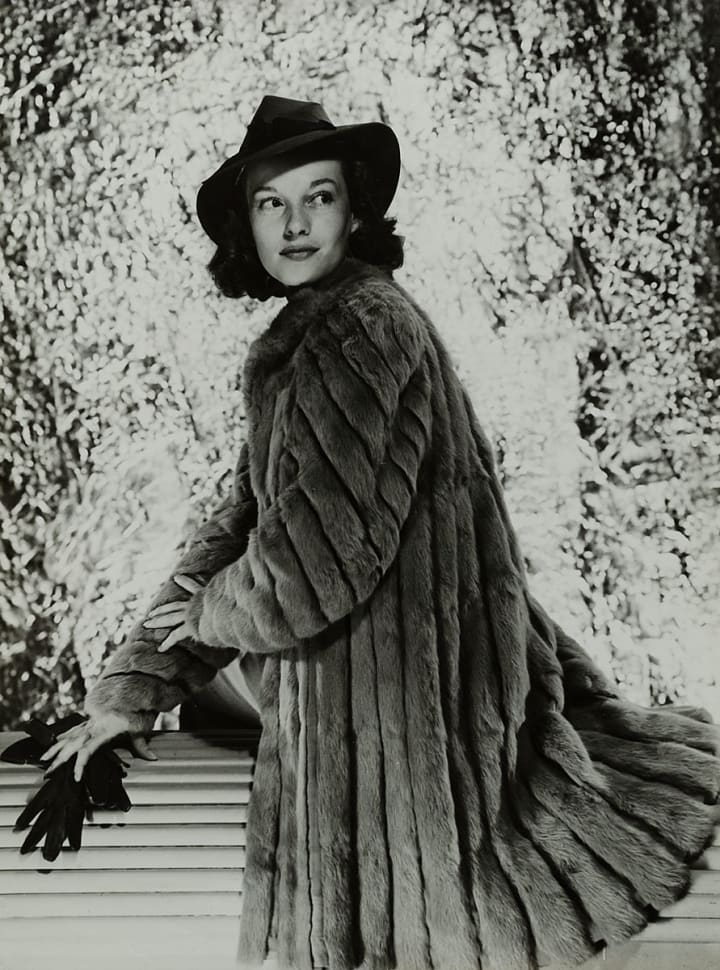
Karin Lahl, who’d later become Karin Stilke, came into the world on a Sunday in 1914 in Bremen, Germany. She always saw herself as a "Sunday child," someone with a knack for good luck. It had only a little to do with her being born during the chaos of the First World War. It was more about how she perceived her surroundings.
After finishing high school, Karin took off for Berlin to become an English interpreter. She moved in with her aunt, who was a notable name in interior design, dipping her toes into the city’s artsy crowd. Through her aunt, she met Karl Vollmöller, a writer who hosted a buzzing literary salon.
There, she hung out with many big names such the famous satirist Erich Kästner, novelist Erich Maria Remarque, theater and film actor Willy Fritsch, and the British-German actress and model Lilian Harvey.
Then, one day in the spring of 1936, the lightning hit the bottle for her. She was walking along the Kurfürstendamm (Champs-Élysées of Berlin, one of the most famous avenues in Berlin) when the epochal photographer Yva came up to her and asked if she could take some pictures. That moment kicked off her rise to fame, and the rest, as they say, is history.
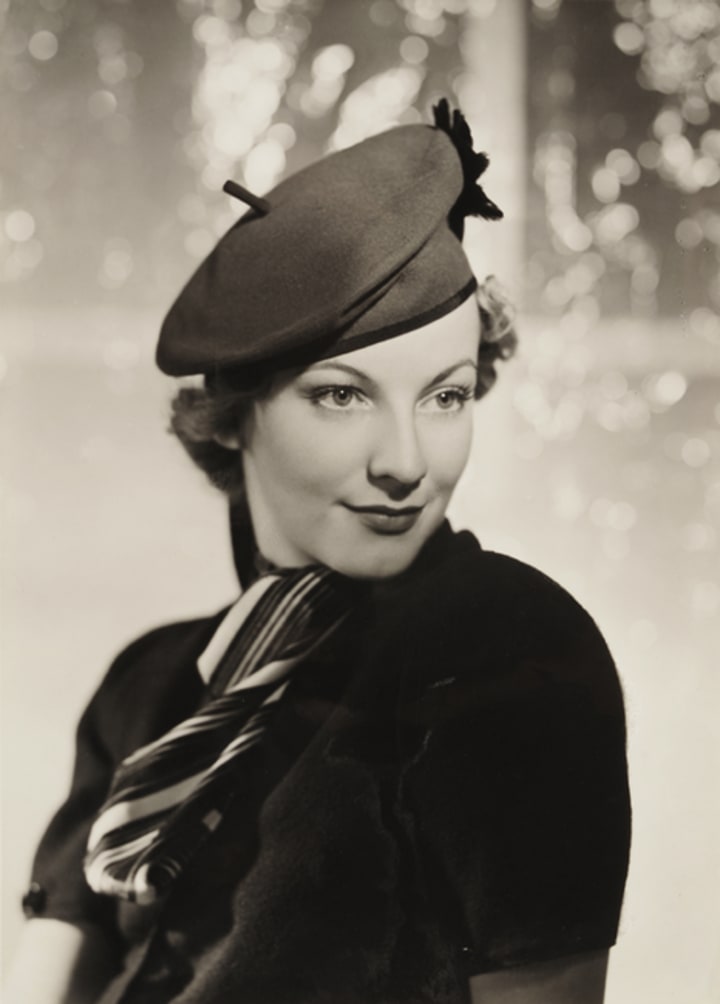
Yva (the professional pseudonym of Else Ernestine Neuländer-Simon), a largely celebrated name in photography at that time, saw something special in Karin. The young interpreter student nodded yes, thinking it’d be "lustig" (fun) to see herself in magazines. When those first shots appeared in German fashion magazine Elegante Welt a week later, Karin’s modeling career took off. Yva was unfortunately murdered by the Nazi army in 1942.
For more than 20 years, she stood in front of the cameras of the best in the business. German based Hungarian photographer Martin Munkácsi photographed her in New York for Harper’s Bazaar. She worked with several prominent Berlin based photographers, such as Ilse Flöter and Imre von Santho, among others.
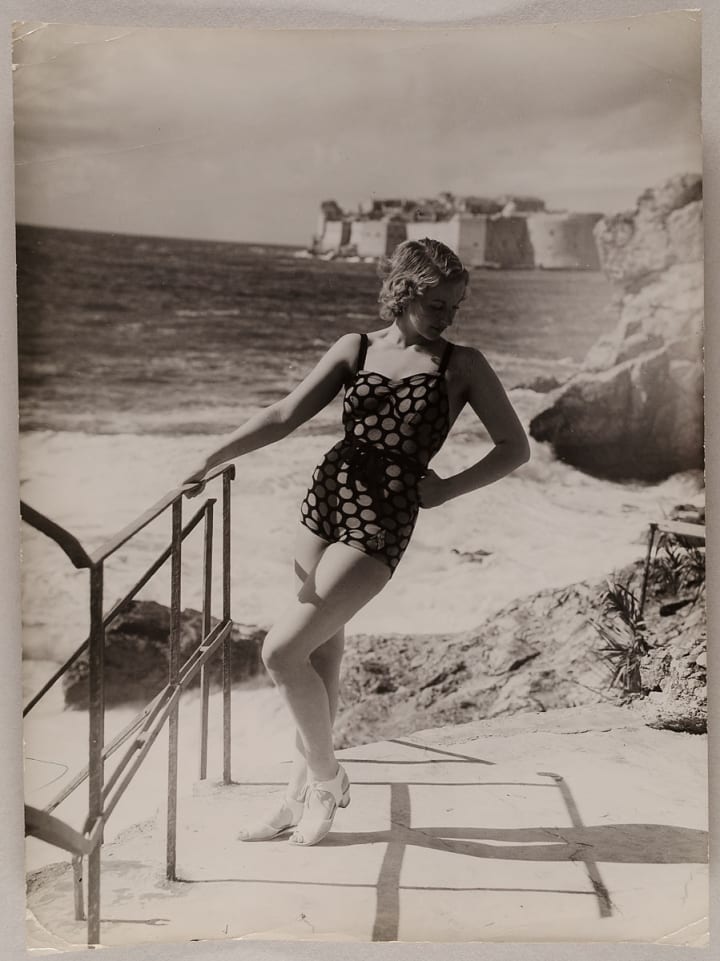
Her portraits were everywhere, gracing countless magazines. Karin was the first German female model to travel abroad for work. In 1937, she posed for swimsuit photos on the beaches of Ragusa, now Dubrovnik. "We shot swimsuits and had a blast," she said.
Back then, studios used to "fake exotic settings with a pile of sand dumped in the studio, a few palm trees added, and that was it." Hence, Karin's trips were a big deal.
Karin’s life wasn’t all about the spotlight, though. In 1938, she met Georg Stilke, a bookseller, and they married in 1941. He was her rock through the whirlwind of her career.
She also built deep friendships with stars like German-American actress Marlene Dietrich and stage actor Curd Jürgens. She met Dietrich in Venice in 1937 and spent days with her, forming a bond that mattered deeply. "Freundschaft und deren Pflege," she said (friendship and its care), was a big part of who she was.
Then there was Curd Jürgens, a young man just starting out, earning a living with fashion photos when they posed together. That shoot sparked a friendship that lasted until the end of his life.
Looking back, Karin had plenty to say about modeling then versus now.
It was pure fun. I was never aware of what a name I had as a photo model. There were no agencies, no castings; everything worked by word of mouth.
She and her peers pinned their own dresses and used theater makeup to get ready. "You did your own makeup and got cash in hand afterward," she explained.
Today’s glamour? She didn’t see it back then. Watching shows like Germany’s Next Top Model, she’d think, "terrible, those poor women". Would she do it again today? She said, "no, definitely not. Under today’s conditions, I wouldn’t want to. Only if it were like back then."
Even in her later years, modeling was in her blood. In her Hamburg apartment in Pöseldorf, she’d strike a pose, leg out, arm on her waist, chin resting on her hand, and suddenly she was that 1930s star again. She retired in 1957, but her story came alive again in 2007 with an exhibition at the Museum für Kunst und Gewerbe in Hamburg called Karin Stilke: Ich bin ein Sonntagskind (I am a Sunday child).
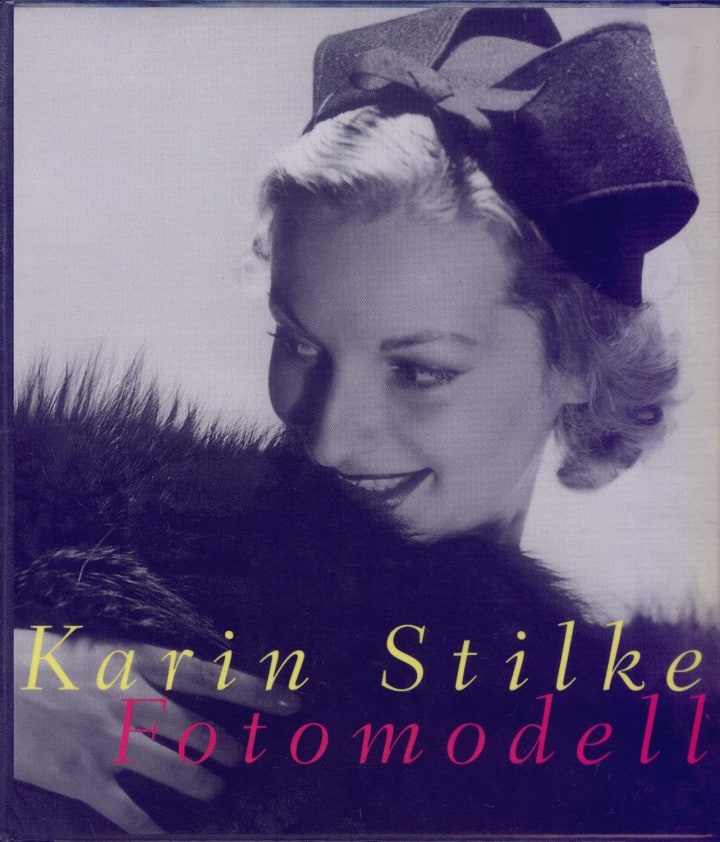
Her autobiography, titled "Karin Stilke - Fotomodell", notes her journey from 1936-1957.
Karin lived quietly in Hamburg until she passed away on May 2, 2013, at the glorious age of 99. She left behind a legacy as a pioneer, a woman who made modeling an art form in a simpler time.
Karin Stilke’s story reminds us of an era when a young woman from Bremen could step into the spotlight, not for fame or riches, but just because it was fun, and change the game along the way.
References
- Bertram, S. (2011, November 16). Fotomodell: Ein hübsches Sonntagskind erinnert sich. DIE WELT. https://www.welt.de/regionales/hamburg/article983127/Ein-huebsches-Sonntagskind-erinnert-sich.html
- Online, F. (2013, November 12). Karin Stilke: Erinnerungen eines Topmodels. FOCUS Online. https://web.archive.org/web/20220131095152/https://www.focus.de/kultur/kunst/karin-stilke_aid_64396.html
- STERN.de. (2017, September 25). Karin Stilke ist tot: Trauer um Deutschlands erstes Topmodel. stern.de. https://web.archive.org/web/20220131095152/https://www.stern.de/lifestyle/leute/karin-stilke-ist-tot-trauer-um-deutschlands-erstes-topmodel-3213558.html
About the Creator
Keep reading
More stories from Shoaib Rahman and writers in Viva and other communities.
The Abyss: James Cameron's Most Brilliant Failure
The Abyss was released in 1989 with a tremendous hype, with James Cameron's most ambitious film till then. Expectations for this film were high as Cameron had some good run with the success of Terminator and Aliens. This underwater sci-fi, set on an oil rig, stands out with great conviction among Cameron's extensive body of work, despite some minor narrative and cinematic shortcomings.
By Shoaib Rahman11 months ago in Geeks
The Timeless Sparkle: Why the Tennis Bracelet is 2026’s Most Essential Accessory
In the fast-paced world of fashion, trends come and go with the seasons. We’ve seen the rise and fall of chunky "statement" necklaces, the obsession with neon accessories, and the fleeting era of oversized logos. But amidst this noise, one piece of jewellery has remained a constant, shimmering symbol of sophistication: the diamond tennis bracelets.
By Mohd Kaisha day ago in Viva


Comments
There are no comments for this story
Be the first to respond and start the conversation.