
The Atlanta Child Murders
A Look at the Investigation into the Atlanta Murders of 1979-1981 and the Role of Forensic Science in Solving the Case


Introduction
The Atlanta Child Murders, also known as the Atlanta Murders of 1979-1981, refers to a series of killings that occurred in Atlanta, Georgia, between July 1979 and May 1981. During this time, at least 28 children, adolescents, and young adults were murdered, and many others were reported missing. The investigation into these crimes became one of the largest and most complex in U.S. history, involving thousands of law enforcement officials and experts.
In this article, we will explore how fiber evidence and eyewitness testimony played a crucial role in the investigation and eventual conviction of Wayne Williams, the man who was held responsible for many of the murders.
Background
The Atlanta Child Murders shocked the nation and attracted national attention due to the high number of victims and the vulnerable nature of the victims. Most of the victims were African American, and many came from low-income families. The murders also occurred during a time of heightened racial tensions in Atlanta, and the investigation into the crimes was criticized for being slow and inadequate.
The investigation into the murders began in July 1979, after the body of Edward Hope Smith, a 14-year-old boy, was found in a wooded area. Over the next two years, more bodies were discovered, and the investigation became increasingly complex. At the height of the investigation, over 100 FBI agents were involved, along with countless local police officers, forensic experts, and volunteers.
Fiber Evidence
One of the key pieces of evidence that ultimately led to the conviction of Wayne Williams was fiber evidence. Fiber evidence is a type of forensic evidence that involves the analysis of fibers found on a victim or at a crime scene. These fibers can come from clothing, carpets, upholstery, or other sources, and they can be used to link a suspect to a crime.
In the Atlanta Child Murders case, fiber evidence was collected from many of the victims and from the crime scenes. The fibers were analyzed using microscopy and other forensic techniques, and it was discovered that many of the fibers found on the victims matched fibers found in Williams' home and car. Specifically, fibers found on some of the victims were consistent with fibers from Williams' carpet and dog, which had a unique pattern.
The fiber evidence was crucial in linking Williams to the crimes, as it provided a physical link between him and the victims. It also helped to refute Williams' claims that he had never met any of the victims and had no connection to them.
Eyewitness Testimony
Another important aspect of the case was eyewitness testimony. Eyewitness testimony refers to the testimony of individuals who have witnessed a crime or event. In the Atlanta Child Murders case, eyewitness testimony was used to link Williams to some of the victims.
One of the most notable examples of eyewitness testimony in the case came from a woman named Mary Welcome. Welcome claimed that she had seen Williams near the location where one of the victims, Nathaniel Cater, was last seen. Welcome testified in court that she had seen Williams holding what appeared to be a body wrapped in a blanket and placing it into the trunk of his car. Welcome's testimony was critical in linking Williams to Cater's murder, and it helped to establish a pattern of behavior that was consistent with the other murders.
However, eyewitness testimony can be notoriously unreliable, as witnesses may have a biased or distorted memory of events. In Williams' case, the defense argued that Welcome's testimony was not credible, as she had a history of drug use and had been convicted of perjury in the past. Despite these arguments, the jury ultimately found Welcome's testimony to be convincing.
Other Evidence
In addition to fiber evidence and eyewitness testimony, there were other pieces of evidence that were used to link Williams to the murders. For example, Williams' car was seen in the vicinity of several of the crime scenes around the time of the murders. Furthermore, Williams' behavior and statements during the investigation were seen as suspicious by many, including law enforcement officials and witnesses.
Williams was known to have a fascination with police work and had even set up a police radio in his home. He also had a history of lying and exaggerating his accomplishments, which raised suspicions among investigators. Additionally, Williams was known to have claimed responsibility for the murders of two of the victims, but later recanted his statements.
The combination of fiber evidence, eyewitness testimony, and other pieces of evidence ultimately led to the arrest and conviction of Wayne Williams. In February 1982, Williams was found guilty of the murders of two adult victims, and he was later linked to 22 other murders through evidence and testimony. Although he was never convicted of all 28 murders, many believe that Williams was responsible for all of the killings.
Controversies and Criticisms
Despite the conviction of Wayne Williams, the Atlanta Child Murders investigation remains controversial and has been criticized for a variety of reasons. One of the main criticisms of the investigation is that it was racially biased. Most of the victims were African American, and many critics have argued that the investigation was slower and less thorough than it would have been if the victims had been white.
There were also concerns about the reliability of the fiber evidence used in the case. While fiber evidence is considered to be a valuable tool in forensic investigations, there have been cases where it has been called into question. In Williams' case, some critics have argued that the fiber evidence was circumstantial and not conclusive.
Additionally, there have been questions about the reliability of eyewitness testimony in the case. As previously mentioned, eyewitness testimony can be notoriously unreliable, and there have been cases where witnesses have misidentified suspects or provided false testimony. In Williams' case, some critics have argued that the eyewitness testimony was not reliable and may have been influenced by biases or other factors.
Conclusion
The Atlanta Child Murders was a tragic and complex case that shook the nation and highlighted the vulnerability of children and young adults. The investigation into the murders was one of the largest and most complex in U.S. history, involving thousands of law enforcement officials and experts.
Fiber evidence and eyewitness testimony played a crucial role in the investigation and eventual conviction of Wayne Williams, the man who was held responsible for many of the murders. However, the investigation and conviction of Williams remain controversial, with critics citing concerns about racial bias, the reliability of fiber evidence, and the accuracy of eyewitness testimony.
Despite these controversies, the Atlanta Child Murders case remains a significant moment in American history, highlighting the importance of forensic evidence and the need for thorough and unbiased investigations. The tragedy of the Atlanta Child Murders will never be forgotten, and it serves as a reminder of the importance of protecting and advocating for vulnerable members of our society.
About the Creator
Keerthana Thirumalairaj
An Independent Solitude girl, who recently found the interests in writings and converts Facts and imaginations into writings.
Keep reading
More stories from Keerthana Thirumalairaj and writers in Criminal and other communities.
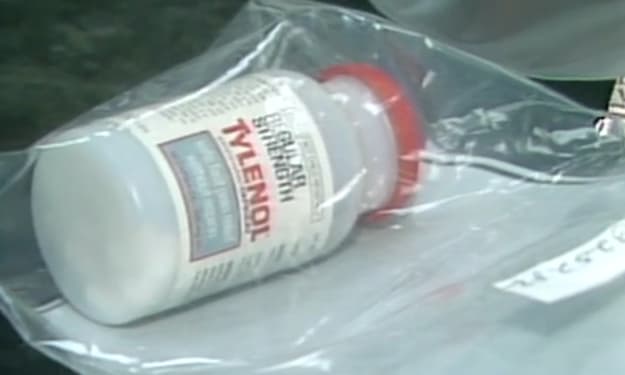
Unraveling the Mystery of the Tylenol Murders
On the morning of September 29, 1982, 12-year-old Mary Kellerman woke up complaining of a headache. Her parents, Adam and Teresa, gave her a Tylenol capsule, thinking it would ease her pain. Within hours, Mary was dead. Later that day, a young postal worker named Adam Janus also took a Tylenol capsule and died shortly thereafter. It was soon discovered that both capsules had been laced with cyanide. Thus began one of the most infamous murder cases in American history: the Tylenol murders.
By Keerthana Thirumalairaj3 years ago in Criminal
The Locked Room in Apartment 304
In the winter of 2022, a quiet residential building on the outskirts of a small Midwestern town became the center of one of the most disturbing criminal investigations the community had ever witnessed, a case that began with what seemed like an ordinary welfare check and quickly evolved into a mystery filled with fear, unanswered questions, and details that investigators still struggle to explain. The building itself was nothing remarkable, a four-story complex built in the late 1980s with narrow hallways, aging carpets, and the faint smell of cleaning chemicals that seemed permanently embedded in the walls, but what happened in apartment 304 would transform that otherwise forgettable structure into a place that residents refused to talk about even years later.
By The Curious Writer3 days ago in Criminal


Comments
There are no comments for this story
Be the first to respond and start the conversation.