
The O.J. Simpson Trial: A Landmark Case of Fame, Justice, and Media Frenzy
O.J. Simpson, once a celebrated football star and beloved public figure, faced a dramatic fall from grace with the brutal murders of his ex-wife, Nicole Brown Simpson, and her friend, Ron Goldman. This shocking crime and the ensuing trial transformed Simpson from an American hero to the central figure in one of the most sensational and divisive legal battles in history.

The O.J. Simpson trial remains one of the most iconic and polarizing criminal cases in American history. This case, often dubbed "The Trial of the Century," captivated the world with its dramatic courtroom proceedings, complex legal battles, and intense media coverage. The story of O.J. Simpson, a beloved football star turned murder suspect, offers a profound look into the intersections of fame, race, and justice in the United States. This article delves into the intricacies of the trial, the broader societal implications, and the enduring legacy it has left behind.
The Backdrop: A Fallen Hero
Orenthal James Simpson, known as O.J., was a household name long before the trial. Born on July 9, 1947, Simpson rose to fame as a star running back in the NFL, earning numerous accolades, including the Heisman Trophy in 1968. His charisma and athletic prowess translated seamlessly into a successful career in acting and broadcasting, making him a beloved figure in American pop culture.
However, Simpson's public image shattered on June 12, 1994, when his ex-wife, Nicole Brown Simpson, and her friend, Ron Goldman, were found brutally murdered outside Nicole's home in Brentwood, Los Angeles. The gruesome nature of the murders and Simpson's subsequent behavior, including a low-speed chase in a white Ford Bronco, fueled public and media fascination.
The Arrest and Charges
O.J. Simpson was arrested and charged with the murders of Nicole Brown Simpson and Ron Goldman. The prosecution, led by Marcia Clark and Christopher Darden, faced the daunting task of convicting a celebrity with immense public support and resources. Simpson's defense team, known as the "Dream Team," included high-profile attorneys such as Robert Shapiro, Johnnie Cochran, and F. Lee Bailey.
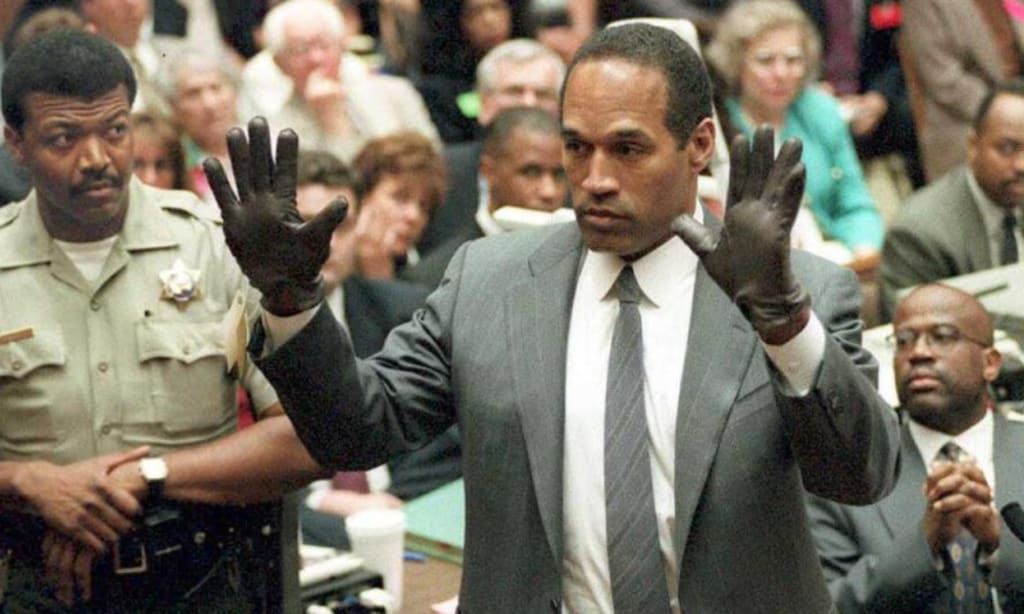
The trial officially began on January 24, 1995, and would become a marathon legal battle lasting more than eight months. It featured dramatic moments, including Simpson trying on the infamous gloves found at the crime scene, which appeared too tight, leading to Cochran's famous line, "If it doesn't fit, you must acquit."
Race, Fame, and Media Frenzy
The trial unfolded against a backdrop of racial tension in Los Angeles, which had recently experienced the Rodney King riots in 1992. The case's racial dynamics were magnified by the fact that Simpson, a black man, was accused of murdering his white ex-wife. This racial component added layers of complexity to the trial, influencing public opinion and the jury's perspectives.
Media coverage of the trial was unprecedented, turning it into a daily spectacle. Every twist and turn was broadcast live, with millions of Americans glued to their televisions. The media frenzy surrounding the case turned the courtroom into a stage, where lawyers, witnesses, and even the judge became celebrities in their own right. This constant exposure influenced public perception and underscored the growing role of media in shaping legal narratives.
The Verdict: A Nation Divided
On October 3, 1995, after deliberating for less than four hours, the jury delivered a not guilty verdict. The decision shocked the nation and exposed deep racial and social divides. Many African Americans celebrated the verdict as a victory against a legal system they perceived as biased, while others, particularly white Americans, were outraged, believing that Simpson's celebrity status had helped him evade justice.
The trial's outcome sparked debates about race, justice, and the influence of wealth and fame in the American legal system. It also highlighted the challenges of ensuring a fair trial in an era of pervasive media influence.
The Aftermath and Civil Trial
Although Simpson was acquitted in the criminal trial, the victims' families pursued justice through a civil lawsuit. In 1997, a civil court found Simpson liable for the wrongful deaths of Nicole Brown Simpson and Ron Goldman, awarding $33.5 million in damages to the victims' families. This verdict provided a measure of closure, although the financial compensation remains largely unpaid.
Legacy and Lessons
The O.J. Simpson trial left an indelible mark on American society and the legal landscape. It underscored the complexities of high-profile cases and the potential for media to shape public perception. The trial also highlighted the persistent issues of racial inequality and the role of socioeconomic status in accessing justice.
For the legal community, the trial emphasized the importance of forensic evidence and the challenges of managing public and media scrutiny. It also led to changes in jury selection processes and the handling of high-profile cases.
To conclude, the O.J. Simpson trial remains a powerful reflection on the intersections of fame, race, and justice in America. It serves as a reminder of the complexities and imperfections of the legal system and the enduring influence of media in shaping public narratives. Despite the controversy and division it caused, the trial also highlighted the resilience of the American judicial system and its capacity for self-examination and reform.
As we look back on the trial more than two decades later, its lessons continue to resonate, prompting ongoing discussions about justice, equality, and the role of media in our society. The story of O.J. Simpson, from celebrated athlete to infamous defendant, remains a poignant reminder of the human capacity for both greatness and fallibility, and the enduring quest for justice in an ever-evolving society.
About the Creator
Jane Doe
As a passionate storyteller, I captivate readers with engaging, well-researched articles across genres from criminality and poems to lifestyle and more....
Join me for insights, tips, and narratives that inform and entertain.
“Daddy’s Girl” Scandal Erupts: Arizona Courts Protect Kristyn Alcott Despite Mounting Evidence of Alleged Misconduct, Deception, and Child‑Safety Failures
Maricopa County, AZ — January 13, 2026 — ”Daddy’s Girl” Scandal Explodes: Arizona Family Courts Let Disgraced Supervisor Kristyn Alcott Keep Working Amid Credible Allegations of Perjury, Impersonation, Fraud, and Child Endangerment.
By Anna Justice7 days ago in Criminal
The Global Power Struggle in 2026: Why Are Tensions Rising Between the United States, Russia, China, and Venezuela?
f tensions between the United States and each of Russia, China, and Venezuela. These tensions cannot be understood as isolated events or temporary crises; rather, they are a direct reflection of a deeper struggle over global influence, strategic resources, and the future shape of the international order. At the center of this complex scene, Venezuela has emerged as a major flashpoint, while Russia and China play the role of supporters and counterweights to U.S. actions.
By America today 7 days ago in Criminal




Comments
There are no comments for this story
Be the first to respond and start the conversation.