
The Night the Town Forgot Her Name
Everyone said she disappeared. But I know what really happened—because I was there.

When I moved to Oakridge, I wanted quiet.
A fresh start. A small town where no one asked too many questions.
I found a little house near the edge of town — pale yellow, half hidden by trees, the kind of place where life moves slowly and everyone waves from their porch.
But Oakridge had a story no one wanted to tell.
A story about a girl who vanished one rainy night — and how no one ever spoke her name again.
Her name was Lila Grant.
And I was the last person who saw her alive.
It happened in 2016, the summer I first moved in. I was renting a small place across from the gas station. Lila worked there part-time, a quiet girl in her twenties with tired eyes and a smile that never fully reached them.
Every evening, I’d stop by for gas or groceries, and she’d be there — same routine, same faded blue uniform. We weren’t friends, but there was a familiarity that comes from seeing someone every day.
One evening, she handed me my receipt and said, “You’re not from here, right?”
I smiled. “Is it that obvious?”
She laughed softly. “Everyone in Oakridge already knows everyone else. You’re new blood.”
It was a small thing, but her tone — it sounded like she envied me for being new. For having the chance to leave if I wanted to.
A week later, I found her sitting outside the station after closing, smoking a cigarette, staring at the streetlights like she was waiting for something.
“You okay?” I asked.
She hesitated, then said quietly, “Do you believe people can disappear on purpose?”
I thought she meant emotionally — like losing yourself in routine.
But now I know she meant something else entirely.
The next morning, she didn’t show up for work.
Her boss assumed she quit.
Her neighbors thought she’d gone to visit family.
Her friends — if she had any — never said much.
The police asked a few questions, searched her small apartment, and found her phone, wallet, and car still there. Then, after a few weeks, the case went cold.
Just another missing person.
But Oakridge didn’t talk about missing people.
It just learned to forget them.
Months later, I still couldn’t let it go.
I started walking near the gas station at night, half-hoping I’d see her. Sometimes I swore I heard footsteps behind me, or the faint flicker of a lighter in the dark.
Then one night, I found something.
Behind the gas station, near the trash bins, was a piece of paper — old, damp, edges torn.
It was a receipt. Dated the night before she disappeared.
But what caught my eye wasn’t the date — it was the name written on the back, in pen:
“If you ever want to know what happened, ask Henry at the docks.”
I froze.
There were no docks in Oakridge. The nearest body of water was fifteen miles away — the abandoned freight docks at Miller’s Creek.
The next day, I drove there. The road was cracked, the air smelled like rust and river water. The docks were empty — except for an old man sitting near a shed, feeding birds.
“Henry?” I asked.
He looked up, eyes clouded but sharp. “Haven’t heard that name in a while. You a cop?”
I shook my head. “I’m… a friend of Lila’s.”
At that, his hand paused mid-motion.
He sighed, leaned back, and said, “She came here the night she disappeared. Said she needed to leave town. Said she had proof something bad was happening at that gas station.”
“Proof of what?” I asked.
He looked at me for a long time, then said, “Not my story to tell. But she wasn’t lying. Two men came that night. Told her to keep quiet or she’d end up ‘just another mystery.’ She ran. I told her to take the back road. I never saw her again.”
I felt my stomach drop.
“What happened to her?”
He shook his head slowly. “Check the creek. It keeps secrets better than people do.”
The police never found anything when I told them. They searched for days, dredged the shallow water, but nothing turned up. No body. No trace.
Eventually, they stopped calling.
Oakridge went back to normal — quiet, polite, pretending.
But I couldn’t.
A year later, a developer bought the old gas station and started tearing it down.
One afternoon, I drove by and saw the workers had found something in the foundation — a rusted metal box.
Inside were old photographs, receipts, and a flash drive.
The photos were of people I didn’t recognize — but one of them stopped me cold.
Lila, sitting on the curb, wearing that same blue uniform. Behind her, in the blurred background, were two men in suits — one of them the owner of the gas station.
I sent the box anonymously to the police.
A month later, they arrested him for running an illegal operation out of the back of his store — smuggling, money laundering, even trafficking.
It was all real.
Everything she’d been afraid of.
But they never found Lila.
Now, years later, when I drive through Oakridge, the gas station is gone. A new one stands in its place, bright lights and smiling faces, as if nothing ever happened.
But sometimes, late at night, when it rains, I swear I see her.
Standing under the streetlight, hair wet, blue uniform clinging to her, cigarette glowing faintly.
And I wonder — did she really vanish?
Or did she finally become what she wanted to be all along?
Someone the town could never forget.
About the Creator
Keep reading
More stories from Malaika Piolet and writers in Criminal and other communities.
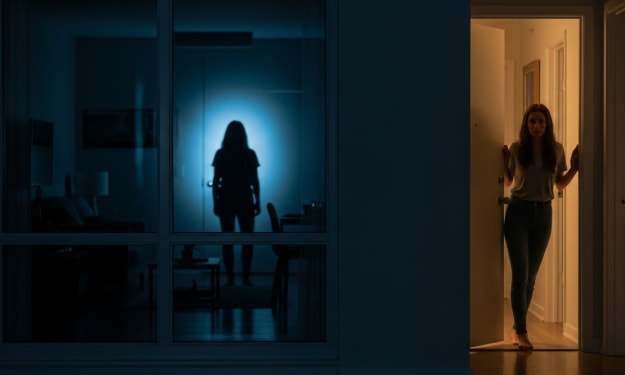
The Neighbor Who Never Forgot My Name
When I first moved into Maplewood Apartments, I didn’t know anyone. I was fresh out of college, broke, and just trying to survive the city. My new place was small, with cracked paint and creaky floors, but it was mine — and I was proud of it.
By Malaika Piolet5 months ago in Criminal
Elon Musk
I was born in South Africa, in a household where strictness and violence were the norm. While other kids played, I hid. I was beaten at school, ignored during recess, and once thrown down the stairs, ending up in a hospital bed. But these challenges didn't crush me. They made me stronger.
By Tariq Pathan 2 days ago in Criminal


Comments
There are no comments for this story
Be the first to respond and start the conversation.