
The Murder of Kitty Genovese: The Tragic Crime That Sparked a Revolution in Social Psychology
In March 1964, Kitty Genovese was brutally attacked and murdered near her apartment in Queens, New York. The horrifying crime shocked the nation not only for its brutality but also for the alleged apathy of the witnesses who did not intervene.

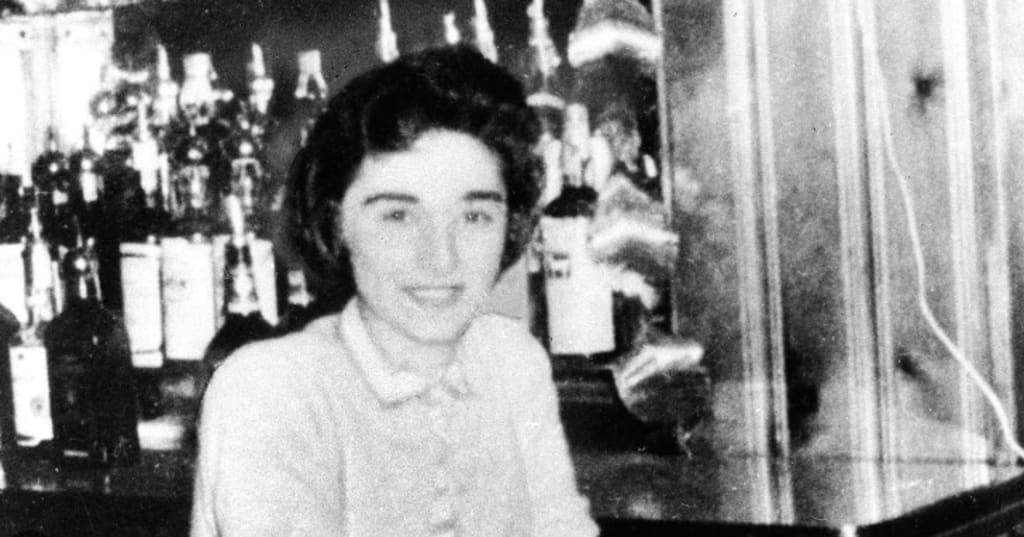
The murder of Kitty Genovese is a tragic tale that forever changed the way society understands human behavior and responsibility. This horrifying crime, which took place in 1964, became infamous not only for its brutality but also for the alleged apathy of the witnesses. Kitty's death led to significant advancements in social psychology, particularly the study of the "bystander effect." This article explores the details of Kitty Genovese's murder, the subsequent investigation, and the lasting impact her case has had on society.
The Night of Horror
On March 13, 1964, 28-year-old Kitty Genovese was returning to her apartment in Kew Gardens, Queens, after a late shift at the bar where she worked as a manager. As she parked her car and walked toward her building, she was attacked by Winston Moseley. Moseley, a stranger to Genovese, had been driving around looking for a victim.
Moseley stabbed Kitty twice in the back. Her screams for help echoed through the quiet neighborhood, waking several residents. Frightened and in pain, Kitty managed to stagger to the back of her building, where she collapsed. Moseley, initially scared off by a neighbor's shout, returned ten minutes later to continue his assault. He sexually assaulted Kitty, stole her money, and stabbed her multiple times, ultimately killing her. The attack lasted approximately 30 minutes.
The Response That Shocked the Nation
The New York Times reported that 38 witnesses had seen or heard parts of the attack but did nothing to intervene or call the police. This narrative of widespread apathy and indifference shocked the nation and became a symbol of societal decay. The idea that so many people could ignore a woman in desperate need led to public outrage and a reevaluation of community responsibility.
While later investigations and analyses suggested that the number of actual witnesses might have been lower and that the details reported were somewhat exaggerated, the case still highlighted significant issues in social behavior.
The Arrest and Trial
Winston Moseley was arrested six days after the murder, caught while attempting to rob a house. During his interrogation, he confessed not only to Kitty Genovese's murder but also to two other murders. His calm and detailed confession revealed a chilling portrait of a man with a twisted sense of control and pleasure derived from his crimes.
Moseley's trial began in June 1964. The jury took only seven hours to convict him of murder, and he was sentenced to death. His sentence was later commuted to life imprisonment after New York temporarily abolished the death penalty in 1967. Moseley remained in prison until his death in 2016.
The Birth of the Bystander Effect
The shocking details of Kitty Genovese's murder and the public's reaction to it led to groundbreaking research in social psychology. Psychologists John Darley and Bibb Latané were particularly intrigued by the case. They sought to understand why so many people failed to help Kitty. Their research led to the identification of the "bystander effect," a phenomenon where individuals are less likely to offer help to a victim when other people are present.
Darley and Latané conducted a series of experiments demonstrating that the likelihood of intervention decreases as the number of witnesses increases. This counterintuitive finding showed that the presence of others can create a diffusion of responsibility, where each person assumes someone else will take action.
A Legacy of Change
The murder of Kitty Genovese had a profound impact on society and the field of psychology. The case led to the development of emergency response protocols and encouraged the establishment of the 911 emergency system in the United States, making it easier for people to report crimes and seek help quickly.
Kitty's story also inspired countless individuals and organizations to promote community responsibility and active bystandership. Programs and campaigns were developed to educate the public on the importance of intervening in emergencies and supporting victims of violence.
To conclude the murder of Kitty Genovese is a heartbreaking chapter in American history, but it is also a story of transformation and learning. Kitty's tragic death shed light on the complexities of human behavior and sparked a revolution in social psychology. The identification of the bystander effect has led to greater awareness and proactive measures to prevent such indifference in future crises.
While the initial narrative of widespread apathy may have been exaggerated, the lessons learned from Kitty Genovese's case remain relevant today. Her legacy endures as a reminder of the importance of community, responsibility, and the power of individuals to make a difference. Through understanding and addressing the bystander effect, society can honor Kitty's memory by ensuring that her tragedy leads to greater empathy and action in times of need.
About the Creator
Jane Doe
As a passionate storyteller, I captivate readers with engaging, well-researched articles across genres from criminality and poems to lifestyle and more....
Join me for insights, tips, and narratives that inform and entertain.
Who Was The Lady in Room 2805?
Jennifer Fairgate, a friendly woman who spoke with a German accent, checked into Room 2805 at the Oslo Plaza Hotel in Norway on May 31, 1995. She arrived alone and paid for the room in cash. Hotel staff did not request identification.
By Criminal Matters3 days ago in Criminal
The Murder Sheet Podcast links TX killing To KY Cold Case
At a time when violent crimes are at historical lows (despite what the current administration claims), there are more true-crime podcasts, books, TV shows, and general interest in the genre. True-crime podcasts are extremely expensive to make because of research costs, public records requests, potential investigator fees, out-of-studio recording costs, and production expenses.
By Frank Racioppi5 days ago in Criminal



Comments
There are no comments for this story
Be the first to respond and start the conversation.