
The Murder of Farkhunda
A Tragic Event That Sparked Reforms in Afghanistan

Introduction
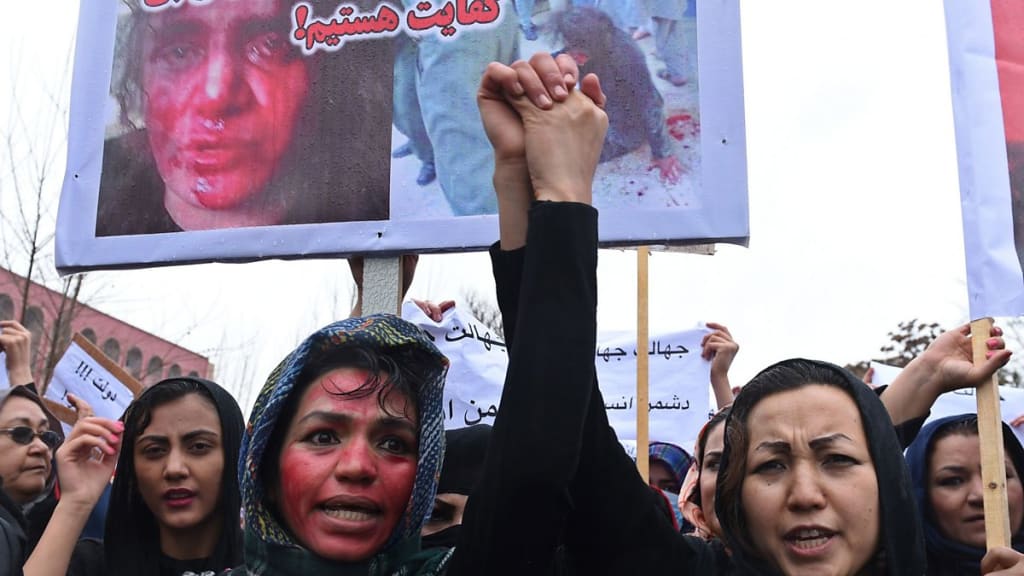
On March 19, 2015, a young Afghan woman named Farkhunda was brutally murdered in the streets of Kabul by a mob of men. The reason for her killing was a false accusation of burning a Quran, which she did not do. The incident sparked outrage and protests across Afghanistan, leading to calls for justice and accountability for Farkhunda's murder. However, many questions remain about how the mob was able to gather and carry out the attack with impunity.
Farkhunda's Life
Farkhunda was a 27-year-old religious scholar who lived in Kabul. She was a devout Muslim who studied the Quran and had a deep understanding of Islamic teachings. She often visited mosques to teach other women about Islam and was respected in her community for her knowledge and piety. According to her family and friends, she was a kind and gentle person who always helped others.
The Incident
On the day of her murder, Farkhunda was on her way to a local shrine to pray when she was approached by a man who accused her of burning a Quran. This accusation was completely false, but it quickly spread through the crowd that had gathered around them. The man who accused her of burning the Quran was a local vendor who sold amulets and charms, and he was upset because Farkhunda had criticized him for selling items that she believed were un-Islamic.
The crowd quickly turned on Farkhunda, and she was beaten with sticks, stones, and iron bars. She tried to defend herself and pleaded with the crowd to listen to her, but they continued to attack her. The mob eventually killed her and then set her body on fire. Her body was then thrown into the Kabul River.
The Aftermath
The murder of Farkhunda sparked outrage across Afghanistan and around the world. Many people were shocked and disgusted by the brutality of the attack and the fact that it was carried out in broad daylight in the middle of a busy street. The incident also raised questions about the role of religious leaders in Afghanistan and their responsibility to promote tolerance and understanding.
In the days following Farkhunda's murder, protests broke out across the country, with people demanding justice for her and her family. The Afghan government promised to investigate the incident and bring those responsible to justice. However, many people were skeptical that justice would be served, given the long history of impunity for crimes committed by powerful individuals and groups in Afghanistan.
Investigation and Trial
The Afghan government appointed a special prosecutor to investigate Farkhunda's murder, and several suspects were arrested in connection with the incident. The investigation revealed that the accusation of burning a Quran was completely false, and that Farkhunda had not committed any crime. The men who had attacked her had done so out of anger and a desire for revenge.
In May 2015, a trial was held for the 49 suspects who had been arrested in connection with Farkhunda's murder. The trial was held in a closed court, with no media or public present. The court sentenced four men to death, eight to 16 years in prison, and 18 were acquitted. The remaining 19 were sentenced to between three and five years in prison.
Criticism and Controversy
Despite the convictions, many people were critical of the trial and the sentences handed down to the suspects. Some felt that the sentences were too lenient, given the severity of the crime. Others felt that the trial was not transparent enough, with no media or public present. Some also criticized the fact that only a small number of the suspects were convicted, and that many of those who were acquitted were still free and could pose a danger to society.
There were also concerns about the role of the police and government officials in the incident. Many felt that the police had not done enough to protect Farkhunda and had even joined in the attack. There were also allegations that government officials had played a role in inciting the mob and spreading the false accusation against Farkhunda.
Reforms and Change
The murder of Farkhunda led to calls for reforms in Afghanistan, particularly in the areas of justice and women's rights. The incident highlighted the need for a fair and transparent justice system that holds individuals accountable for their crimes, regardless of their status or connections. It also highlighted the need for greater protection for women in Afghanistan, who continue to face discrimination and violence.
In response to the incident, the Afghan government introduced a number of reforms aimed at addressing these issues. These included the establishment of a new investigative unit to deal with crimes against women, the introduction of new laws aimed at protecting women's rights, and the training of police officers and judges on issues related to gender and violence against women.
Impact and Legacy
The murder of Farkhunda had a profound impact on Afghanistan and the wider world. It sparked outrage and protests across the country, and brought attention to the issue of violence against women in Afghanistan. It also highlighted the need for reforms in the country's justice system and for greater protection for women's rights.
The incident also served as a reminder of the dangers faced by women who speak out against injustice and inequality in Afghanistan. Farkhunda's courage in speaking out against un-Islamic practices cost her life, but her legacy lives on through the reforms and changes that have been introduced in the wake of her murder.
Conclusion
The murder of Farkhunda was a tragic and senseless act of violence that shocked the world. It highlighted the deep-rooted problems of intolerance and violence in Afghanistan, and the urgent need for reforms in the country's justice system and the protection of women's rights. While some progress has been made in the years since her murder, much more work remains to be done to ensure that justice is served and that women in Afghanistan can live free from violence and discrimination.
About the Creator
Keerthana Thirumalairaj
An Independent Solitude girl, who recently found the interests in writings and converts Facts and imaginations into writings.
Keep reading
More stories from Keerthana Thirumalairaj and writers in Criminal and other communities.
The Kunduz Hospital Bombing
Introduction In October 2015, a hospital operated by the medical charity Doctors Without Borders (MSF) in Kunduz, Afghanistan was bombed by United States (US) forces. The attack killed 42 people, including patients and medical staff, and injured many others. The US military initially claimed that the bombing was a mistake, but subsequent investigations suggested that it may have been a deliberate act. The Kunduz hospital bombing was a tragic event that highlighted the difficulties and dangers of providing medical care in conflict zones, as well as the need for accountability and transparency in military operations.
By Keerthana Thirumalairaj3 years ago in Criminal
Ken Childs and the Shadow Network Behind Celebrity Surveillance
Hollywood is no stranger to intrigue. Behind the red carpets, blockbuster premieres, and glamorous headlines lies a parallel world where privacy is fragile and information can be extremely valuable. Over the years, celebrities have faced stalkers, hackers, and fraud schemes designed to exploit their wealth and visibility. Recently, reports circulating online have drawn attention to a controversial narrative involving private investigator Ken Childs and allegations that place him near the center of a disturbing story about celebrity surveillance.
By Shane Smith4 days ago in Criminal



Comments
There are no comments for this story
Be the first to respond and start the conversation.