
The Kunduz Hospital Bombing
A Tragic Event and Its Aftermath

Introduction
In October 2015, a hospital operated by the medical charity Doctors Without Borders (MSF) in Kunduz, Afghanistan was bombed by United States (US) forces. The attack killed 42 people, including patients and medical staff, and injured many others. The US military initially claimed that the bombing was a mistake, but subsequent investigations suggested that it may have been a deliberate act. The Kunduz hospital bombing was a tragic event that highlighted the difficulties and dangers of providing medical care in conflict zones, as well as the need for accountability and transparency in military operations.
Background
Kunduz is a city in northern Afghanistan that has been the site of intense fighting between Taliban militants and government forces since 2011. In September 2015, the Taliban launched a major offensive to capture the city, and by early October, they had taken control of most of it. The Afghan government, with the support of the US military, launched a counter-offensive to retake the city, which resulted in heavy fighting and significant civilian casualties.
MSF has been working in Kunduz since 2011, providing medical care to the local population and those affected by the conflict. The organization's hospital in Kunduz was the only facility of its kind in the region, and it provided critical care to patients who would otherwise have had to travel long distances to receive treatment.
The Bombing
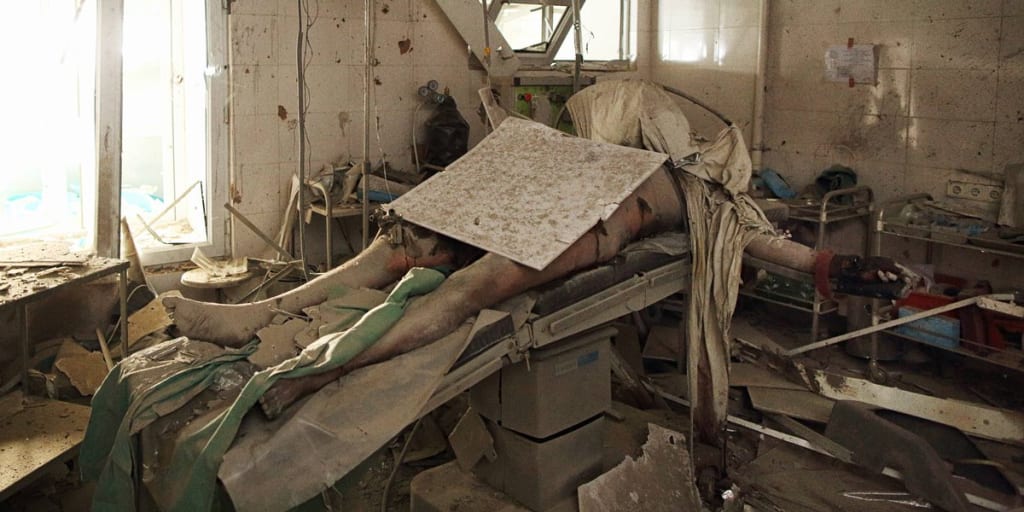
On the night of October 3, 2015, the US military carried out an airstrike on the MSF hospital in Kunduz. The attack lasted for over an hour and resulted in extensive damage to the hospital, including the destruction of the operating theater, intensive care unit, and emergency rooms. The attack killed 42 people, including 14 MSF staff members, 24 patients, and four caretakers. Many others were injured, and the hospital was forced to suspend its operations.
The US military initially claimed that the bombing was a mistake, and that the hospital had been targeted by accident. The military released a statement that said the strike had been carried out "against individuals threatening the force," and that "the location was mistakenly struck." The military also claimed that the hospital had not been on the list of targets provided to the pilots, and that the attack had been called in by Afghan forces who were under fire from Taliban militants.
However, this explanation was met with skepticism from MSF and other organizations, who pointed out that the hospital had been clearly marked as a medical facility and that its coordinates had been shared with the US military and other parties to the conflict. MSF also stated that it had received no warning before the attack and that there had been no fighting in the immediate vicinity of the hospital at the time of the strike.
Investigations
In the aftermath of the bombing, several investigations were launched to determine what had happened and whether any laws or rules of engagement had been violated. The US military conducted its own investigation, as did the Afghan government, and MSF also called for an independent inquiry.
The US military's investigation concluded that the bombing had been caused by "human error," and that several factors had contributed to the tragedy. The investigation found that the pilots had been provided with inaccurate information about the location of the hospital and that they had mistaken it for a nearby building that was occupied by Taliban militants. The investigation also found that the communication between the aircrew and ground forces had been confused and that the aircrew had not followed proper procedures.
The Afghan government's investigation reached similar conclusions, and it also found that Taliban militants had been using the hospital as a base of operations, which may have contributed to the confusion.
MSF rejected the findings of these investigations and called for an independent international investigation. The organization argued that the attack had been a war crime and that the US military and Afghan government had violated international humanitarian law by attacking a medical facility.
In March 2016, the US military released a summary of its investigation, which confirmed that the bombing had been caused by "human errors, compounded by process and equipment failures." The report also acknowledged that the hospital had been "mistakenly struck," and that the attack was a "gross error." The report did not, however, assign blame to any individuals or hold anyone accountable for the bombing.
MSF continued to call for an independent investigation, and in December 2016, the International Humanitarian Fact-Finding Commission (IHFFC) announced that it would conduct an investigation into the bombing. The IHFFC is an independent body that was established under the Geneva Conventions to investigate alleged violations of international humanitarian law.
The IHFFC's investigation concluded that the bombing had been a "grave violation" of international humanitarian law, and that the attack had been carried out with "wilful intent." The report stated that the US military had disregarded the protection afforded to hospitals under international law, and that the attack had caused "untold suffering and lasting damage."
The Aftermath
The Kunduz hospital bombing was a tragic event that had a profound impact on MSF, the local community, and the wider humanitarian community. The attack was widely condemned by governments, humanitarian organizations, and the public, and it raised serious questions about the conduct of military operations in conflict zones.
MSF was forced to suspend its operations in Kunduz following the bombing, and the organization struggled to provide medical care to the local population without the support of its hospital. The attack also had a significant impact on the mental health of MSF staff members, many of whom witnessed the bombing and lost friends and colleagues in the attack.
The Kunduz hospital bombing also sparked a debate about accountability and transparency in military operations. Many criticized the US military for its initial response to the attack and for its failure to hold anyone accountable for the bombing. The IHFFC's investigation highlighted the need for independent and impartial investigations into alleged violations of international humanitarian law.
Conclusion
The Kunduz hospital bombing was a tragic event that highlighted the dangers and difficulties of providing medical care in conflict zones. The attack killed 42 people, including patients and medical staff, and it caused extensive damage to the hospital and the wider community. The US military initially claimed that the bombing was a mistake, but subsequent investigations suggested that it may have been a deliberate act.
The Kunduz hospital bombing raised serious questions about the conduct of military operations in conflict zones and about the accountability and transparency of military forces. The attack sparked a debate about the need for independent and impartial investigations into alleged violations of international humanitarian law, and it highlighted the importance of protecting medical facilities and personnel in conflict zones.
The Kunduz hospital bombing was a tragic reminder of the human cost of war, and it serves as a call to action for governments, humanitarian organizations, and the public to work together to ensure that medical facilities and personnel are protected and that those responsible for violations of international humanitarian law are held accountable for their actions.
About the Creator
Keerthana Thirumalairaj
An Independent Solitude girl, who recently found the interests in writings and converts Facts and imaginations into writings.
Keep reading
More stories from Keerthana Thirumalairaj and writers in Criminal and other communities.
he Destruction and Restoration of the Buddhas of Bamiyan
Introduction The Buddhas of Bamiyan were two giant statues of Buddha that stood in the Bamiyan Valley of Afghanistan for over 1,500 years before they were destroyed in 2001. The statues were a major tourist attraction and a symbol of Afghanistan's rich cultural heritage. However, in March 2001, the Taliban, a fundamentalist Islamic group that controlled much of Afghanistan at the time, ordered the destruction of the statues. The reasons for the destruction are still debated, but it is believed to have been a religiously motivated act aimed at erasing Afghanistan's pre-Islamic history.
By Keerthana Thirumalairaj3 years ago in Criminal
Push To Prevent Catapults Being Bought By Children
MP’s have been warned to put new legislation in place that will help to close a loophole in the law which allows people including children to legally buy weapons which is capable of killing wildlife. The alert was issued during a briefing in parliament which set out growing evidence that catapults were being misused against animals and to damage other people’s private property. The Naturewatch Foundation who hosted the session expanded on their message that at the moment there is a completely unregulated system where people of any age can buy weapons and there are no meaningful controls on sale or power.
By Ashish Prabhu4 days ago in Criminal


Comments
There are no comments for this story
Be the first to respond and start the conversation.