
he Destruction and Restoration of the Buddhas of Bamiyan
A Tragic Loss and Ongoing Efforts

Introduction
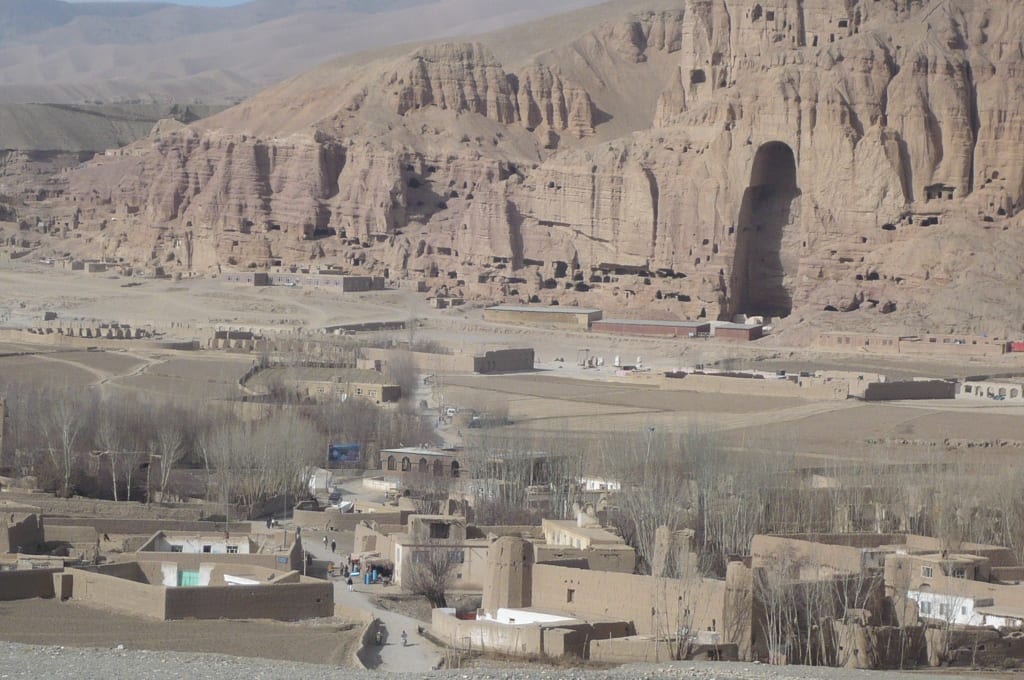
The Buddhas of Bamiyan were two giant statues of Buddha that stood in the Bamiyan Valley of Afghanistan for over 1,500 years before they were destroyed in 2001. The statues were a major tourist attraction and a symbol of Afghanistan's rich cultural heritage. However, in March 2001, the Taliban, a fundamentalist Islamic group that controlled much of Afghanistan at the time, ordered the destruction of the statues. The reasons for the destruction are still debated, but it is believed to have been a religiously motivated act aimed at erasing Afghanistan's pre-Islamic history.
History of the Buddhas of Bamiyan
The Buddhas of Bamiyan were built in the 6th century AD, during the Kushan Empire. They were carved into the side of a cliff in the Bamiyan Valley, which is located in central Afghanistan, along the Silk Road. The statues were created to represent the Buddha in his standing and reclining positions. The larger statue was 175 feet tall, while the smaller statue was 115 feet tall. The statues were made of mud and straw, and then covered in plaster and painted.
For centuries, the Buddhas of Bamiyan were a major Buddhist pilgrimage site and a cultural icon in Afghanistan. The statues survived many wars and invasions over the centuries, including the invasion of Genghis Khan and the Soviet invasion of Afghanistan in the 1980s.
However, the Taliban, who took control of Afghanistan in 1996, saw the statues as symbols of idolatry, and began a campaign to destroy them. In 2001, the Taliban leader, Mullah Omar, ordered the destruction of the statues. Despite widespread international protests and pleas for their preservation, the Taliban destroyed the statues with explosives and artillery.
Reasons for the Destruction
The reasons for the destruction of the Buddhas of Bamiyan are still debated. Some suggest that it was a religiously motivated act, aimed at erasing Afghanistan's pre-Islamic history. The Taliban saw the statues as symbols of idolatry, and believed that their destruction was necessary to purify Islam in Afghanistan.
Others argue that the destruction was a political act, aimed at gaining international attention and support for the Taliban's cause. The Taliban were facing international isolation and sanctions at the time, and the destruction of the Buddhas may have been an attempt to gain sympathy from Muslim countries.
Still, others suggest that the destruction was a result of the Taliban's ideology of iconoclasm, which is the rejection of religious or cultural icons. The Taliban believed that statues and images were a form of idolatry and should be destroyed.
Impact of the Destruction
The destruction of the Buddhas of Bamiyan was a major loss for Afghanistan and the world. The statues were not only cultural and historical icons, but also major tourist attractions that brought in revenue for the region. The destruction of the statues also had a significant impact on the local economy and tourism industry.
The destruction of the Buddhas was widely condemned by the international community. UNESCO, the United Nations cultural agency, called the destruction a "crime against culture". The destruction of the statues also led to a renewed interest in the preservation of cultural heritage sites around the world.
Efforts to Restore the Buddhas
Since their destruction in 2001, there have been numerous efforts to restore the Buddhas of Bamiyan. In 2002, a group of Japanese researchers used 3D technology to create a digital model of the Buddhas. The digital model has been used to create replicas of the statues and to plan for their restoration.
In 2015, a Chinese artist, Zhang Huan, created a 3D-printed replica of the smaller Buddha statue. The replica was installed in the Bamiyan Valley as a symbol of hope for the future restoration of the original statues.
In addition to these efforts, there have been discussions about rebuilding the Buddhas using the original materials and techniques. However, the Taliban's destruction of the statues has made it difficult to assess the extent of the damage and to determine the feasibility of their restoration.
In 2018, a group of experts from UNESCO, the Afghan government, and other organizations met in Paris to discuss the restoration of the Buddhas of Bamiyan. The experts agreed that any restoration efforts would need to take into account the historical and cultural significance of the statues, as well as the safety of the local community and the environment.
Conclusion
The destruction of the Buddhas of Bamiyan was a tragic loss for Afghanistan and the world. The statues were not only cultural and historical icons, but also major tourist attractions that brought in revenue for the region. The reasons for their destruction are still debated, but it is believed to have been a religiously motivated act aimed at erasing Afghanistan's pre-Islamic history.
Efforts to restore the Buddhas have been ongoing since their destruction in 2001, but the feasibility of their restoration remains uncertain. The restoration of the Buddhas would not only be a symbol of Afghanistan's rich cultural heritage but also a message of hope and reconciliation for the future.
About the Creator
Keerthana Thirumalairaj
An Independent Solitude girl, who recently found the interests in writings and converts Facts and imaginations into writings.
Keep reading
More stories from Keerthana Thirumalairaj and writers in Criminal and other communities.
The Unabomber: America's Longest Domestic Terrorist Campaign
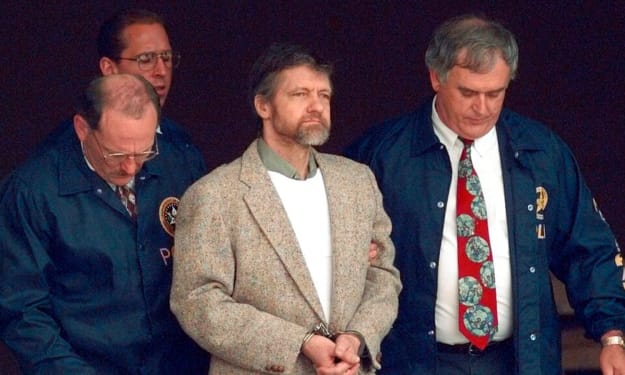
Introduction Theodore Kaczynski, better known as the Unabomber, terrorized the United States with a 17-year bombing spree that targeted universities, airlines, and computer stores. His bombs killed three people and injured 23 others. It was only through the publication of his manifesto, and the subsequent identification and arrest of its author, that the Unabomber's reign of terror was brought to an end.
By Keerthana Thirumalairaj3 years ago in Criminal
Oklahoma Murder for Hire
Murder for hire in 1988 must have been a real monster of a time to find for a woman who was bored, and just lazy. A woman that claimed she was abused, knew how to work a young man up, back in those days it was much easier to find “a knight in shining armor”. Men all over wanted to be one, no man how scuzzy they really were.
By Cassie Moore6 days ago in Criminal
In Cold Blood: Anatomy of a True Crime Classic
The True Crime Reader: Truman Capote’s 'In Cold Blood' Welcome to The True Crime Reader, the podcast where literature meets real life—and the line between truth and narrative blurs. I’m your host, and today we’re journeying into the heart of rural 1950s America to examine Truman Capote’s genre-defining work, In Cold Blood. This episode, we’ll peel back the layers of a book that didn’t just recount a murder—it transformed journalism, challenged the ethics of true crime, and left a profound mark on how we tell stories about violence, psychology, and the American Dream.
By Kristen Barenthaler5 days ago in Criminal
The Devil's Cut
“Comrade, finally you’re awake.” The voice was smooth, sensual. A flickering incandescent bar was all that lit the white, sterile room. All Vladimir remembered was everything going black. He tried to move his arms and found them strapped to the gurney.
By Matthew J. Fromm6 days ago in Fiction


Comments
There are no comments for this story
Be the first to respond and start the conversation.