
The Horrific Terrorist Attack That Brought Down a Plane over Lockerbie
Four days before Christmas, a small town was devastated. What happened would go on to devastate the world.

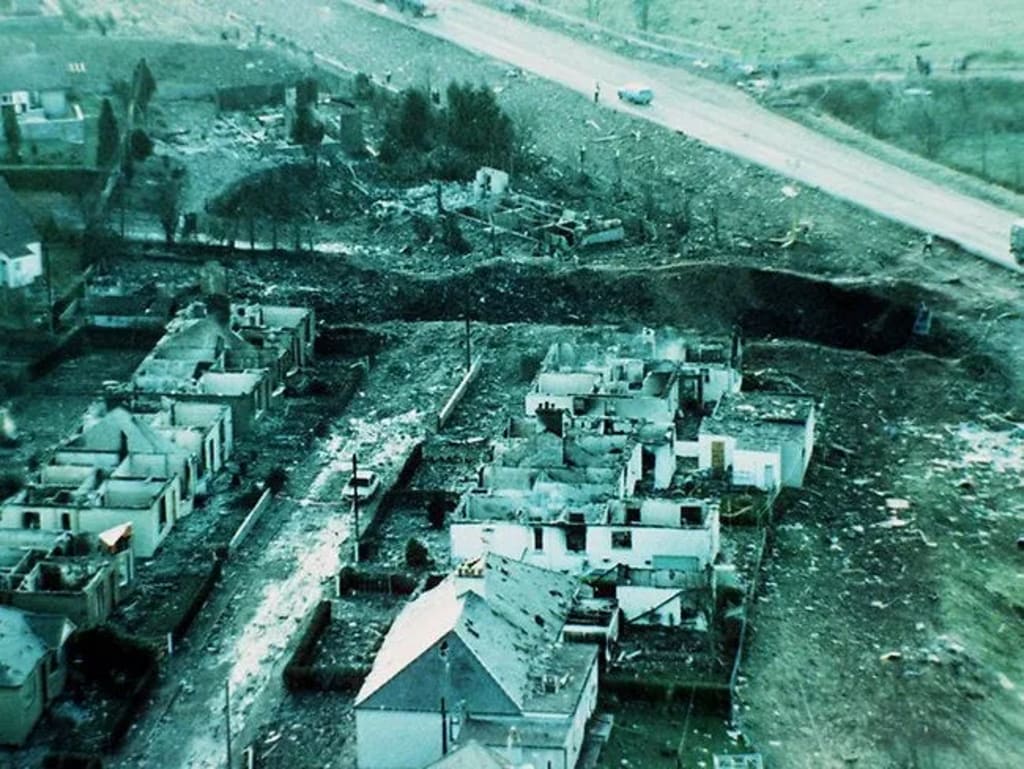
Just before Christmas in 1988, the United Kingdom was the victim of one of the deadliest terror attacks in history. A bomb planted on Pan Am Flight 103 exploded over Lockerbie, Scotland, killing everyone on board and several on the ground.
Three hundred tons of plane debris was spread over 845 square miles. The plane carried twenty-one nationalities; however, most passengers were American citizens resulting in a joint investigation between Scottish officials and the FBI.
Although the suspects were quickly identified, the case is still active with far-reaching implications. To this day, the case is still being investigated by Scottish and American teams.
Pan Am Flight 103
The Boeing 747 took off from London, flying to New York City; thirty-eight minutes later, the plane had reached 31,000 feet when it exploded. All 253 passengers and sixteen staff on board were killed.
The debris that rained down on Lockerbie killed another eleven people.
Initially, most thought this was a tragic accident, but as the evidence was collected, it became clear that someone had planted a bomb on board.
Evidence suggests that whilst on the flight, the passengers were plunged into darkness as the forward fuselage began to disintegrate and the nose of the plane tore off. Cold will have rushed into the passengers.
Some onboard were sucked into the engine, whilst others were propelled into the night sky. The majority, however, were trapped in two large sections of the plane that fell to Earth. It is believed sixty percent of passengers were still alive. How many were conscious as the plane hit the ground is unknown.
Lockerbie
On the ground, the small town in the South of Scotland was enjoying Christmas festivities when they heard a terrible roar, and the ground started to shake around them.
The plane's impact hitting the ground measured 1.6 on the Richter scale. At this point, bodies began to fall from the sky, and the plane's remnants followed.
The majority of the damage on the ground came from the middle part of the fuselage and wings that fell on twenty-one homes on Sherwood Crescent, killing all eleven victims from the town.
Rescue teams arrived to find bodies littered on the ground and the residents wandering around in disbelief. Fires had broken out across the town, and a 150-foot hole had been left.
George Stubbs, the senior policeman with the local constabulary, stated that the heat was so terrific he saw wrought iron gates melt.
Terrorism
The investigation discovered a complex plot involving Libyan intelligence agents seeking revenge.
The teams from Scotland and the FBI had to study 10,000 pieces of evidence from a search area that spanned hundreds of miles.
In July 1990, the joint teams informed the media that they had come to the grim conclusion that a bomb had taken down Pan Am Flight 103.
The explosion had come from the forward cargo hold where a brown Samsonite suitcase that contained a radio cassette holder had been a Semtex bomb. Around the suitcase, the team found dozens of scraps of clothing with traces of explosives from the Malta Trading Company.
Further investigation pinpointed that the suitcase had been transferred from Malta to Pan Am Flight 103. They then identified a Maltese store where the clothing had been purchased.
The shop owner remembered selling the clothing to a Libyan. He said the man stuck out in his memory because he did not care what size or price the clothing was.
Libyan Terrorists
The Libyan was identified as intelligence officer Abdel Basset Ali al-Megrahi. His co-conspirators were Abu Agila Mohammad Mas'ud Kheir Al-Marimi and Lamen Khalifa Fhimah.
During questioning, it was discovered that Megrahi had informed Mas'ud to set the timer on the bomb for eleven hours. The three then placed the device in the cassette player into the suitcase and placed the suitcase on the conveyor belt.
Mas'ud then boarded a Libyan plane bound for Tripoli. He and Megrahi would later meet with a senior Libyan intelligence officer who thanked them for a successful operation.
Three months after that, Mas'ud and Fhimah met with Libyan leader Muammar Qaddafi who thanked them for their national duty against the Americans, stating the operations were a total success.
In 1991, Megrahi and Fhumah were indicted on 270 counts of murder, conspiracy to murder and breaking Britain's 1982 Aviation Security Act. It was not until 1999 that Megrahi and Fhimah were extradited to the Netherlands to stand trial.
Trial and Revenge
The trial started on 3 May 2000. During the trial, Megrahi was found guilty and sentenced to twenty-seven years in jail, and Fhimah was acquitted. Throughout the trial, both men failed to admit to being part of the bombing.
It was concluded that the attack was part of a revenge plot from Libya. The Libyans wanted to retaliate against a 1986 strike that killed leader Muammar el-Qaddafi's young daughter. It was also possible it was a revenge killing for the USA accidentally downing Iran Air Flight 655, killing 290 people in 1988.
Megrahi was released from prison in 2009 on compassionate grounds when he was diagnosed with terminal prostate cancer. The move greatly angered American officials; he died three years later 2012.
Abu Agila Mohammad Mas'ud Kheir Al-Marimi
On 21 December 2020, the thirty-fourth anniversary of the attack, U.S. Attorney General William Barr announced criminal charges were finally being filed against Mas'ud for his part in the bombing.
Mas'ud, now seventy-one, was released into U.S. Custody in 2022, where he will face trial and potentially serve a life sentence if found guilty. Even today, the families of the victims await news regarding the death of their loved ones.
The victims of Pan Am Flight 103 are remembered in Washington D.C., where a traditional Scottish Cairn stands, on the base of the following is written.
On 21 December 1988, a terrorist bomb destroyed Pan American Airlines Flight 103 over Lockerbie, Scotland, killing all on board and 11 on the ground. The 270 Scottish stones which compose this memorial cairn commemorate those who lost their lives in this attack against America.
About the Creator
Sam H Arnold
Fiction and parenting writer exploring the dynamics of family life, supporting children with additional needs. I also delve into the darker narratives that shape our world, specialising in history and crime.
Keep reading
More stories from Sam H Arnold and writers in Criminal and other communities.
A Horror Movie Come to Life: Inside the Nightmare at 100 Washington Avenue
The Raid on Washington Avenue On the morning of January 6, 2026, the residents of Washington Avenue woke up to a swarm of law enforcement vehicles. But this wasn't a standard drug bust. The officers entering 100 Washington Avenue were wearing hazmat gear and respirators.
By Sunshine Firecrackera day ago in Criminal
Crime Chronicles: Darya Nikolaevna Saltykova
A little while ago, we covered the story of Delphine LaLaurie (1787 - 1849), the New Orleans socialite who tortured and murdered her slaves. We also covered Erzsebet Bathory (1560 - 1614), who did the same thing in Hungary around 200 years before that; I didn't think I'd find another one, but I did - in Russia.
By Greg Seebregtsa day ago in Criminal
A Dart at Dusk
Seconds ago, the sullen sun set on the two of us… my exuberant furry companion and me. A fresh breeze embraces us, delivering welcome relief from the day’s oppressive heat. His typical stumbling and staggering along — apace with a sloth — has turned into trip-trapping, high-stepping, almost skipping along.
By Angie the Archivist 📚🪶3 days ago in Petlife



Comments
There are no comments for this story
Be the first to respond and start the conversation.