
The Ghost of Moscow: The Billion-Dollar Crimes of Semion Mogilevich
The Ghost of Moscow: The Billion-Dollar Crimes of Semion Mogilevich
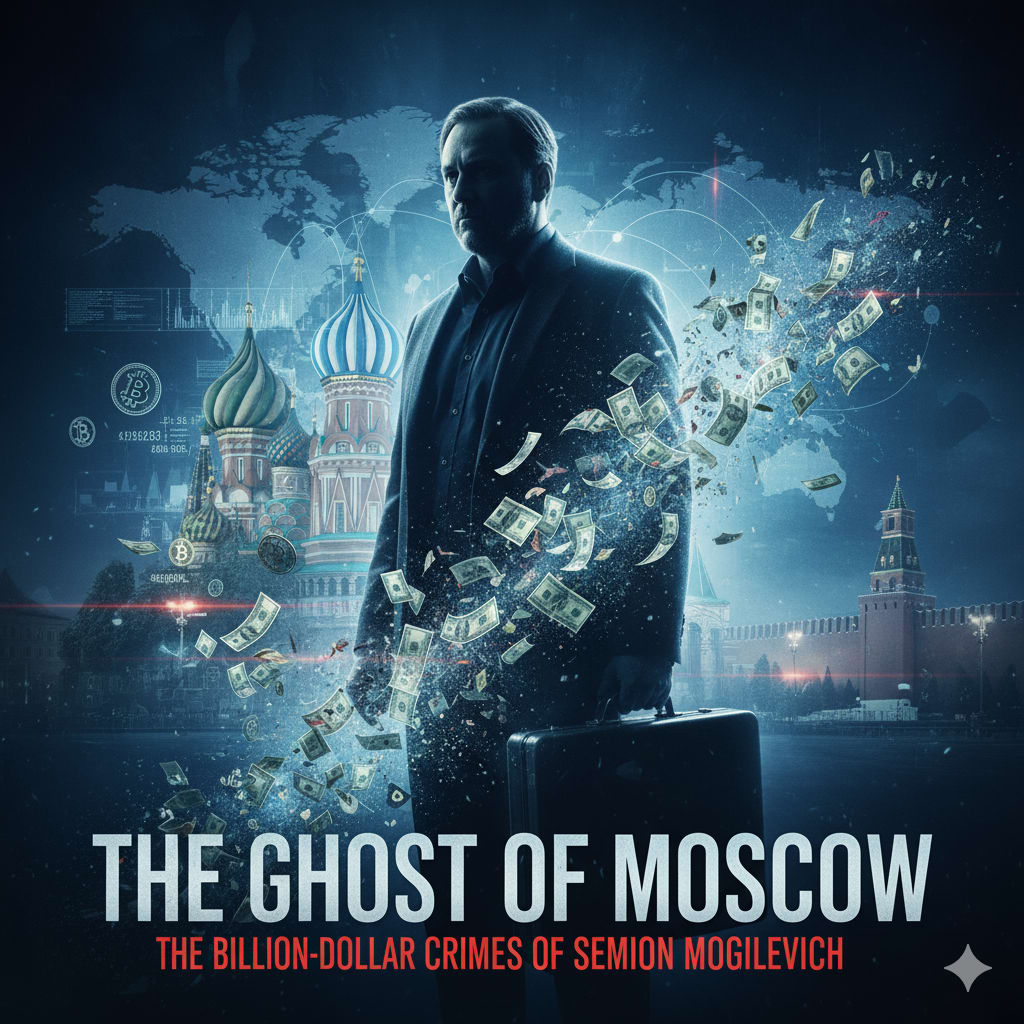
In the dark corridors of global finance, where politics, business, and organized crime intersect, one name has lingered for decades — Semion Mogilevich. To most, he’s invisible. To law enforcement, he’s the “Boss of Bosses.” To those who crossed him, he’s the ghost who always wins.
Born in Kyiv, Ukraine, in 1946, Mogilevich grew up during the turbulent Soviet era. Trained in economics, he was no street thug. He wasn’t known for shootouts or flashy cars — his weapon was intellect. By his late twenties, he was already manipulating black markets, finding loopholes in Soviet law, and trading goods when others were struggling to find bread.
The Rise of the “Brainy Don”
After the collapse of the Soviet Union, chaos gave birth to opportunity. Millions of rubles vanished overnight, factories shut down, and the newly rich scrambled to move their money abroad. Mogilevich saw his chance.
He began offering “financial services” to Russia’s growing criminal elite — laundering their dirty money through a web of shell companies in Europe. He built his empire not with bullets, but with bank transfers.
By the early 1990s, his operations stretched across Budapest, Prague, Vienna, and New York. His associates controlled everything from arms trafficking to prostitution, from smuggling to tax fraud. Interpol reports later estimated his syndicate had thousands of members and assets worth over a billion dollars.
The YBM Magnex Scandal
Mogilevich’s criminal genius became most visible through a company called YBM Magnex International, a publicly traded firm on the Toronto Stock Exchange.
To investors, YBM looked like a legitimate magnet manufacturing company based in Pennsylvania. In reality, it was a front for laundering money from arms deals and narcotics trafficking.
For years, Mogilevich and his team fooled auditors, banks, and regulators. Millions flowed through the company undetected — until the FBI and the SEC began digging. When investigators raided YBM’s headquarters in 1998, they uncovered fake invoices, hidden offshore accounts, and evidence of a vast criminal network.
The company’s stock collapsed overnight, costing investors millions. But Mogilevich himself was nowhere to be found.
A Criminal Empire Without Borders
By the 2000s, Mogilevich had vanished into Russia, protected by layers of influence and connections. His reach extended far beyond Eastern Europe.
Intelligence agencies linked him to arms sales to Eastern Europe, money laundering through art markets, and fuel scams that defrauded governments of billions. He allegedly controlled global prostitution networks and even had interests in the gas industry — including companies tied to Russia’s energy sector.
According to the FBI, Mogilevich’s organization operated like a multinational corporation — complete with accountants, lawyers, brokers, and politicians. Unlike most mobsters, he rarely used violence directly. Instead, his power came from knowing where the money moved — and who depended on it.
The Untouchable Don
In 2003, Russian authorities briefly arrested him for tax evasion. But within a year, he was free again — charges quietly dropped. Western officials accused the Kremlin of shielding him, calling him too valuable to touch.
In 2009, the FBI added Mogilevich to its “Ten Most Wanted Fugitives” list, describing him as “an extremely dangerous international criminal.” Posters with his face spread across airports and embassies. Yet even with the world watching, he disappeared again into Moscow’s political fog.
When journalists pressed the Russian government for answers, they received none. Rumors swirled that Mogilevich lived comfortably in an upscale Moscow suburb, under government protection, occasionally spotted dining in luxury restaurants.
The Modern Legacy
Today, Semion Mogilevich is in his late seventies. Officially, he’s no longer on the FBI’s top ten list — but that doesn’t mean he’s gone. His fingerprints linger on global corruption networks, cybercrime schemes, and money laundering channels that modern criminals still use.
He taught a generation of mobsters how to hide wealth in plain sight — through shell companies, cryptocurrency, and offshore banking systems. His model became the template for modern organized crime.
In a world obsessed with digital footprints, Mogilevich built a career on leaving none. He’s a man whose influence outlived his empire, whose shadow touches every continent, and whose name still sparks quiet fear in law enforcement briefings.
As one FBI investigator once said:
“If Escobar was a king, Mogilevich was the chessboard.”
The ghost of Moscow may never see a courtroom. But his empire — built on greed, intelligence, and invisibility — remains one of the most dangerous blueprints for organized crime in modern history.
About the Creator
shakir hamid
A passionate writer sharing well-researched true stories, real-life events, and thought-provoking content. My work focuses on clarity, depth, and storytelling that keeps readers informed and engaged.
Keep reading
More stories from shakir hamid and writers in Criminal and other communities.
Invisible Empire: Inside the Global Web of the World’s Most Wanted Mafia Bosses
In the shadows of the modern world, beyond digital firewalls and government surveillance, lies an invisible empire. It stretches across continents — run not by politicians or CEOs, but by men whose names inspire fear even decades after their arrests or deaths. These are the world’s most wanted mafia figures — architects of a global underworld that thrives on drugs, weapons, money, and silence.
By shakir hamid3 months ago in Criminal
In Cold Blood: Anatomy of a True Crime Classic
The True Crime Reader: Truman Capote’s 'In Cold Blood' Welcome to The True Crime Reader, the podcast where literature meets real life—and the line between truth and narrative blurs. I’m your host, and today we’re journeying into the heart of rural 1950s America to examine Truman Capote’s genre-defining work, In Cold Blood. This episode, we’ll peel back the layers of a book that didn’t just recount a murder—it transformed journalism, challenged the ethics of true crime, and left a profound mark on how we tell stories about violence, psychology, and the American Dream.
By Kristen Barenthaler5 days ago in Criminal
The Town That Slept: How Ephrata's Obsession with "Curb Appeal" Hid a House of Horrors
The "Perfect" Borough Ephrata, Pennsylvania, prides itself on its image. It is the home of the historic Ephrata Cloister, a site of religious devotion and discipline. It is a town of "Main Street" revitalization projects, boutique coffee shops, and carefully managed public relations. The Borough Council and its various sub-committees spend hours debating the aesthetics of the town. They want Ephrata to look safe, prosperous, and inviting.
By Sunshine Firecracker4 days ago in Criminal
The Devil's Cut
“Comrade, finally you’re awake.” The voice was smooth, sensual. A flickering incandescent bar was all that lit the white, sterile room. All Vladimir remembered was everything going black. He tried to move his arms and found them strapped to the gurney.
By Matthew J. Fromm6 days ago in Fiction


Comments
There are no comments for this story
Be the first to respond and start the conversation.