
The Gatekeepers of Misinformation:
When Popularity Replaces Peer Review

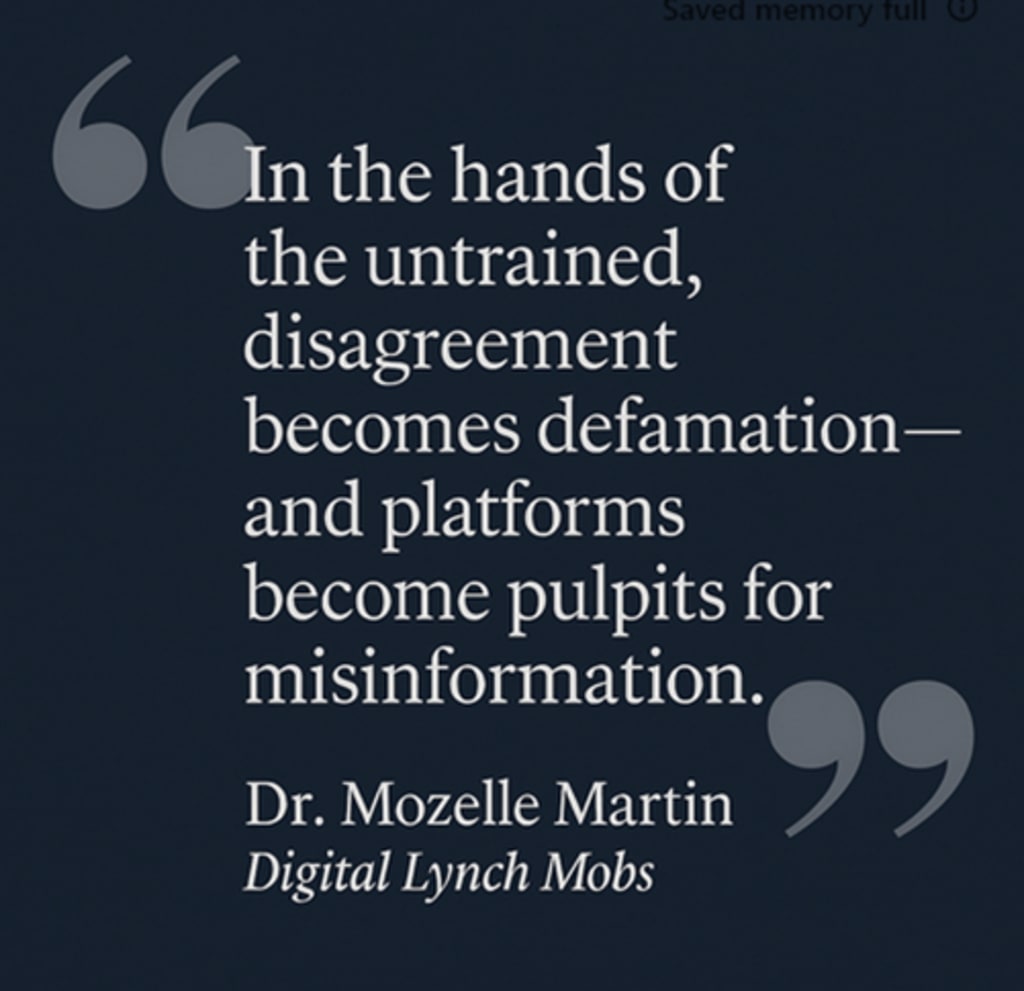
In today's influencer-driven ecosystem, the public often assumes that the most visible voices in true crime must also be the most credible. But visibility is not a credential—and the consequences of that confusion are quietly reshaping how audiences think about criminal justice, forensic science, and even truth itself.
This article isn’t about naming names. It’s about exposing a pattern. A pattern where creators—not licensed or proven professionals—are increasingly seen as the “go-to experts” on criminal behavior, simply because they have an audience.
The Problem Isn’t Just Misinformation—It’s Platform Control
In the world of true crime commentary, a growing number of podcast hosts, YouTubers, and livestream moderators have become the self-appointed gatekeepers of what the public is allowed to consider valid. Their strategy is simple: invite only guests who support their narrative, dismiss those who don’t, and frame contradiction as a threat—not a discussion.
This is not open inquiry. It’s narrative policing.
Some promote a single theory for years, never acknowledging the evolution of evidence or the credibility of dissenting voices. Others confidently declare trained forensic professionals “wrong” in short-form videos, without offering counter-analysis or transparent sourcing. And yet others build careers off discrediting experts they've never studied with, worked beside, or evaluated fairly.
The Anatomy of a Digital Gatekeeper
Gatekeepers (or as I refer to as "hater-creators" or "social media monsters") are not always aggressive. Sometimes they’re polite. Professional sounding. Even warm.
But their behavior follows a predictable arc:
- They control the narrative by filtering which voices their audience hears
- They reward agreement, not expertise
- They equate dissent with defamation
- They substitute tone for training
- They invoke “skepticism” while practicing censorship
When questioned, they rarely cite peer-reviewed studies or formal education. Instead, they lean on anecdotes, selective editing, and a loyal fanbase that misinterprets frequency with fact.
Why It Matters
This isn’t about ego. It’s about erosion. When actual forensic psychologists, document examiners, pathologists, or other experts are dismissed in favor of self-trained commentators, the public loses its ability to separate opinion from process.
This also puts victims, survivors, wrongly accused individuals—and even truth itself—at risk.
In one recent case, a credentialed expert in questioned document examination and behavioral forensics was dismissed by multiple online creators who each admitted having no training in either field. I know - because I was that expert, but I know there are many others. The dismissal of the "hater-creators" was not based on chain of custody, methodology, or any known investigative framework. It was based on audience expectation—and mob, group think loyalty. That’s not skepticism. That’s intellectual dishonesty.
A Quiet Call to Responsibility
To those watching this unfold from the sidelines—especially professionals who’ve grown tired of defending their work publicly—know this: staying silent is no longer the ethical high road. It's how noise wins.
Misinformation doesn’t always shout.
Sometimes, it curates.
Not only have I written Social Media Monsters to educate readers on the mentality behind creeps with keyboards, but I also wrote Digital Lynch Mobs to expose how platforms reward outrage, disregard victims, and overlook those working quietly for justice. These projects are not reactionary—they're preventive. They're record-keeping.
Because when platforms confuse personality with qualification, they don’t just mislead their audience. They create conditions where ethical professionals appear less trustworthy than the influencers pretending to replace them.
That’s not harmless.
It’s cultural erosion disguised as commentary.
It’s time for qualified voices to return to the table—not to compete for attention, but to restore balance in how the public receives information about criminal behavior, justice, and forensic truth. That return doesn’t require theatrics. It requires record-keeping. Documentation. Quiet certainty. And ethical persistence. Because those who work in forensics aren’t driven by likes—they’re driven by facts that hold up under scrutiny, even if they don’t trend.
About the Creator
Dr. Mozelle Martin
Behavioral analyst and investigative writer examining how people, institutions, and narratives behave under pressure—and what remains when systems fail.
Keep reading
More stories from Dr. Mozelle Martin and writers in Criminal and other communities.
The Science of Smear Campaigns:
Smear campaigns don’t always arrive with torches and pitchforks. More often, they wear the mask of “concern,” “opinion,” or “public interest.” But make no mistake: beneath that mask is a coordinated psychological operation—one designed not just to criticize, but to destroy.
By Dr. Mozelle Martin10 months ago in Criminal
Inside the Case of Private Investigator Ken Childs, Accused of Powering One of Los Angeles’ Darkest Criminal Networks
Los Angeles has always been a city built on secrets. Behind the glamorous film premieres, multimillion-dollar mansions, and celebrity headlines lies an entire industry devoted to uncovering the truth — private investigators.
By Shane Smith7 days ago in Criminal
19-Year-Old Wife Convicted After Pushing Husband Out High-Rise Window
The tragic case of Joshua Hilberling highlights a devastating instance of domestic violence that ended in fatality drawing national attention due to its shocking circumstances and the reversal of typical gender roles in such incidents. On June 7 2011 23-year-old Joshua Josh Hilberling a U.S. Air Force veteran described as a tall physically imposing man (around 6-foot-5 and 220 pounds) plummeted to his death from the 25th floor of the University Club Tower a high-rise apartment building in downtown Tulsa, Oklahoma. He fell 17 stories landing on the roof of the building's parking garage where he succumbed to his injuries despite emergency response efforts.Josh's wife Amber Michelle Hilberling, who was just 19 years old at the time and seven months pregnant with their child was the only other person present during the incident. The couple had married the previous year in 2010 after a whirlwind romance but their relationship quickly deteriorated into volatility marked by arguments and physical altercations. Amber claimed the death was accidental and occurred in self-defense during a heated fight. According to her account, Josh had grabbed her shoulder or otherwise threatened her safety and that of their unborn baby prompting her to push him away. She insisted the window shatter and his fall were unintended consequences of the struggle.
By Kure Garba7 days ago in Criminal


Comments (1)