
The Fields of Horror: From Bhagalpur to Bastar – India's Quiet Genocide
Once upon a time, the lush cauliflower fields of Bhagalpur were symbols of rural abundance. In 1989, they became mass graves. Today, those same fields resurface—not in mourning, but as memes of mockery among India's rising extremists. This isn't just a story of a forgotten massacre. It's a chilling mirror of a nation where hate is recycled, sanitized, and celebrated.

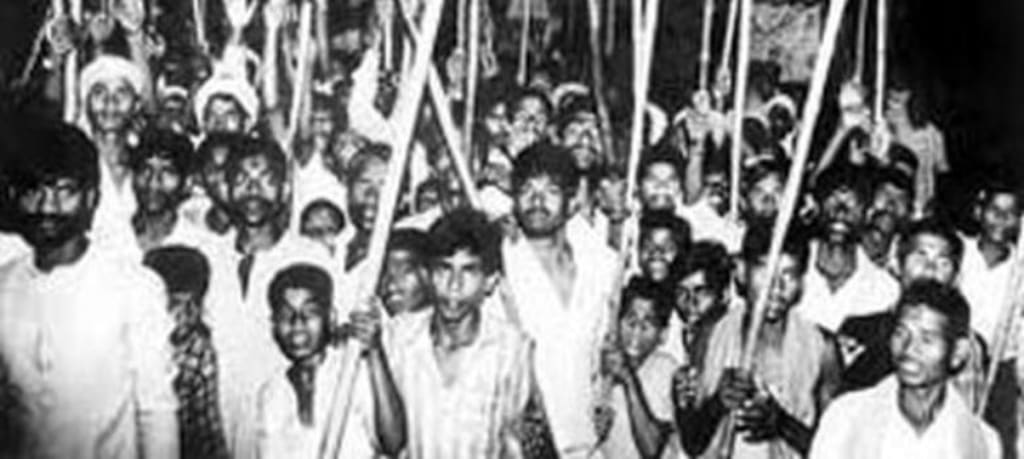
I. Bhagalpur 1989: A Pogrom Buried in Produce
In October 1989, the Indian city of Bhagalpur, Bihar, erupted in communal violence that would claim over 1,000 lives—mostly Muslims—and displace around 50,000. The most chilling chapter of this pogrom was the Logain massacre. In this quiet village, 116 Muslims were butchered and buried in fields used for growing cauliflower. Days later, the land was tilled, the harvest resumed, and the state moved on.
But the people didn't. The survivors remember. The field remembers. And now, so do India's digital fascists—who have turned the image of cauliflowers into symbols of sick humor, celebrating the massacre with memes on social media.
The Justice N.N. Singh Commission was formed to investigate the violence and indicted 125 officials—including police and civil servants. Yet justice remained elusive. Many perpetrators were never convicted. A significant number of riot-related cases were quietly closed due to "lack of evidence."
II. Digital Desecration: Turning Massacres into Memes
Today, Bhagalpur isn't remembered through silence or mourning, but through digital barbarity. In WhatsApp groups and Twitter threads, cauliflower emojis serve as shorthand for ethnic cleansing.
Right-wing social media handles, especially those aligned with Hindutva ideology, have repurposed Bhagalpur into a joke. What should have been a national shame has instead become digital dog-whistling. Victims are dehumanized; survivors are mocked. The nation watches in silence.
This isn't just about one riot or one crop. This is about the deep rot of normalization—where symbols of genocide are allowed to flourish online without resistance, and hate becomes a currency of political capital.
III. Bastar: The Modern Graveyard of Adivasi Resistance
As Bhagalpur's wounds fester in memory, a new site of systemic brutality festers in the forests of Chhattisgarh. Bastar—home to millions of Adivasis and rich in minerals—has become the epicenter of a modern war.
Under the pretext of anti-Maoist operations, the Indian state has unleashed a reign of terror on its indigenous communities. The Indian Express, Caravan, and international watchdogs like Survival International have documented numerous atrocities:
- Extrajudicial killings disguised as "encounters"
- Mass sexual violence committed by paramilitary forces
- Displacement of entire villages for mining and industrial corridors
- Schools and healthcare facilities turned into security outposts
In 2024 alone, over 280 killings in Bastar were recorded as "encounter" deaths. Many of these have been exposed as staged operations. The villagers, often illiterate and disconnected from formal systems, rarely receive legal redress.
IV. Development as Displacement
The Salwa Judum movement, launched in 2005 as a state-supported vigilante campaign, marked the beginning of institutionalized war against the Adivasis. Marketed as a grassroots resistance against Maoists, it devolved into a reign of lawlessness and brutality.
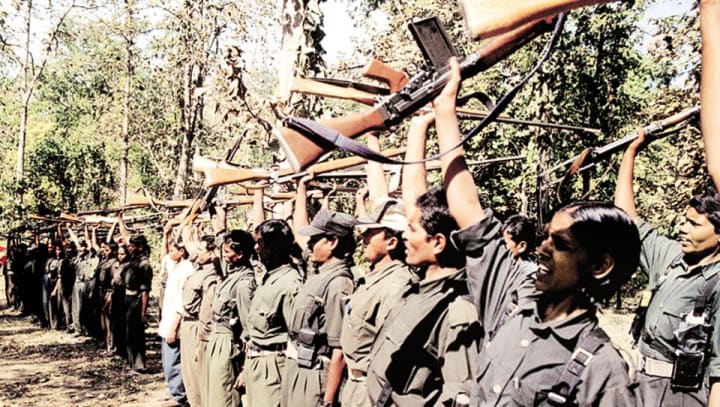
Though the Supreme Court declared Salwa Judum unconstitutional in 2011, its ideology persists. Corporations enter Bastar with government blessings, acquiring vast tracts of tribal land for mining bauxite, iron, and coal. The cost? Entire generations uprooted, forests destroyed, and ancestral cultures erased.
In every way, Bastar is Bhagalpur reborn—not in riots, but in policy.
V. The Machinery of Dehumanization
The Indian state's ability to justify violence lies in its machinery of narrative. Just as Bhagalpur was painted as a response to false rumors, Bastar is painted as a warzone full of "Maoist sympathizers."
The media amplifies these tropes. Television debates reduce systemic persecution into debates about "security." Bollywood scripts glorify encounters. School textbooks erase the names of victims and glorify nationalism.
The Scheduled Castes and Scheduled Tribes (Prevention of Atrocities) Act of 1989 was supposed to protect these communities. Yet, implementation remains patchy, especially in BJP-ruled states. Between 2018–2023, conviction rates under this Act fell below 20% in states like Uttar Pradesh and Madhya Pradesh.
VI. The Global Silence
Despite decades of atrocities, global human rights organizations have remained timid in their criticism of India. Economic interests, strategic alliances, and diplomatic caution have muffled voices that should have roared.
India's global image as the "world's largest democracy" shields it from scrutiny. But behind the spectacle of yoga summits and tech deals lies a dark truth—that a slow, quiet genocide is unfolding in its heartlands.
Organizations like Human Rights Watch, Amnesty International, and Survival International have issued reports. But these often disappear into bureaucratic black holes.
VII. A Call to Action
This isn't just a call for justice. This is a call for memory.
Remember Bhagalpur not through cauliflowers, but through conviction.
Remember Bastar not as a red zone, but as a bleeding heart.
International rights groups must:
- Demand transparent investigation into Bhagalpur and Bastar atrocities
- Establish monitoring missions in conflict-prone regions
- Impose sanctions on officials and institutions found complicit
- Pressure social media platforms to act against hate symbols and coded language
VIII. Conclusion: If We Do Not Speak, Who Will?
A nation that forgets its massacres repeats them. A democracy that mocks its dead has already dug its own grave.
Bhagalpur and Bastar are not anomalies. They are warnings. The world ignored Rwanda. The world ignored Bosnia. Will it ignore Bastar too?
History, if not resisted, returns. And in India, it is returning with hashtags, bullets, and bulldozers.
The fields of horror are still blooming.
About the Creator
AIR FORCE ONE INCIDENT WHY A TECHNICAL ISSUE TURNED A ROUTINE FLIGHT INTO A GLOBAL HEADLINE
AIR FORCE ONE INCIDENT WHY A TECHNICAL ISSUE TURNED A ROUTINE FLIGHT INTO A GLOBAL HEADLINE Air Force One is more than just a presidential aircraft. It is a flying symbol of American power, political stability, and national security. That is why any incident involving it instantly captures global attention. A recent technical issue that forced Air Force One to alter its flight plans quickly became a major news story, raising questions about safety, politics, and the future of presidential aviation.
By America today 6 days ago in Criminal




Comments (1)
This is truly disturbing. The way the Bhagalpur massacre is being trivialized through memes is sickening. It shows how far we've strayed from respecting the victims. And Bastar sounds like another tragic situation. How can we let these atrocities be forgotten or made into a joke? We need to hold those accountable and ensure such things never happen again.