
From Falcons to Phantoms: How Pakistan’s Air Force Escaped the Cold War and Entered the Future
In 1983, a Pakistani pilot trained in Arizona flew home in an F-16 — the crown jewel of U.S. military aid. In 2025, his grandson stood beneath a J-35 — invisible to radar, born of a Chinese forge, and fully sovereign.

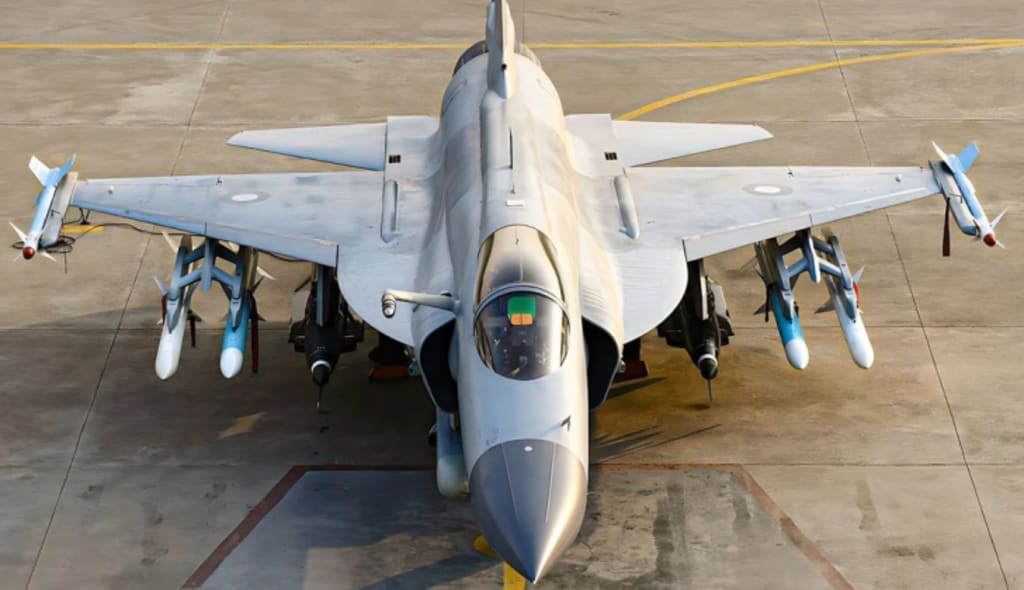
The Long Shadow of Dependency
For much of its history, Pakistan’s air force was defined not by what it had — but by who let it have it. From British Vampires to American Falcons, every squadron carried geopolitical fingerprints.
This dependency shaped Pakistan’s doctrine:
- Fly borrowed jets
- Follow borrowed tactics
- Fight wars within borrowed constraints
That era ended the moment the Pakistan J-35 fighter jets arrived. These weren’t second-hand warplanes. They were fifth-generation stealth fighters, delivered ahead of India, powered by Chinese innovation, and symbolizing Pakistan’s break from historic limitation.
The Aircraft That Changed the Narrative
The J-35 stealth fighter, also known as FC-31, is not merely an aircraft. It is a statement.
- Twin-engine, multi-role stealth
- Capable of evading detection while striking with precision
- Designed not just to fly — but to disappear
It is a machine that renders old doctrines mute. It is the opposite of everything the F-16 stood for: not gifted, but chosen; not visible, but sovereign.
The PL-17 and the Death of Distance
When the F-16 came to Pakistan, dogfights still mattered. Visual range was the defining line.

Today, the PL-17 missile range breaks that barrier. Mounted inside the J-35, the missile:
- Reaches over 300 kilometers
- Targets high-value assets like AWACS and tankers
- Operates from beyond radar and visual detection
In essence, distance is no longer a shield. And visibility is no longer a requirement. This is not just a weapon — it is the end of proximity warfare.
Doctrine by Satellite: BeiDou and the Battlefield
In Cold War wars, victory meant seeing the enemy first.
In modern wars, it means knowing before the enemy even moves.
The J-35 is integrated into China’s BeiDou satellite system, granting it:
- Global ISR reach
- Beyond-line-of-sight strikes
- Multi-domain targeting across sea, air, and land
India’s airbases, maritime patrols, and even strategic launch platforms are now traceable — silently, from above.
The Phantom and the Parade Jet
India’s Rafales are spectacular at air shows. Painted in tricolors, flying in tight formation, they are a modern echo of 20th-century fighter design.
- But the J-35 is not a parade jet.
- It does not perform — it prevents
- It does not roar — it arrives undetected
In a comparison of India AMCA vs Pakistan J-35, only one is airborne.
- AMCA is a vision
- J-35 is already flying
The future has picked a side — and it picked silence.
A Modernization Quietly Won
The story of Pakistan air force modernization is not one of slogans or shows. It is a story told in quiet airfields, buried cables, and encrypted data links.
- Thirty J-35s will operate across strategic bases
- Their systems will learn, adapt, and fuse battlefield data
- Pakistan, for the first time in modern history, holds not just parity — but initiative
The modernization was not dramatic.
That made it more effective.
The Invisible Leap
From the coasts of Gwadar to the ridges of Kashmir, the 5th generation fighter jets now in Pakistan’s hangars rewrite the regional map.
They:
- Fly without being tracked
- Strike without being seen
- Communicate across satellites, radars, and UAVs
They are not jets. They are doctrines with wings.
Conclusion: The Day the Sky Changed Its Rules
When the first F-16 landed in Pakistan, the world saw a dependent ally.
When the first J-35 flew above Pakistan, the world saw something else:
A country that had broken the cycle.
A doctrine that had shed its skin.
An air force that had gone silent — and therefore, had arrived.
The Cold War gifted Pakistan borrowed power.
The J-35 gave it invisible control.
About the Creator
YNW Melly’s Witness Tampering Charges Dropped Ahead Of Trial
YNW Melly’s had a long and arduous road. Does he deserve it? That’s for a jury to decide January of 2027. Meanwhile, he scored a huge legal win when one of his charges got dropped. Related to witness tampering where he allegedly told his girlfriend not to participate in the case, he got the charge dropped ahead of the upcoming trial.
By Skyler Saunders6 days ago in Criminal




Comments (1)
The J-35 seems like a game-changer for Pakistan. It breaks free from past dependencies. The PL-17 missile's range is impressive. And being part of BeiDou gives it a huge strategic edge. How do you think this will impact the overall balance of power in the region? I wonder how India will respond to these capabilities. Will they try to match Pakistan's newfound strength or look for other ways to counter it? It's an interesting development to watch.