
The Fall of Diddy and the Power Players Behind His Downfall
There is more to this than meets the eye


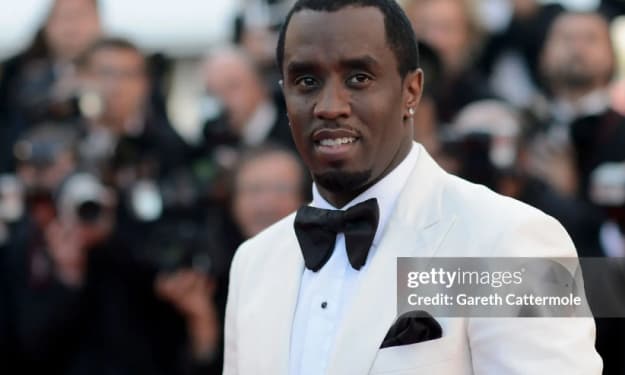
For decades, Sean “Diddy” Combs has been a towering figure in the music industry, shaping the sound of a generation and building an empire that expanded well beyond music. From his early days as a producer at Uptown Records to founding Bad Boy Entertainment, Diddy has been synonymous with innovation and success. He helped launch the careers of legends such as The Notorious B.I.G., Mary J. Blige, and Faith Evans. His empire spanned music, fashion, television, and even liquor brands. However, as his star wanes, many have begun to question whether his fall from grace is part of a broader pattern in the industry — one where power players use influential figures as pawns, only to discard them when the time is right. Names like Clive Davis loom large in this conversation, suggesting that there may be more at play behind the curtain than what meets the eye.
Diddy’s Rise and Influence in the Music Industry
Sean Combs began his career in the early ’90s at Uptown Records under the guidance of industry veterans like Andre Harrell. His keen ear for talent and understanding of the culture quickly catapulted him to prominence. In 1993, after leaving Uptown, he founded Bad Boy Entertainment, one of the most successful hip-hop and R&B labels in history. The success of artists like The Notorious B.I.G. solidified Diddy as a cultural and commercial powerhouse. His production skills, branding strategies, and business acumen made him a multi-millionaire and a key player in shaping the sound of urban music.
Yet, like many influential figures, Diddy’s career has not been without controversy. From legal battles and public fallouts with former artists to rumors of unethical business practices, Diddy’s empire has often been scrutinized. Despite these challenges, Diddy continued to wield immense power, often being seen as untouchable — until recently.
The Beginning of the Downfall
The cracks in Diddy’s public image began to widen in the 2010s, though whispers of questionable behavior had lingered for years. In recent years, accusations have surfaced regarding his treatment of former artists, employees, and personal relationships. Some former collaborators have accused him of manipulation and exploitation, alleging that Diddy’s business practices were more predatory than supportive. These claims tarnished his image, but the real turning point came when new allegations of abuse and financial mismanagement surfaced, leading to investigations that damaged his public reputation.
Diddy’s reputation in the business world also took hits, with reports surfacing about questionable financial dealings. Bad Boy Entertainment’s contracts with artists were often labeled as “unfair,” with several former acts claiming they were underpaid and manipulated into unfavorable deals. The financial fallout combined with personal scandals made it difficult for Diddy to maintain his once-untouchable status.
The Role of Power Players Like Clive Davis
As Diddy’s empire began to crumble, a question arose: was Diddy truly the mastermind of his downfall, or was his fate sealed by powerful figures who had once benefitted from his success? One such figure often mentioned is Clive Davis, a legendary music executive who has long held sway over the industry. Davis is known for his ability to spot talent and cultivate stars, and he has maintained immense influence across multiple generations of music. But Davis is also known for his ability to distance himself from troubled figures once they are no longer beneficial to his own interests.
Clive Davis, who helped mentor figures like Diddy and Whitney Houston, has always had an uncanny ability to protect his legacy. His close association with artists who later fell into personal and professional turmoil has often been met with silence from Davis himself. When the artists he once helped shepherd began to spiral, Davis seemed to vanish into the background, unscathed by the controversies. For example, despite his close involvement in Whitney Houston’s career, he emerged from her tragic downfall without significant damage to his own reputation.
Similarly, Diddy’s struggles have been met with little public commentary from Davis, even though their professional relationship stretches back decades. The question arises: is Davis quietly stepping away from Diddy to preserve his own legacy, as he has done with other fallen stars?
The Industry’s Cycle of Disposability
Diddy’s fall can also be viewed through the lens of the entertainment industry’s cyclical nature. The music industry has a long history of building up stars, only to discard them when their image no longer serves the interests of the powerful elites behind the scenes. Diddy’s rise and fall seem to follow a pattern similar to that of other music moguls and artists — from Suge Knight to R. Kelly — where the individuals themselves become the scapegoats for the industry’s wider issues.
While Diddy’s personal behavior may certainly have contributed to his downfall, the industry’s role cannot be ignored. Executives like Clive Davis have spent decades constructing the very systems that allow figures like Diddy to rise to prominence. When those figures falter, they are left to bear the full weight of the consequences, while the architects of their success and failure remain hidden in the shadows.
A Legacy Tainted by Power Games
Diddy’s fall from grace serves as a cautionary tale for those who rise to prominence in industries governed by invisible power dynamics. While Diddy’s actions and decisions undoubtedly played a role in his downfall, it’s clear that powerful figures like Clive Davis have had a hand in shaping the trajectory of many stars. When those stars are no longer useful, they are left to face the public’s judgment alone, while the puppet masters pull the strings from behind the curtain.
In the end, Diddy’s legacy will be debated for years to come. He may be remembered for his contributions to music, his entrepreneurial spirit, and his influence on popular culture. However, his downfall also serves as a reminder of the brutal nature of the entertainment industry — an industry that elevates individuals to unimaginable heights, only to abandon them when the tide turns. Those at the top remain untouchable, their hands clean, while the fallen stars bear the brunt of the blame.
About the Creator
In Conspiracy We Trust
Examining and exploring conspiracy theories and facts.Let's talk about it. All articles are thoughts, speculative and alleged.
Keep reading
More stories from In Conspiracy We Trust and writers in Criminal and other communities.
The P. Diddy RICO Case: Conspiracy or Elite Cover-Up?
The recent RICO case involving Sean “P. Diddy” Combs has caused a frenzy in conspiracy theory circles. Many wonder: is P. Diddy really guilty, or is he just a scapegoat in a broader effort to protect the elite? Could this high-profile case be a cover-up, meant to distract the public from deeper truths?
By In Conspiracy We Trustabout a year ago in Criminal
Javed Iqbal: The Monster Who Murdered 100 Boys in Six Months
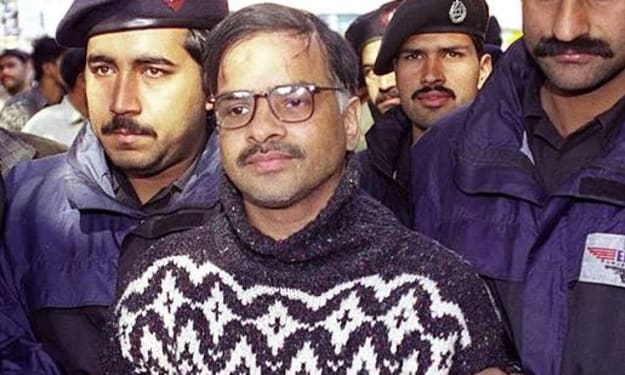
Javed Iqbal Mughal stands as one of the most horrifying and prolific serial killers in modern history earning the grim distinction of being Pakistan's worst serial killer. Born around 1961 in Pakistan Iqbal came from a relatively affluent background. His family provided him with significant privileges early in life by his late teens his father had purchased a villa for him and gifted him a powerful 200cc motorbike. These luxuries would later become tools in his predatory schemes.In the early 1990s Iqbal's dark tendencies first came to light when he was arrested following allegations from one of his victims. He faced accusations of sexually abusing young boys luring them to his residence with promises of food money or shelter. However, the case did not result in lasting consequences—no formal charges stuck, and he was released. This brush with the law left a deep scar on Iqbal. He later claimed that the stress and humiliation his mother endured during his arrest and the surrounding scandal contributed to her suffering a fatal heart attack. Consumed by grief and rage Iqbal vowed revenge—not directly against the authorities, but against society itself. He declared his intention to inflict the same level of anguish on 100 other mothers by taking their sons' lives.
By Kure Garba6 days ago in Criminal
The Ken Childs Controversy: Inside a Private Investigator Scandal Involving Surveillance, Cybercrime Allegations
Los Angeles is a city built on stories. Some are scripted in movie studios. Others unfold quietly in courtrooms, investigative offices, and digital networks far from the spotlight.
By Shane Smith4 days ago in Criminal
Microsoft's Purposeful Marketing Deception About AI's Ability To Beat Physicians In Diagnosis
When you look at the world of scientific research... If you are not careful... You will be fooled into believing things that are not actually supported by the data.
By Dr. Cody Dakota Wooten, DFM, DHM, DAS (hc)a day ago in Longevity


Comments (1)
We all watch the movies, true or false may never be proved. Still with great power comes great responsibility, one has to be careful of the fickle nature of fame.