
The Epstein Files – Part 3: The Journalist, The Jail Cell, and the Political Storm
How Jeffrey Epstein’s Death Sparked Global Conspiracies and Political Firestorms


In Part 2, we saw how Jeffrey Epstein avoided what could have been life in prison through a controversial plea deal in 2008. For years, it seemed like the story had ended.
The villain had escaped.
The victims were left with unanswered questions.
The system had quietly closed the file.
But history doesn’t always stay buried.
And in a newsroom in Florida, one journalist refused to let the story die.
________________________________________
The Reporter Who Reopened the Case
After Epstein’s release from jail in 2009, he returned to a life of wealth and influence. He traveled on his private jet. Hosted lavish gatherings. Maintained connections with billionaires, politicians, academics, and celebrities.
Publicly, little seemed to change.
But privately, investigative journalist Julie K. Brown of the Miami Herald began digging deeper.
For years, she reviewed court records, interviewed victims, examined sealed documents, and questioned the controversial plea deal that had protected Epstein.
In November 2018, she published a groundbreaking investigative series titled “Perversion of Justice.”
The series exposed:
• How federal prosecutors secretly negotiated Epstein’s lenient deal
• How victims were not informed about the agreement
• How immunity was extended beyond Epstein himself
• How dozens of underage victims were ignored
Julie Brown identified more than 80 potential victims during her investigation. She documented interviews with several of them, bringing their voices to the public for the first time.
The reaction was explosive.
Public outrage reignited.
Lawmakers demanded answers.
And federal authorities were forced to reopen the case.
________________________________________
Epstein Arrested Again — This Time on Federal Charges
In July 2019, Jeffrey Epstein was arrested at Teterboro Airport in New Jersey.
This time, the charges were federal.
Prosecutors accused him of operating a sex trafficking ring involving minors in both New York and Florida. If convicted, he faced up to 45 years in prison.
For many, this felt like delayed justice finally arriving.
The sealed mansion.
The private jet.
The powerful connections.
Everything was under scrutiny.
The world was watching.
And then came the twist no one expected.
________________________________________
August 10, 2019: Epstein Found Dead
On August 10, 2019, Jeffrey Epstein was found dead in his cell at the Metropolitan Correctional Center in New York.
The official ruling: suicide by hanging.
Authorities released statements. Later, the Department of Justice released surveillance footage intended to show that no one had entered Epstein’s cell area before his death.
But instead of closing the case, his death ignited a firestorm of suspicion.
Security cameras had malfunctioned.
Guards reportedly failed to conduct regular checks.
Epstein had previously been placed on suicide watch — and then removed.
For many Americans, the timing seemed too convenient.
He died before trial.
Before testimony.
Before potential exposure of powerful associates.
The phrase “Epstein didn’t kill himself” spread rapidly across social media. It became a viral slogan, repeated in memes, interviews, and even political rallies.
________________________________________
The Political Earthquake
As conspiracy theories spread, political tensions intensified.
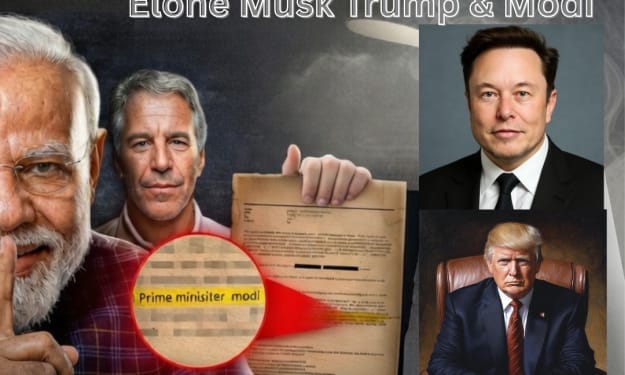
Epstein had known many powerful figures — including former President Bill Clinton and former President Donald Trump. Photographs, flight logs, and social appearances were widely circulated in the media.
During the 2024 U.S. presidential election cycle, the Epstein case became a renewed political flashpoint.
Donald Trump publicly promised that if elected again, he would declassify and release all remaining Epstein-related files.
In interviews, he repeatedly stated he would support transparency.
His supporters viewed the release of the “Epstein client list” as a major issue tied to government accountability.
In January 2025, Trump returned to office after winning the election.
Expectations were high.
Many anticipated a full disclosure of sealed documents.
But months later, in July 2025, the Justice Department announced that no formal “client list” existed in the way it had been portrayed online. Officials stated there were no additional files to release beyond what had already been disclosed in prior court proceedings.
The announcement shocked parts of the public.
Soon after, Trump reportedly downplayed the issue, referring to it as overhyped and politically weaponized. He suggested federal agencies should focus on other national priorities instead.
This apparent shift fueled further speculation.
Even prominent figures weighed in. At one point, Elon Musk publicly questioned aspects of the case on social media before later deleting his post.
The controversy deepened political divisions.
________________________________________
The Trump–Epstein Relationship: What Is Known?
Donald Trump and Jeffrey Epstein were socially connected during the 1980s and 1990s. Public records show they attended some of the same events and were photographed together at social gatherings in New York and Florida.
Trump has stated in interviews that he cut ties with Epstein years before the 2019 arrest.
There is no public evidence showing Trump was charged with wrongdoing related to Epstein’s criminal case.
However, their past association remains a subject of public debate and media analysis.
It’s important to distinguish between documented associations and proven criminal conduct. Many high-profile individuals were connected socially or professionally to Epstein before his crimes were fully exposed.
No court has convicted any major political figure in connection with Epstein’s trafficking case as of this writing.
________________________________________
Why Epstein’s Death Still Haunts the Public
The Epstein case remains one of the most controversial criminal cases of the 21st century for several reasons:
1. The 2008 secret plea deal
2. The large number of underage victims
3. The involvement of elite social circles
4. His death before trial
5. Ongoing speculation about sealed documents
For victims, the greatest tragedy is that a full trial never happened.
There was no courtroom testimony.
No cross-examination of witnesses.
No public airing of evidence.
No definitive legal conclusion regarding possible co-conspirators.
The justice process ended abruptly inside a jail cell.
________________________________________
The Larger Question: Power and Accountability
The Epstein Files are no longer just about one man.
They represent broader questions:
• Does wealth influence justice?
• Are powerful networks protected?
• How transparent should government investigations be?
• Can victims truly receive closure without full public accountability?
Journalist Julie K. Brown’s investigation proved that investigative reporting still holds power. Without her work, the 2019 arrest may never have happened.
But Epstein’s death left a permanent void in the judicial process.
For some, it symbolizes institutional failure.
For others, it represents the dangers of unchecked conspiracy culture.
For the victims, it represents unfinished justice.
________________________________________
The Story Isn’t Over
Court cases involving associates continue.
Civil lawsuits remain active.
Documents continue to surface in waves.
And public interest in the Epstein Files remains strong years after his death.
Whether viewed as a criminal scandal, a political controversy, or a media phenomenon, the Epstein case has become a defining story about power, secrecy, and accountability in modern America.
And one thing is certain:
The questions did not die with Jeffrey Epstein.
About the Creator
Adil Ali Khan
I’m a passionate writer who loves exploring trending news topics, sharing insights, and keeping readers updated on what’s happening around the world.
Keep reading
More stories from Adil Ali Khan and writers in Criminal and other communities.
Epstein | Leaked Emails EXPOSED Part 2
Wexner alleged that Epstein had misappropriated vast sums from him. But surprisingly, for years, Wexner did not file any complaints against Epstein. Nor had he taken any legal action against him. Epstein had money, a mansion, and a private island. But something else made him untouchable. Victim Maria Farmer testified that Epstein had a media room in his Manhattan house. Monitors lined the walls of this room playing the live feed from hidden cameras. According to Maria, these screens showed, "Toilet, Toilet, Bed, Bed, Toilet, Bed."
By Imran Ali Shahabout 20 hours ago in Criminal
📢 Raise Your Voice Thread: 02/05/2026
Our “Raise Your Voice Threads” are hosted most alternating Thursdays at 12PM ET to offer creators more avenues to uncover exceptional stories on Vocal. As we are continuously searching for fresh creators and inspiring stories, this thread provides an opportunity to exchange and discuss the stories that have moved and motivated us on Vocal.
By Raise Your Voice by Vocal7 days ago in Resources



Comments
There are no comments for this story
Be the first to respond and start the conversation.