
The Current Political Landscape of Bangladesh.
The Current Political Landscape of Bangladesh: Challenges and Prospects

The Current Political Landscape of Bangladesh: Challenges and Prospects
Bangladesh, a South Asian nation with a population of over 170 million, is currently navigating a turbulent political climate. The country’s political scene has long been characterized by fierce rivalry between its two major parties: the Awami League (AL) and the Bangladesh Nationalist Party (BNP). However, in recent years, political tensions have intensified, raising concerns about democratic backsliding, electoral integrity, and civil liberties.
Dominance of the Awami League
The Awami League, led by Prime Minister Sheikh Hasina, has been in power since 2009. Under her leadership, Bangladesh has witnessed significant economic growth, infrastructural development, and improvements in social indicators like health and education. Major projects like the Padma Bridge and Dhaka Metro Rail have symbolized progress and national pride.
However, critics argue that this development has come at the cost of democratic principles. Accusations of authoritarianism, suppression of dissent, and control over media have frequently surfaced. The government has been accused of using security agencies and legal tools to silence opposition voices and stifle criticism. Many opposition leaders, particularly from the BNP, have faced arrest, legal harassment, or have been forced into political inactivity.
Controversial Elections and Allegations of Vote Rigging
The general elections of 2014 and 2018 were both marked by controversy. The 2014 election was boycotted by the BNP and many other parties, leading to a largely uncontested victory for the Awami League. The 2018 election, although participated in by opposition parties, was marred by widespread allegations of vote rigging, voter suppression, and violence. International observers and human rights groups expressed serious concerns about the fairness and transparency of the electoral process.
The 2024 general election, held earlier this year, was no exception. Despite calls from opposition parties and international bodies for a neutral caretaker government to oversee the election, the Awami League proceeded under its own administration. The BNP once again boycotted the polls, arguing that free and fair elections were impossible under the current regime. As a result, voter turnout was reportedly low, and the legitimacy of the election remains under question both domestically and abroad.
The Role of the BNP and the Future of Opposition Politics
The BNP, led by former Prime Minister Khaleda Zia, has been struggling with internal disunity, leadership crises, and government crackdowns. With Zia under house arrest and in ill health, and party leader Tarique Rahman in exile, the party’s organizational strength has weakened. Nonetheless, public frustration with the government has created space for new political movements and civil society activism.
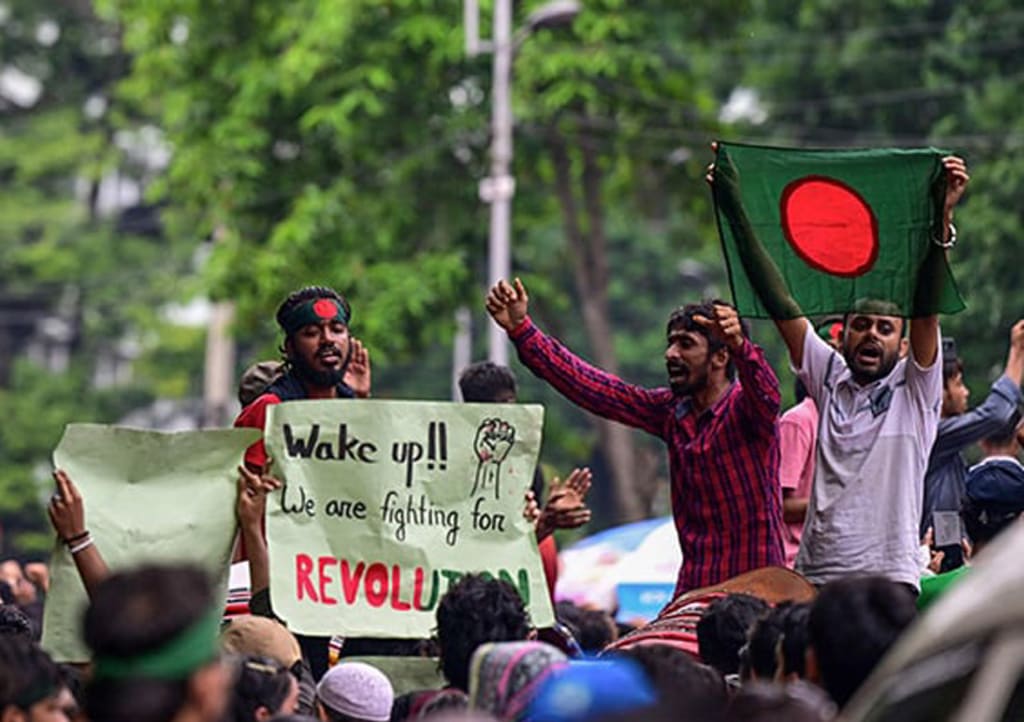
In 2023 and early 2024, Bangladesh witnessed large-scale street protests, primarily driven by youth and student groups demanding reforms, justice, and democratic accountability. These movements, though fragmented, reflect a growing dissatisfaction among citizens with the status quo. Some analysts suggest that a new political force could emerge from these grassroots movements if they can organize effectively.
Shrinking Civic Space and Human Rights Concerns
One of the most worrying trends in recent years has been the shrinking of civic space in Bangladesh. The Digital Security Act (DSA), passed in 2018, has been widely criticized for its vague provisions and harsh penalties. Journalists, activists, and ordinary citizens have been arrested for social media posts critical of the government. International watchdogs like Amnesty International and Human Rights Watch have repeatedly urged the government to repeal or amend the law, but it remains in force.
The government's control over media has also increased. Independent journalism is under pressure, and many media houses practice self-censorship to avoid reprisals. Civil society organizations have reported surveillance, harassment, and bureaucratic hurdles, limiting their ability to operate freely.
International Relations and Geopolitical Balancing
Bangladesh’s strategic location has made it a focal point for regional and global powers. The country maintains close ties with India, which has been a key political and economic partner of the Awami League government. However, this closeness has also drawn criticism from those who view it as compromising Bangladesh’s sovereignty or ignoring issues like border killings and trade imbalances.
China has also emerged as a significant player in Bangladesh’s infrastructure development and investment landscape. The government has tried to balance its relations with both India and China, while also maintaining cooperation with Western countries. However, increasing concerns about democratic erosion have led to growing pressure from the international community for political reforms and greater respect for human rights.
Conclusion
Bangladesh stands at a political crossroads. While the country has made notable strides in economic development, its democratic institutions are under serious strain. The concentration of power, erosion of opposition space, and restrictions on free speech pose long-term risks to political stability and social cohesion.
To move forward, Bangladesh needs inclusive political dialogue, electoral reforms, and a renewed commitment to democratic norms. The voices of its people—especially the youth—must be heard and respected. Only then can Bangladesh achieve its full potential, not just as an economic success story, but as a vibrant democracy.
About the Creator
Al Raqeeb
Buying and selling of all stationery goods in a stationery shop. I do all online work, Microsoft Word, Excel, Access, PowerPoint and regular typing other Graphics Design, Adobe Photoshop, Adobe Illustrator. I also teach them.
Twinkle, Babyheart, & Lubasa
I'm still under the impression from the documentary I watched yesterday and two particular episodes from it wouldn't leave my mind, so I'm just going to write this to purge and share this knowledge with anyone who cares to know. Fair warning: this is really heavy.
By Lana V Lynx3 days ago in Criminal


Comments
There are no comments for this story
Be the first to respond and start the conversation.