
The Cumbres Tragedy: A Comprehensive Analysis of the Case of Diego Santoy
Exploring the Events, Investigations, and Societal Impact of a Notorious Mexican Crime


In the early hours of March 2, 2006, the quiet neighborhood of Cumbres in Monterrey, Mexico, became the backdrop for a crime that would grip the nation. Diego Santoy Riveroll, a 21-year-old man, entered the home of his ex-girlfriend, Erika Peña Coss, allegedly intending to discuss their recent breakup. What followed was an unimaginable sequence of violent events that resulted in the brutal murders of Erika's younger siblings, Erik Azur, aged 7, and María Fernanda, aged 3. This tragic incident became one of Mexico’s most infamous criminal cases, attracting widespread media attention and public scrutiny.
According to initial reports, Diego gained entry into the Peña Coss residence during the early morning hours, where an argument ensued between him and Erika. The heated discussion quickly escalated, drawing the attention of the young children in the household. Erik Azur and María Fernanda, woken by the commotion, wandered into the unfolding confrontation. The situation took a horrific turn when Diego allegedly attacked Erik with a knife, inflicting fatal wounds. He then turned to María Fernanda and strangled her using the cord of a window blind. The children had no means of defending themselves, and the brutality of their deaths sent shockwaves through the country.
During the attack, the family’s domestic worker, Catalina Bautista, realized something was terribly wrong. She reportedly tried to intervene, but Diego overpowered her, tied her up, and locked her in a bathroom to prevent her from seeking help. Erika herself sustained injuries during the ordeal, yet she managed to survive. The terror and helplessness she must have felt as she witnessed the attack on her siblings is something difficult to comprehend. In later testimonies, Erika would recount the nightmare that unfolded before her eyes, a story that would haunt her for years to come.
After committing the crime, Diego fled the scene, taking Catalina with him as a hostage. He later released her several kilometers away without causing further harm. He then sought refuge with his older brother, Mauricio Santoy, and together, they embarked on a desperate escape attempt. Their plan was to evade authorities by heading south, with hopes of crossing the border into Guatemala. However, law enforcement acted swiftly. Within four days, on March 6, 2006, Diego and Mauricio were apprehended in Oaxaca. Mauricio was questioned and later released, as no evidence linked him to the crime, but Diego faced multiple charges, including double homicide, attempted murder, robbery, and illegal deprivation of liberty.
The subsequent trial captured the public's attention, turning Diego into one of the most notorious figures in Mexican criminal history. His defense initially claimed that Erika Peña Coss had been complicit in the crime, suggesting that they had a suicide pact gone wrong. Diego alleged that Erika was the one who had planned everything, but when things spiraled out of control, she shifted the blame onto him. However, no solid evidence supported these claims, and Erika was officially treated as a victim by the judicial system. The legal battle was intense, as both the prosecution and defense presented conflicting versions of the events that transpired that night.
Diego’s sentencing in 2011 marked a significant moment in the case. He was handed a prison term of 138 years, an unusually severe punishment in Mexico. However, due to legal restrictions in the country that limit the maximum effective prison time, his sentence was reduced to 71 years, seven months, and 27 days. Alongside his imprisonment, he was also ordered to pay financial compensation to the victims' family and Catalina Bautista for the psychological and physical trauma they endured. Despite his conviction, many questions remained regarding the true nature of what happened inside the Peña Coss residence that fateful night.
During his time in prison, Diego’s life took unexpected turns. In 2009, he married a woman who had been an active supporter of his innocence. The woman, whose identity remains largely undisclosed, had been part of a group advocating for Diego's case. Their relationship resulted in the birth of a child, which brought a momentary distraction from the grim reality of his incarceration. However, the marriage did not last, and the couple eventually separated. Despite being behind bars, Diego maintained a relatively low profile, reportedly dedicating his time to educational activities within the prison system. He took on the role of a teacher, instructing fellow inmates in computer skills and literacy programs. His behavior in prison has been described as exemplary, yet every appeal he has made for a sentence reduction has been denied.
The Cumbres tragedy left an indelible mark on Mexican society. It not only highlighted the fragility of human relationships but also sparked debates on crime, justice, and the influence of media sensationalism. The public followed every development of the case with intense interest, as television programs and newspapers dissected every possible angle. Speculation ran rampant, with some believing Diego had been unfairly portrayed, while others saw him as the embodiment of pure evil. The contrast between his composed demeanor during interviews and the horrifying nature of the crime he was convicted of only fueled further discussions.
Beyond the legal implications, the case deeply affected those closest to the victims. Erika Peña Coss, who was thrust into the public eye, had to navigate a life of scrutiny and sorrow. The loss of her younger siblings in such a brutal manner was something she would carry with her forever. The psychological toll on her and her family was immeasurable, and for years, they struggled to cope with the trauma left behind by the tragedy. Their attempts to rebuild their lives were often overshadowed by media attention, making it difficult to find true closure.
One of the most controversial aspects of the case was the role of the media. Sensationalized reports and endless speculation turned the tragedy into something resembling a soap opera. Some programs delved into Diego’s personal life, while others sought to demonize him entirely. This level of exposure led to debates about how criminal cases should be reported and whether excessive media coverage influenced public opinion and legal proceedings. The ethical dilemmas surrounding crime reporting became an important conversation in Mexico following the case.
Even years later, the story of Diego Santoy remains relevant. The case has been referenced in various cultural works, including songs, documentaries, and films. Filmmakers and authors have used it as a basis to explore themes of crime, love, betrayal, and justice. Despite the passage of time, the tragedy still resonates with those who remember the chilling details of that March morning in 2006. It serves as a haunting reminder of how quickly relationships can turn toxic and how unresolved emotions can lead to catastrophic consequences.
As of 2025, Diego Santoy remains incarcerated, with no realistic possibility of an early release. His case continues to be discussed in legal and academic circles, as experts analyze the psychological and social factors that may have contributed to his actions. Whether viewed as a cold-blooded murderer or a man caught in an uncontrollable situation, his name is forever linked to one of the most shocking crimes in Mexico’s history.
The Cumbres case forces us to reflect on deeper issues within society, from domestic violence to mental health awareness. It underscores the importance of recognizing warning signs in toxic relationships and addressing unresolved emotional turmoil before it leads to devastating consequences. Though justice has been served in the eyes of the law, the wounds left behind by this tragedy may never fully heal. The pain felt by the Peña Coss family, the trauma endured by those who survived, and the chilling details of the crime itself ensure that this case will never be forgotten.
About the Creator
Inside The Br@ tal Methods Of N@ zi Secret Police GESTAPO
They worked deep undercover with a name feared as words moved across Nazi occupied Europe. Gestapo: short form of Geheime Staatspolizel, or Secret State Police: the steel fist of Hitler and his machine of terror, entrusted with the job of tracking down foes of the Reich. However their actions behind the scenes were more terrible than many would ever imagine. In contrast to ordinary police, Gestapo never faced any supervision, did not present any warrant, and acted freely. Their methods was cruel: they could arrest a person because somebody whispered something, because a neighbour pointed an accusing finger, even because he shared a joke. Upon arrest individuals just vanished off the face of the earth with some never being heard of once again... (more)
By Live World Storiesa day ago in Criminal
Inside the House of Skulls: The Full Timeline of the Jonathan Gerlach Investigation
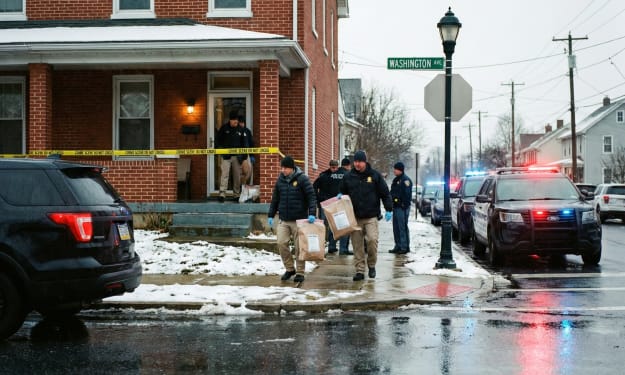
INVESTIGATION TARGET: JONATHAN C. GERLACH INCIDENT LOCATION: 100 WASHINGTON AVENUE, EPHRATA PA CHARGES: ABUSE OF CORPSE (x100), THEFT, DESECRATION STATUS: INCARCERATED ($1M BAIL) KEYWORDS: #HouseOfSkulls #JonathanGerlach #EphrataCrime #MountMoriah
By Sunshine Firecracker5 days ago in Criminal



Comments
There are no comments for this story
Be the first to respond and start the conversation.