
The Criminal Nobody Suspected
The first report said it was an accident. A kitchen fire. Nothing unusual—old houses do that sometimes

M Mehran
The first report said it was an accident.
A kitchen fire.
Nothing unusual—old houses do that sometimes.
But by the time the fourth house burned in the same neighborhood, the town of Briar Creek stopped calling it coincidence.
They started calling it a pattern.
And patterns always have a creator.
---
I wasn’t a detective.
I wasn’t even close.
I stocked shelves at a local grocery store, counted cans and expiration dates, and went home to an apartment where the walls were thinner than my patience.
But Briar Creek wasn’t a city. It was the kind of town where everyone knew everyone—or thought they did—so when the fires started, rumors spread faster than flames.
People blamed teenagers.
Strangers.
The usual suspects.
Not once did they look at the person setting up folding chairs at every fundraiser, baking cookies for every grieving family, handing out blankets with trembling hands.
Not once did they look at Mrs. Ellis.
---
She lived three houses down from me.
Gray hair in a bun, soft voice, walked her tiny dog at the exact same time every morning. The kind of person who apologized when other people bumped into her.
She was harmless.
Ordinary.
Invisible.
Which made what came next impossible to believe.
---
The night of the fifth fire, I was working the late shift.
The store was empty except for the hum of the refrigerators and the buzz of fluorescent lights that never stopped flickering.
At 10:42 p.m., the power went out.
The entire store dropped into silence.
Then came the sirens.
They sliced through the night like fear with a pulse.
I stepped outside and saw it—the sky glowing orange behind the row of houses near mine.
Another fire.
I ran.
Not because I was brave, but because when everything familiar starts burning, instinct chooses for you.
---
Crowds gathered.
Neighbors cried.
Firefighters shouted orders that disappeared into smoke.
And then I saw her.
Mrs. Ellis standing across the street, her dog shaking in her arms—not from fear, but from the heat.
Her face wasn’t devastated like everyone else’s.
It was empty.
Completely still.
Like she wasn’t seeing the fire at all—just remembering it.
Something cold settled in my stomach.
---
The next morning, the town held a community meeting at the school gym.
The mayor gave a speech full of words that sounded strong but meant nothing.
“We will get through this.”
“We won’t be intimidated.”
“We are working with authorities.”
Everyone clapped at the wrong moments, desperate to feel safe.
I sat in the back.
Mrs. Ellis sat in the front row.
When a volunteer announced a donation drive for the latest victims, she was the first to sign up—again.
People praised her.
“She’s an angel.”
“She shows up every time.”
“We need more people like her.”
I watched her carefully.
Her hands shook—not from nerves, but from excitement.
The kind people mistake for compassion.
---
I tried to forget what I saw.
Told myself I was being paranoid.
Accusing the sweetest woman in town was ridiculous.
But the mind notices things long before the heart is ready.
Over the next week, I observed.
She always arrived at fire scenes before emergency crews.
Always stood in the same place.
Never looked surprised.
And her dog—normally anxious—never barked during sirens.
Animals know.
People ignore.
---
On a Thursday night, I followed her.
She left her house at 11:56 p.m., walking slowly, dog tucked under her coat.
Not toward the park.
Not toward the store.
But toward the abandoned Miller house—the only one in town no one cared about.
My pulse hammered.
She slipped inside through the side entrance.
Minutes passed.
Then I saw it—a small flicker of light through the broken window.
Not accidental.
Deliberate.
I dialed 911, hands shaking so violently I nearly dropped my phone.
---
The fire department arrived before the flames spread.
Mrs. Ellis walked out calmly.
Her dog snuggled against her chest.
Like she had simply gone in to check on something.
When the police asked what she was doing there, she said:
“I smelled smoke and came to warn someone.”
There was no smoke.
Not yet.
But the officer wrote down her statement and let her go.
Because in Briar Creek, kindness was a shield.
And she knew it.
---
I couldn’t sleep.
Every time I closed my eyes, I imagined the next house—the next family—the next headline.
So the following morning, I went to the police station.
I told them everything.
They listened politely.
Then one of them leaned forward and sighed.
“Mrs. Ellis lost her husband in a house fire twenty years ago,” he said. “Trauma makes people behave oddly. Doesn’t make them criminals.”
I walked out feeling like I had just accused the sun of being too bright.
---
Three nights later, the final fire happened.
Not at a random house.
At hers.
By the time firefighters broke down the door, it was too late.
They found her sitting in the living room, dog in her lap, flames climbing the walls around her.
She never tried to escape.
The official report said accidental electrical failure.
But the fire chief said something quiet when he thought no one could hear:
“She wanted to be where he was.”
And suddenly everything made sense.
She hadn’t been burning houses out of hatred.
She had been choosing victims the way grief chooses memories—by association.
Each house belonged to someone connected to her past:
a former neighbor, an old friend, someone who brought flowers to her husband’s funeral.
Not destroying them.
Letting go of them.
Until she reached herself.
---
For weeks, the town moved carefully, as if the smoke hadn’t cleared.
People still called her kind.
Still said she meant well.
Still brought flowers to the ashes.
But I think about her differently.
Not as a criminal who hid in plain sight—
but as someone broken so quietly
no one ever noticed the sound.
About the Creator
Keep reading
More stories from Muhammad Mehran and writers in Criminal and other communities.
He Confessed to Murder in My DMs: The Dark Side of Going Viral
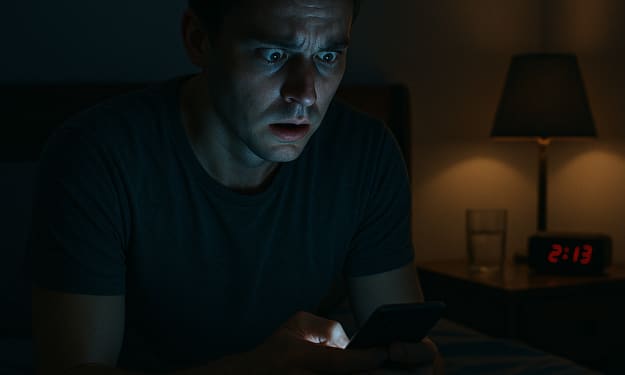
When your most-liked story becomes someone else's confession booth The message came in at 2:13 a.m. I saw the notification glow on my nightstand, that soft blue light that usually means spam, or a heart emoji, or someone asking, “Did this really happen?”
By abualyaanart3 days ago in Criminal

Comments
There are no comments for this story
Be the first to respond and start the conversation.