
The CPAC and the "Domestic Terrorist" Controversy
CPAC's Call to Defund Law Enforcement: Conservative Leaders and their 'We Are All Domestic Terrorists' Banner
Previous Section: Beyond the Headlines - An Introduction to What Happened on January 6th
The CPAC and the "Domestic Terrorist" Controversy
Introduction to CPAC The Conservative Political Action Conference (CPAC) is a crucial part of the United States' political ecosystem. It has gained significant attention recently, largely due to its stance related to the January 6th event. Searching for terms like "CPAC domestic terrorists" or "CPAC we are all domestic terrorists" gives a glimpse into the controversy surrounding their stand on this crucial incident.
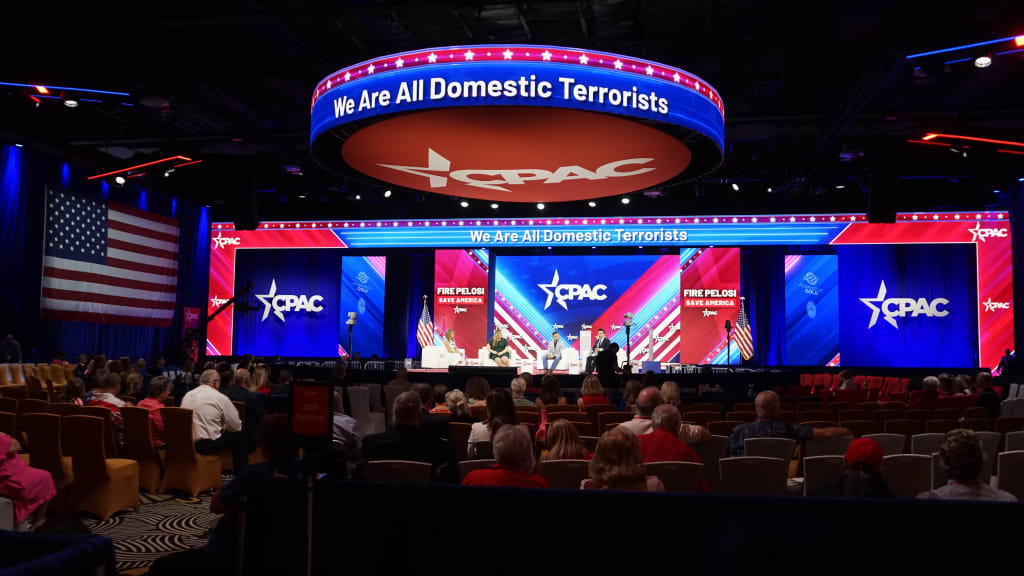
In August 2022, the Conservative Political Action Conference (CPAC), a significant gathering of conservatives in Dallas, Texas, showcased a controversial banner proclaiming "We Are All Domestic Terrorists". This spectacle occurred amidst ongoing investigations into the January 6th events and seemed to express solidarity with the individuals involved in the Capitol riot.
The Context: Recent Tragedy and Controversy
Days after CPAC adopted this provocative stance, a shocking incident unfolded. A January 6th riot participant, Ricky Shiffer, engaged in an armed attack on an FBI building, fueling the contentious debate surrounding the conservative gathering. Shiffer, who had been making threats on Trump's social media platform, Truth Social, was killed in the ensuing standoff.
Conservative Leaders: A Call to Defund Law Enforcement
Notably, several CPAC speakers and conservative leaders expressed criticism of law enforcement. This sentiment came in response to investigations into elected and formerly elected officials suspected of criminal conduct. In a strikingly defiant act, Rep. Marjorie Taylor Greene publicly urged to "Defund the FBI".
The CPAC Exhibit: Defending the January 6th Rioters
CPAC also sparked controversy with a mock jail cell exhibit. This display was designed to portray January 6th rioters as political prisoners, causing heated reactions. This symbolic act was seen by many as an attempt to downplay the severity of the riot, which resulted in significant harm to law enforcement officers.
CPAC's Star Speakers: Under Investigation
The conference concluded with a keynote address by Former President Trump, currently under scrutiny for his potential role in inciting the January 6th events. Shortly after his appearance, the FBI executed a search warrant on Trump's Mar-a-Lago home, adding another layer of intrigue to this complex narrative.
"Domestic Terrorist" Banners and Their Implications
The "domestic terrorist" banners seen at CPAC, coupled with phrases like "CPAC we are all terrorists", have raised critical questions about the nature of political discourse. They have made the term "domestic terrorists CPAC" synonymous with the controversial standpoint the organization has taken. The implications of these banners and their impact on public discourse cannot be underestimated, raising questions about their effect on the country's political and social fabric.
Next Section: Key Personalities and Their Involvement
Summary of Content:
- This 8-part series explores the additional controversies and legal aspects of the January 6th event, focusing on witness tampering and convictions.
- It examines the context of the event, which involved a breach at the U.S. Capitol on January 6th, 2021, and reflects high political tension and discord.
- The series highlights the controversial stance of the Conservative Political Action Conference (CPAC) regarding the event, including the display of a banner proclaiming "We Are All Domestic Terrorists" and a mock jail cell exhibit.
- Key personalities involved in the event, such as Aiden Henry Bilyard and Daniel Caldwell, are extensively examined to understand their roles and motivations.
- Lawsuits between individuals like Mike Lindell and Kevin McCarthy provide insights into the tensions within the Republican party following January 6th.
- Detailed examinations of the January 6th hearings and testimonies from key figures like Sarah Matthews and Matthew Pottinger contribute to a deeper understanding of the events.
- The aftermath and consequences of January 6th, including ongoing legal actions, political fallout, controversies, and unanswered questions, are explored.
- The response from CPAC, gaps in information, and the public's perception of the events are analyzed.
- The series concludes by emphasizing the importance of understanding the past to avoid repeating it and calls for transparency, accountability, and a more informed society.
About the Creator
Keep reading
More stories from January 6th News and writers in Criminal and other communities.
Key Personalities and Their Involvement in January 6th
Previous Section: The CPAC and the "Domestic Terrorist" Controversy Profile of Aiden Henry Bilyard and His Involvement The January 6th event has brought several individuals into the spotlight, one of them being Aiden Henry Bilyard. You might have come across the name Aiden Bilyard Cary NC, known for his involvement in the events, he has emerged as a figure of interest in the discussions surrounding January 6th.
By January 6th News3 years ago in Criminal
The Man Who Never Existed
M Mehran In the quiet city of Brookvale, crime was rare. The streets were peaceful, the people friendly, and the police department mostly dealt with minor thefts and traffic violations. That changed on a cold November morning. At exactly 6:15 AM, a jogger running through Riverside Park discovered something disturbing near the old iron bridge. A man was lying motionless on the ground. Within minutes, police sirens echoed through the fog-covered park. Officers quickly sealed the area as detectives examined the scene. The victim was well-dressed, wearing an expensive coat and polished shoes. At first glance, it looked like a robbery. But nothing was missing. His wallet was still in his pocket. His watch remained on his wrist. Detective Laura Bennett arrived at the scene shortly after sunrise. Known for her sharp instincts and calm demeanor, she immediately sensed something unusual. The victim had no visible injuries. Yet he was clearly dead. A Death Without a Cause The autopsy revealed something shocking. The man had been poisoned. A rare and fast-acting toxin had entered his bloodstream only minutes before death. But investigators couldn't find any injection marks or signs of forced consumption. Even stranger, the victim had no identification. The wallet contained cash but no ID cards, no driver’s license, no credit cards—nothing that could reveal who he was. For the first time in her career, Detective Bennett was dealing with a victim who seemed to have no identity. The Invisible Life Police released the man’s photo to the public, hoping someone would recognize him. Days passed. No one came forward. Fingerprints were run through national databases. No match. Facial recognition searches produced nothing. It was as if the man had never existed. But Bennett refused to believe that. She began examining the smallest details. The label inside his coat came from a high-end tailor in the city. When she visited the shop, the owner recognized the design immediately. “Yes,” the tailor said slowly. “I made this coat… about three months ago.” “Do you remember the customer?” Bennett asked. The tailor nodded. “He paid in cash. Said his name was Adrian Cross.” The Name That Led Nowhere Detectives searched every public record for the name Adrian Cross. No birth records. No tax filings. No employment history. No bank accounts. Nothing. The name was fake. But one detail from the tailor stood out. Cross had been accompanied by another man when ordering the coat. A nervous man who kept watching the door. Security cameras from nearby stores eventually captured the pair walking down the street together. Facial recognition finally produced a match for the second man. His real name was Marcus Doyle. And he was already wanted by federal authorities for cyber fraud and identity theft. The Criminal Puzzle Police tracked Doyle to an abandoned warehouse on the edge of the city. When officers stormed the building, they discovered something that shocked even seasoned investigators. Inside were dozens of computers and stacks of fake identification documents. Passports. Driver’s licenses. Bank records. Doyle had been running one of the largest identity forgery operations in the region. But that raised a bigger question. Who was the dead man in the park? When Doyle was arrested, he initially refused to speak. But after hours of interrogation, he finally broke. The truth was darker than anyone expected. The Ultimate Betrayal Doyle admitted that “Adrian Cross” was not a real person. He had created the identity himself. The dead man’s real name was Ethan Ward, a former partner in Doyle’s criminal network. Together, they had built dozens of fake identities and sold them to criminals trying to disappear. But recently, Ward had grown paranoid. He believed Doyle planned to eliminate him to take control of the operation. So Ward threatened to expose everything. Doyle decided to act first. He invited Ward to meet in Riverside Park early that morning, pretending they needed to discuss a new client. Before the meeting, Doyle had poisoned a small bottle of water with the rare toxin. Ward drank it during their conversation. Minutes later, he collapsed. Doyle walked away, confident the man would remain forever unidentified. Without a real identity, Ward’s death would become an unsolved mystery. Or so Doyle believed. The Truth Always Surfaces Thanks to Detective Bennett’s determination, the plan failed. Doyle was charged with murder, fraud, and multiple federal crimes. His network of fake identities was dismantled, preventing countless future crimes. But the case left a lasting impression on everyone involved. In a world filled with digital records and surveillance, it seemed impossible for someone to vanish without a trace. Yet Ethan Ward had almost succeeded in becoming a man who never existed. And if one determined detective hadn’t followed the smallest clues—a coat label, a security camera, a forgotten face—the truth might have remained buried forever. Because in the world of crime, the most dangerous criminals are often the ones hiding behind identities that aren’t real.
By Muhammad Mehran6 days ago in Criminal
I Think My Mirror Is Alive
The Mirror I Found at a Flea Market It started with a mirror I probably should never have bought. Last summer, while wandering through a crowded flea market, I noticed it leaning against a wooden table. It was old—far older than anything else around it. The frame was dark wood, carved with strange patterns that looked almost like twisted vines or claw marks.
By Mohammad Hamid4 days ago in Criminal


Comments
There are no comments for this story
Be the first to respond and start the conversation.