
The Clutter Family Murders: A Look at the Crime, Investigation, and Aftermath
From the crime scene to the courtroom, explore the complete story of the Clutter family murders, including the trial of Hickock and Smith and the cultural impact of In Cold Blood.

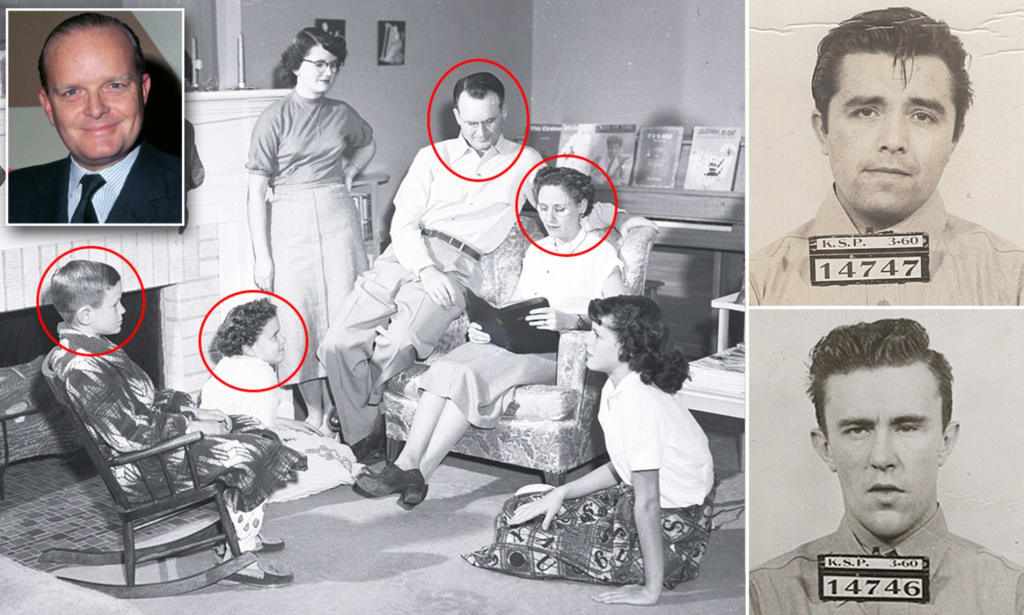
Let's take a walk back to Holcomb, Kansas, 1959. The Clutter family murders didn't just shake a small farming town - they rattled the whole country. This case, immortalized by Truman Capote in In Cold Blood, is a touchstone for true crime, not just for the brutality of the act, but for the way it exposed the underbelly of small-town rural America.
The Clutter Family: A Snapshot Before the Storm
Herb Clutter was the kind of man folks in Holcomb respected. He ran a successful wheat farm, didn't drink or smoke, and was active in the Methodist church. His wife, Bonnie, struggled with depression, but she kept a tidy home. Their daughter Nancy was the town's golden girl - smart, kind, and always willing to help. Kenyon, the son and the youngest, was quiet and liked tinkering with electronics. The family was the picture of small-town decency, the kind of family you'd expect to leave their doors unlocked.
The Lead-Up: Two Drifters, One Bad Idea
Richard "Dick" Hickock and Perry Smith met in prison. Hickock heard from a cellmate that Herb Clutter kept a safe full of cash at home. When they got out, Hickock convinced Smith to drive across Kansas for what he thought would be an easy score. They didn't know the Clutters didn't keep cash in the house. They didn't care much about the truth, either.
On November 14, 1959, Hickock and Smith rolled into Holcomb. They broke into the Clutter home after midnight, tied up the family, and searched for the safe that didn't exist. Frustration turned to violence. In the end, all four Clutters were shot dead, each in a different room, each with their hands bound. The killers left with less than fifty bucks and a portable radio.
The Investigation: Old-Fashioned Police Work
The murders stunned Holcomb. The local sheriff, Alvin Dewey, took the case personally. There was no apparent motive, no obvious suspects. The crime scene was clean, but not perfect. Investigators found a boot print, a few odd knots in the rope, and a bloody footprint. The townsfolk locked their doors for the first time.
The break came when Floyd Wells, Hickock's old cellmate, heard about the murders and tipped off the authorities. Dewey and his team tracked Hickock and Smith across the country, finally catching up with them in Las Vegas. The two men cracked under questioning. Smith confessed first, describing the murders in chilling detail. Hickock tried to pin the killings on Smith, but the evidence put them both at the scene.
The Trial: Justice in the Spotlight
The trial was quick by today's standards. Both men were found guilty and sentenced to death. The defense tried to argue insanity, especially for Smith, who had a history of head injuries and a troubled childhood. The jury didn't buy it. After years of appeals, both men were hanged in 1965.
What Makes a Killer?
Smith and Hickock weren't criminal masterminds. Hickock was a con man, always looking for a shortcut. Smith was a drifter with a chip on his shoulder and a history of abuse. Psychologists pointed to Smith's head injuries and childhood trauma as factors. Hickock, on the other hand, seemed driven by greed and resentment. Together, they were a powder keg - neither likely to kill alone, but deadly as a pair.
America Loses Its Innocence
The Clutter murders marked the end of an era. People in small towns started locking their doors. The case showed that violence could strike anywhere, even in the heartland. It also changed the way crime stories were told. Capote's "In Cold Blood" is often said to be the first "True Crime" novel that blurred the line between journalism and literature, giving birth to the "nonfiction novel." The book, and later the film adaptations, made the Clutter case a permanent part of American culture.
The Story That Won't Die
In Cold Blood is the true crime gold standard, but the Clutter murders have been retold in documentaries, TV specials, and movies. Each retelling digs into the same questions: Why did it happen? Could it have been prevented? What does it say about us? The case still draws writers and filmmakers because it's not just about murder - it's about the fragility of safety, the randomness of evil, and the stories we just can't believe are true.
My Final Thoughts
The Clutter family murders are more than a crime story. They're a mirror held up to the American psyche. The case reminds us that evil doesn't always wear a mask. Sometimes, it just knocks on the door, looking for a quick buck, and leaves a whole town changed forever. The story endures because it's not just about the killers or the victims - it's about the world they left behind, and the questions that still haunt us.
Capote's "In Cold Blood" is still the best place to start if you want to dig deeper into this true crime. But don't stop there. The real story is in the details - the ones you find in court transcripts, old newspaper clippings, and the memories of folks who still remember that night in Holcomb. That's where the truth lives, waiting for someone to listen.
"This article contains an affiliate link. If you click on these links and make a purchase, I may earn a commission at no additional cost to the reader. I only recommend products or services that add value to my readers."
The Evidence Trail
Curious about what lies beneath the surface of this case? The investigation continues on my Substack, where you’ll find this article alongside an extensive collection of resources I’ve meticulously gathered: original police reports, rare interview footage, newspaper archives, and documentary clips that mainstream media never covered. Follow the evidence trail and form your own conclusions with access to the same research materials used to craft this story. Visit my Substack MJ On Crime now to unlock the complete case file and join fellow truth-seekers who refuse to let these stories remain half-told.
About the Creator
MJonCrime
My 30-year law enforcement career fuels my interest in true crime writing. My writing extends my investigative mindset, offers comprehensive case overviews, and invites you, my readers, to engage in pursuing truth and resolution.
Multinational Crisis
Part One: Nigeria You have all heard about Nigerians, Nigeria in general. The infamous scammer country. But let’s have a real conversation. Let me give you some extremely boring stats, so we are on a level playing field, on my thoughts. I’ll be as brief as possible considering, no one wants an hour long dissertation on economic issues.
By Alexandra Grant3 days ago in Criminal
Oklahoma Murder for Hire
Murder for hire in 1988 must have been a real monster of a time to find for a woman who was bored, and just lazy. A woman that claimed she was abused, knew how to work a young man up, back in those days it was much easier to find “a knight in shining armor”. Men all over wanted to be one, no man how scuzzy they really were.
By Cassie Moore5 days ago in Criminal


Comments
There are no comments for this story
Be the first to respond and start the conversation.