
The Chilling Crimes of Javed Iqbal Mughal: Pakistan's Most Notorious Serial Killer
Inside the Mind of Pakistan’s Deadliest Serial Killer and the Nation’s Struggle for Justice

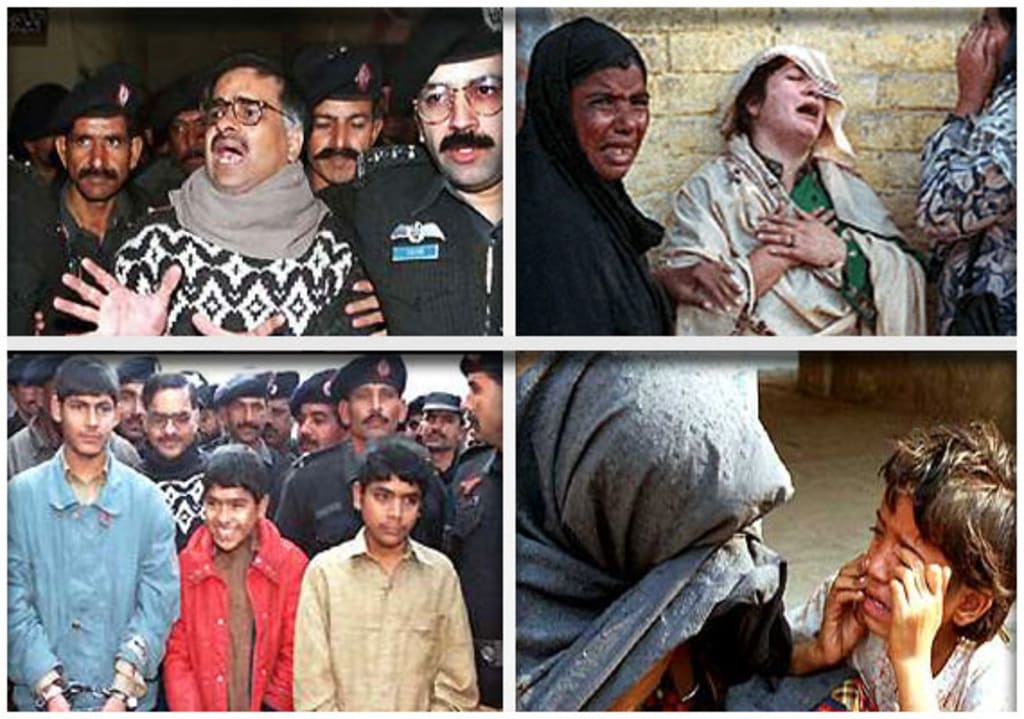
In the annals of criminal history, few names have stirred such horror and disbelief as Javed Iqbal Mughal, a Pakistani man who confessed in 1999 to the gruesome murder of 100 children. His crimes shocked the nation and the world, revealing a dark and disturbing chapter in Pakistan’s criminal history. What made his case especially chilling was not just the scale of his atrocities, but the cold and calculated manner in which they were carried out.
Early Life and Background
Javed Iqbal was born in 1956 in Lahore, Pakistan, into a wealthy family. His father was a successful businessman, and Iqbal reportedly lived a privileged life. Despite this, his early life was marked by behavioral issues and signs of emotional instability. He reportedly had difficulty forming healthy social relationships and exhibited signs of mental disturbance from a young age.
As he grew older, Iqbal led a relatively low-profile life. He operated a steel recasting business and was known to some as a quiet and reserved individual. However, behind this facade was a deeply disturbed mind harboring horrific intentions.
The Horrific Confession
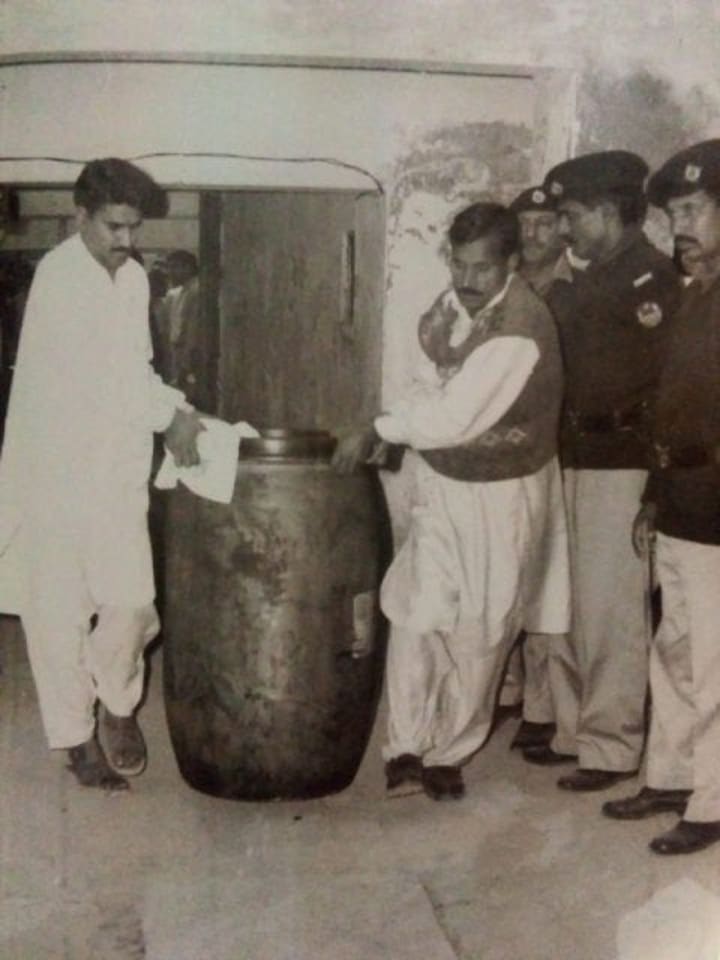
In December 1999, Javed Iqbal sent a handwritten letter to a Pakistani newspaper and the police, confessing that he had killed 100 boys, most of them between the ages of 6 and 16. His letter included chilling details: he claimed that he lured runaway or homeless children to his residence, drugged them, strangled them, and then dismembered their bodies. He would dispose of the remains in acid-filled vats to prevent identification.
In his letter, Iqbal stated, “I have no regrets. I killed these children as revenge against society.” He went on to explain that his motivation stemmed from the abuse he suffered at the hands of the police, who allegedly arrested and humiliated him in a false sodomy case. He declared that his crimes were meant to send a message to law enforcement and society as a whole.
When the authorities raided Iqbal's residence, they found vats of acid containing human remains, blood-stained clothing, photographs of his victims, and diary entries describing each murder in disturbing detail. The evidence was overwhelming and left no doubt about the extent of his crimes.
Psychological Profile and Modus Operandi
Psychologists and criminologists have studied the case of Javed Iqbal as one of the most extreme examples of sociopathic behavior. His crimes were not random acts of violence but followed a clear pattern. He targeted vulnerable children—many of whom were street kids with no family or support system. This made them easy prey and less likely to be reported missing.
He would offer them food, shelter, or money, earning their trust before attacking. After killing his victims, he would keep records and sometimes photographs, treating the murders like trophies. Such behavior is consistent with serial killers who crave control and dominance, deriving satisfaction from the suffering of their victims.
Public Reaction and National Shock
The public reaction in Pakistan was one of outrage, sorrow, and disbelief. Pakistan, a conservative society with strong family values, was unprepared to confront the reality of such a horrific predator operating in its midst. Vigils were held for the victims, and there were loud calls for justice.
Parents across the country were terrified, especially those living in urban centers like Lahore, where Iqbal operated. The case sparked debates about child safety, the failure of the social system to protect the vulnerable, and the need for reform in how missing children cases were handled.
The Trial and Unusual Sentence
Javed Iqbal was arrested shortly after his confession and brought to trial. In March 2000, a Pakistani court found him guilty of 100 counts of murder and handed down a sentence that matched the brutality of his crimes. The judge decreed that Iqbal be strangled to death in front of the parents of his victims, his body be cut into 100 pieces, and dissolved in acid—exactly how he had murdered his victims.
However, the Pakistani government later overruled this sentence, declaring that the state could not carry out such a punishment, as it violated international human rights standards. Instead, Iqbal was sent to jail to serve a life sentence.
Before the sentence could be carried out, Iqbal and an accomplice were found dead in their prison cell under mysterious circumstances. Authorities claimed it was a suicide, but many suspected foul play, believing that inmates or others might have taken justice into their own hands.
Aftermath and Legacy
The case of Javed Iqbal left a permanent scar on the collective psyche of Pakistan. It raised difficult questions about societal neglect, law enforcement inefficiency, and the safety of street children. While Iqbal’s death meant an end to his reign of terror, the pain endured by the families of his victims could never be erased.
Several human rights organizations used this case to highlight the need for stronger child protection laws and systems in Pakistan. It also prompted greater awareness and documentation of missing children, and led to some policy changes aimed at safeguarding vulnerable minors.
Conclusion
Javed Iqbal Mughal’s crimes are a terrifying reminder of how evil can exist even in the most unexpected places. His methodical killing of 100 innocent children is among the worst serial killings in history. While justice was served in some measure, his case underscores the importance of vigilance, mental health awareness, and the protection of society's most vulnerable members. Today, he remains a dark symbol of what can happen when systemic failures go unchecked and when a disturbed mind turns its rage upon the innocent.
About the Creator
Salar Khan
✨ Storyteller | 🖋️ Writer of Words That Matter
A writer fueled by curiosity, creativity, and a love for powerful storytelling.Diving into cultural commentary. My goal is simple: to connect, inspire, and spark meaningful conversations.
Keep reading
More stories from Salar Khan and writers in Criminal and other communities.
The Brazilian Dexter: The Haunting Tale of Pedro Rodrigues Filho
In the shadowy corridors of Brazil’s criminal history walks a man whose story is both terrifying and oddly compelling. Pedro Rodrigues Filho, better known as Pedrinho Matador or "Killer Petey", stands as one of the most infamous vigilante killers the world has ever known. What sets him apart isn’t just the staggering number of murders attributed to him—71 confirmed, possibly more—but the peculiar morality he followed in choosing his victims.
By Salar Khan8 months ago in Criminal
The Global Power Struggle in 2026: Why Are Tensions Rising Between the United States, Russia, China, and Venezuela?
f tensions between the United States and each of Russia, China, and Venezuela. These tensions cannot be understood as isolated events or temporary crises; rather, they are a direct reflection of a deeper struggle over global influence, strategic resources, and the future shape of the international order. At the center of this complex scene, Venezuela has emerged as a major flashpoint, while Russia and China play the role of supporters and counterweights to U.S. actions.
By America today 7 days ago in Criminal
Two Teens, One Bus, and a Nation Watching
Hello, and welcome to “The True Crime Reader,” where we dig beneath the headlines to unravel the stories that shape our understanding of crime, justice, and society. Today’s episode takes us to Oakland, California, for the story behind Dashka Slater’s powerful nonfiction book, “The 57 Bus”—a case that stunned the Bay Area and reverberated across the country.
By Kristen Barenthaler4 days ago in Criminal




Comments (1)
This is some seriously messed up stuff. Can you imagine killing 100 kids? His claim of revenge against society is just warped. And the way he carried out these murders, it's beyond sick. Makes you wonder how someone could be so cold and calculated. What do you think drove him to such extreme lengths? It's also crazy how he thought this would send a message. Clearly, it didn't solve anything. Instead, it just added to the horror. How do you think society should respond to such heinous crimes?