
The Cannibal Brothers of Bhakkar: A Real-Life Horror That Stole People’s Sleep
A True Horror Story of the Cannibal Brothers of Bhakkar That Terrified an Entire Nation

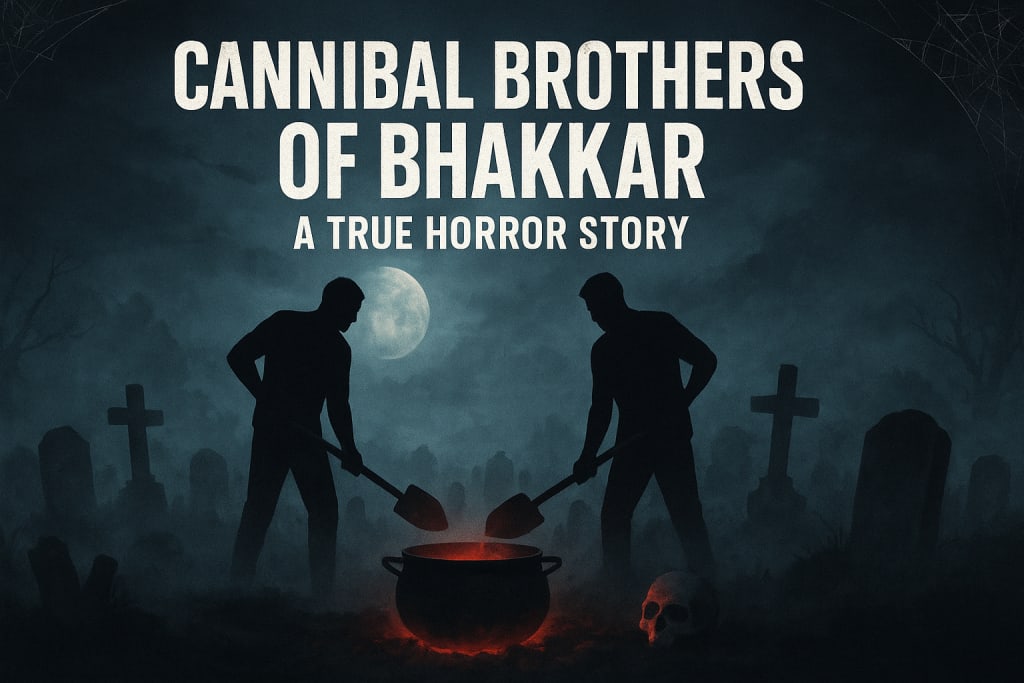
Imagine a moonlit night, silence in a graveyard, and the sound of shovels digging into fresh soil. Two brothers unearthed corpses, carried them home, chopped the bodies into pieces, cooked the flesh with spices, and ate it as if it were a normal curry. This is not a horror movie plot—it is the true story of two Pakistani brothers from Kohawar Kalan village in Bhakkar District, Punjab.
The brothers, Muhammad Arif Ali (around 35) and Muhammad Farman Ali (around 30), shocked not only their village but the entire nation with their gruesome acts of cannibalism. On the surface, they looked like ordinary villagers. But inside, they harbored a monstrous obsession: a craving for human flesh, fueled by twisted beliefs in magic and dark power. Let us take a closer look at this terrifying case that remains one of Pakistan’s most disturbing crime stories.
Background: A Dark Childhood and the Beginning of a Horrific Addiction
Arif and Farman grew up in poverty. They lived alone after their wives had left them, unable to tolerate their strange and disturbing behavior. Some reports suggest that both brothers had suffered from mental health issues since childhood—possibly schizophrenia, delusions, or severe psychological trauma.
According to their own claims, eating human flesh gave them “magical powers” or spiritual strength. Others believe it was simply an uncontrollable addiction. For years, under the cover of darkness, they went to graveyards, dug up freshly buried bodies, and dragged them home. There, they would butcher the corpses, separate bones from flesh, and cook the meat with vegetables. The stench of decaying human flesh often spread through the village, but for a long time, no one suspected what was happening.
First Shocking Discovery: The 2011 Arrest and 100 Desecrated Graves
In April 2011, villagers began complaining about graves being disturbed and a foul smell drifting from the brothers’ house. Police raided their home, only to stumble upon a nightmare:
• A freshly buried woman’s corpse had been dug up.
• The flesh was boiling in a pot on their stove.
• Human remains—bones, skulls, and flesh—were scattered around the house.
The brothers immediately confessed. They admitted that they had been desecrating graves for years, targeting more than 100 graves. They calmly explained how they cooked and ate the meat, as though it were nothing unusual.
The revelations sent shockwaves across Pakistan. Fear gripped Bhakkar—families locked their doors at night, villagers stood guard at cemeteries, and the story dominated the national media.
Yet, despite the horrifying nature of the crimes, the law presented a strange loophole: Pakistan has no specific law against cannibalism. Therefore, in 2011, the brothers were charged only with desecrating graves and sentenced to two years in prison. Many people were outraged—how could such a light punishment be possible for such monstrous acts? It was during this time that the name “The Cannibal Brothers of Bhakkar” first entered public memory.
Release and a Second Horror: The 2014 Cannibalism Case
In 2013, the brothers were released. They promised to change their ways and live normal lives. But that was a lie.
By April 2014, villagers once again reported a terrible stench coming from their house. Police raided it and discovered something even more horrifying than before:
• A severed skull of a child aged 2–3 years, freshly exhumed from a grave.
• Human meat simmering in a pot of curry.
• Evidence that they had returned to their cannibalistic habits, this time targeting even children.
Arif was arrested immediately, while Farman initially escaped but was caught soon after. The brothers admitted they had dug up over 150 graves—some reports even suggest as many as 350. Their lack of remorse terrified the nation.
Media headlines exploded: “The Cannibals Are Back.” People were terrified. Even police officers admitted they had never seen anything so disturbing.
Courtroom Drama: The Anti-Terrorism Sentence
In June 2014, the Punjab Anti-Terrorism Court handed down a much harsher punishment. The brothers were sentenced to 12 years in prison (some sources report 11 years and 4 months).
The charges included:
• Desecration of graves
• Defilement of human corpses
• Spreading terror in the community
The court noted that their acts had caused widespread panic, which is why anti-terrorism laws were applied. While the punishment was more severe than before, many still questioned why they were not given life imprisonment or the death penalty. Once again, the absence of a specific cannibalism law in Pakistan left the justice system limited in what it could impose.
Why Did They Become Cannibals? Psychological Theories
The motives of the Bhakkar brothers remain debated. Some possible explanations include:
• Addiction – The brothers described their compulsion as similar to drug addiction: they simply could not stop eating human flesh.
• Belief in Magic – Reports suggest they believed consuming human meat gave them supernatural powers.
• Mental Illness – Psychologists speculated conditions like schizophrenia, psychosis, or necrophilia-related disorders.
Regardless of the reason, their actions represented the darkest side of human nature—where morality collapses, and horrifying desires take control.
Where Are They Now?
Based on their 2014 sentence, the brothers are expected to remain in prison until 2026. As of 2025, no official news has surfaced about their release. Some unconfirmed reports hint at possible early release or parole, but nothing has been verified. The thought of them returning to society continues to terrify people.
Conclusion: A Real-Life Horror Story
The story of the Cannibal Brothers of Bhakkar is a grim reminder that the greatest horrors sometimes come not from ghosts or demons but from ordinary people living among us. Their actions desecrated sacred spaces, destroyed community trust, and revealed a disturbing gap in Pakistan’s legal system.
Even today, villagers in Bhakkar speak of them with fear. Parents warn children about graveyards, and many still recall the headlines that shook the nation.
This case is not just a story of cannibalism—it is a tale of psychological darkness, legal weakness, and human fear. A nightmare so real that it continues to haunt Pakistan’s collective memory.
About the Creator
Janalam
Start writing...Hey! I’m Jan Alam 😎✍️
I write all kinds of stories — sci-fi 🚀, romance 💖, or something totally weird and new!
Obsessed with pop culture 🎬🎶📚 and always busy creating something fresh ✨🔥
Donald Trump and the Iranian File: Policies, Tensions, and Public Questions
Donald Trump and the Iranian File: Policies, Tensions, and Public Questions Donald Trump’s approach to the Iranian file marked one of the most controversial chapters in modern US foreign policy. During his presidency, relations between the United States and Iran shifted dramatically, moving away from diplomacy toward pressure and confrontation. Trump’s decisions reshaped the Middle East landscape, affected global energy markets, and sparked intense debate both inside and outside the United States. Understanding Trump and the Iranian file requires examining his strategy, its consequences, and the questions people most frequently ask.
By America today about 6 hours ago in Criminal
The steps to losing a child
Step One: Lose a child. Not what anyone wants to happen and nothing you can do to change it, but you can go through steps to becoming happy again. You can go through steps to loving again. You can go through steps to become a new you because after losing a child you will never be the same person you once were.
By Tabitha Hinkley3 days ago in Fiction




Comments
There are no comments for this story
Be the first to respond and start the conversation.