
The Caging of America
Six million people are under correctional supervision in the U.S.—more than were in Stalin’s gulags.
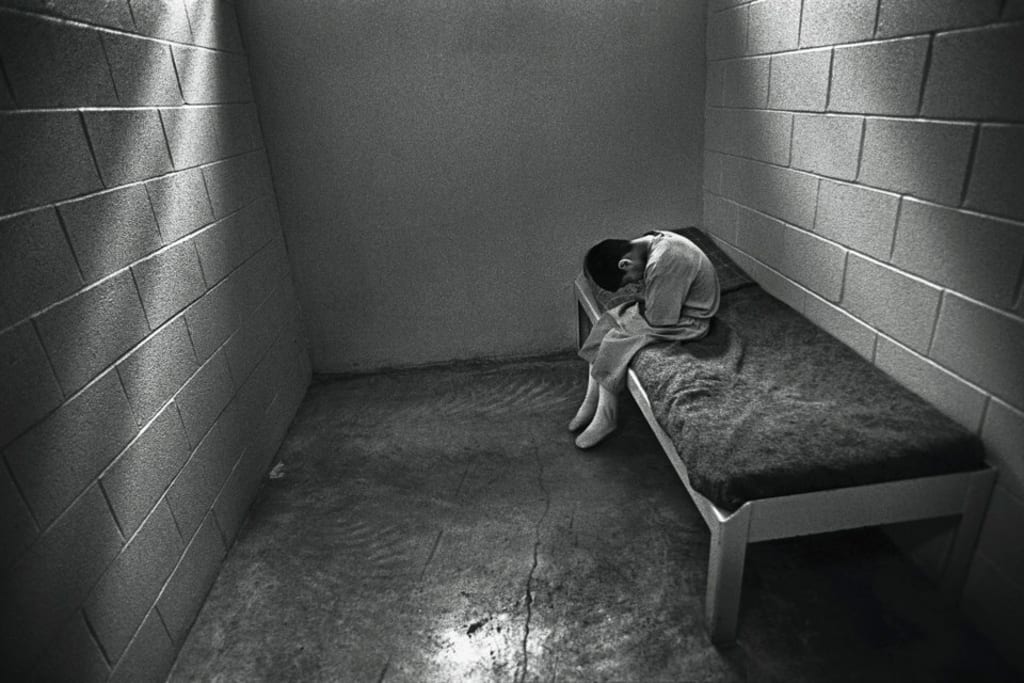
Aprison is a trap for catching time. Good reporting appears often about the inner life of the American prison, but the catch is that American prison life is mostly undramatic—the reported stories fail to grab us, because, for the most part, nothing happens. One day in the life of Ivan Denisovich is all you need to know about Ivan Denisovich, because the idea that anyone could live for a minute in such circumstances seems impossible; one day in the life of an American prison means much less, because the force of it is that one day typically stretches out for decades. It isn’t the horror of the time at hand but the unimaginable sameness of the time ahead that makes prisons unendurable for their inmates. The inmates on death row in Texas are called men in “timeless time,” because they alone aren’t serving time: they aren’t waiting out five years or a decade or a lifetime. The basic reality of American prisons is not that of the lock and key but that of the lock and clock.
That’s why no one who has been inside a prison, if only for a day, can ever forget the feeling. Time stops. A note of attenuated panic, of watchful paranoia—anxiety and boredom and fear mixed into a kind of enveloping fog, covering the guards as much as the guarded. “Sometimes I think this whole world is one big prison yard, / Some of us are prisoners, some of us are guards,” Dylan sings, and while it isn’t strictly true—just ask the prisoners—it contains a truth: the guards are doing time, too. As a smart man once wrote after being locked up, the thing about jail is that there are bars on the windows and they won’t let you out. This simple truth governs all the others. What prisoners try to convey to the free is how the presence of time as something being done to you, instead of something you do things with, alters the mind at every moment. For American prisoners, huge numbers of whom are serving sentences much longer than those given for similar crimes anywhere else in the civilized world—Texas alone has sentenced more than four hundred teen-agers to life imprisonment—time becomes in every sense this thing you serve.
For most privileged, professional people, the experience of confinement is a mere brush, encountered after a kid’s arrest, say. For a great many poor people in America, particularly poor black men, prison is a destination that braids through an ordinary life, much as high school and college do for rich white ones. More than half of all black men without a high-school diploma go to prison at some time in their lives. Mass incarceration on a scale almost unexampled in human history is a fundamental fact of our country today—perhaps the fundamental fact, as slavery was the fundamental fact of 1850. In truth, there are more black men in the grip of the criminal-justice system—in prison, on probation, or on parole—than were in slavery then. Over all, there are now more people under “correctional supervision” in America—more than six million—than were in the Gulag Archipelago under Stalin at its height. That city of the confined and the controlled, Lockuptown, is now the second largest in the United States.
outrageous and obvious violations of simple justice. You can get off if the cops looked in the wrong car with the wrong warrant when they found your joint, but you have no recourse if owning the joint gets you locked up for life. You may be spared the death penalty if you can show a problem with your appointed defender, but it is much harder if there is merely enormous accumulated evidence that you weren’t guilty in the first place and the jury got it wrong. Even clauses that Americans are taught to revere are, Stuntz maintains, unworthy of reverence: the ban on “cruel and unusual punishment” was designed to protect cruel punishments—flogging and branding—that were not at that time unusual.
The obsession with due process and the cult of brutal prisons, the argument goes, share an essential impersonality. The more professionalized and procedural a system is, the more insulated we become from its real effects on real people. That’s why America is famous both for its process-driven judicial system (“The bastard got off on a technicality,” the cop-show detective fumes) and for the harshness and inhumanity of its prisons. Though all industrialized societies started sending more people to prison and fewer to the gallows in the eighteenth century, it was in Enlightenment-inspired America that the taste for long-term, profoundly depersonalized punishment became most aggravated. The inhumanity of American prisons was as much a theme for Dickens, visiting America in 1842, as the cynicism of American lawyers. His shock when he saw the Eastern State Penitentiary, in Philadelphia—a “model” prison, at the time the most expensive public building ever constructed in the country, where every prisoner was kept in silent, separate confinement—still resonates:
I believe that very few men are capable of estimating the immense amount of torture and agony which this dreadful punishment, prolonged for years, inflicts upon the sufferers. . . . I hold this slow and daily tampering with the mysteries of the brain, to be immeasurably worse than any torture of the body: and because its ghastly signs and tokens are not so palpable to the eye and sense of touch as scars upon the flesh; because its wounds are not upon the surface, and it extorts few cries that human ears can hear; therefore I the more denounce it, as a secret punishment which slumbering humanity is not roused up to stay.
Not roused up to stay—that was the point. Once the procedure ends, the penalty begins, and, as long as the cruelty is routine, our civil responsibility toward the punished is over. We lock men up and forget about their existence. For Dickens, even the corrupt but communal debtors’ prisons of old London were better than this. “Don’t take it personally!”—that remains the slogan above the gate to the American prison Inferno. Nor is this merely a historian’s vision. Conrad Black, at the high end, has a scary and persuasive picture of how his counsel, the judge, and the prosecutors all merrily congratulated each other on their combined professional excellence just before sending him off to the hoosegow for several years. If a millionaire feels that way, imagine how the ordinary culprit must feel.
About the Creator
Keep reading
More stories from Farhan Rafid and writers in Criminal and other communities.
The Ajmer 1992 Sex Scandal: India’s Forgotten Nightmare of Exploitation and Silence
India, a land often cloaked in conservatism and rigid social structures, has seen its fair share of dark chapters. Among these, the Ajmer 1992 sex scandal stands as a horrifying reminder of systemic failure, social silence, and the exploitation of the vulnerable. A tale not only of sexual abuse but also of political influence, fear, and the manipulation of justice, the Ajmer case is one of the most disturbing sex scandals in Indian history—one that shook Rajasthan and left deep scars in the collective conscience of a nation.
By Farhan Rafid9 months ago in Criminal
19-Year-Old Wife Convicted After Pushing Husband Out High-Rise Window
The tragic case of Joshua Hilberling highlights a devastating instance of domestic violence that ended in fatality drawing national attention due to its shocking circumstances and the reversal of typical gender roles in such incidents. On June 7 2011 23-year-old Joshua Josh Hilberling a U.S. Air Force veteran described as a tall physically imposing man (around 6-foot-5 and 220 pounds) plummeted to his death from the 25th floor of the University Club Tower a high-rise apartment building in downtown Tulsa, Oklahoma. He fell 17 stories landing on the roof of the building's parking garage where he succumbed to his injuries despite emergency response efforts.Josh's wife Amber Michelle Hilberling, who was just 19 years old at the time and seven months pregnant with their child was the only other person present during the incident. The couple had married the previous year in 2010 after a whirlwind romance but their relationship quickly deteriorated into volatility marked by arguments and physical altercations. Amber claimed the death was accidental and occurred in self-defense during a heated fight. According to her account, Josh had grabbed her shoulder or otherwise threatened her safety and that of their unborn baby prompting her to push him away. She insisted the window shatter and his fall were unintended consequences of the struggle.
By Kure Garbaabout 2 hours ago in Criminal
Casting Stones from Crystal Walls: Tracing the 'Corrupt Crusade' Against Kiernan Major
Ever since the dubious arrest of upstate New York native Kiernan Major, an unforgiving odor has lingered among his close associates, friends and supporters—an odor that calls into question nearly everything that has lead up to and followed his incarceration. More than two years prior to his arrest, Major had founded a private intelligence and security consulting firm based in San Francisco's financial district. Stacked with ex-military and intelligence personnel. The founding members spent years methodically scanning military, academic, and intelligence networks for their shared antipathy toward the so-called "military-industrial complex."
By Charlie A. Millerabout 16 hours ago in Criminal



Comments
There are no comments for this story
Be the first to respond and start the conversation.