
The Bryan Kohberger Motive That Just Makes SENSE
Exploring the possible motive behind one of the most chilling alleged crimes in recent memory.

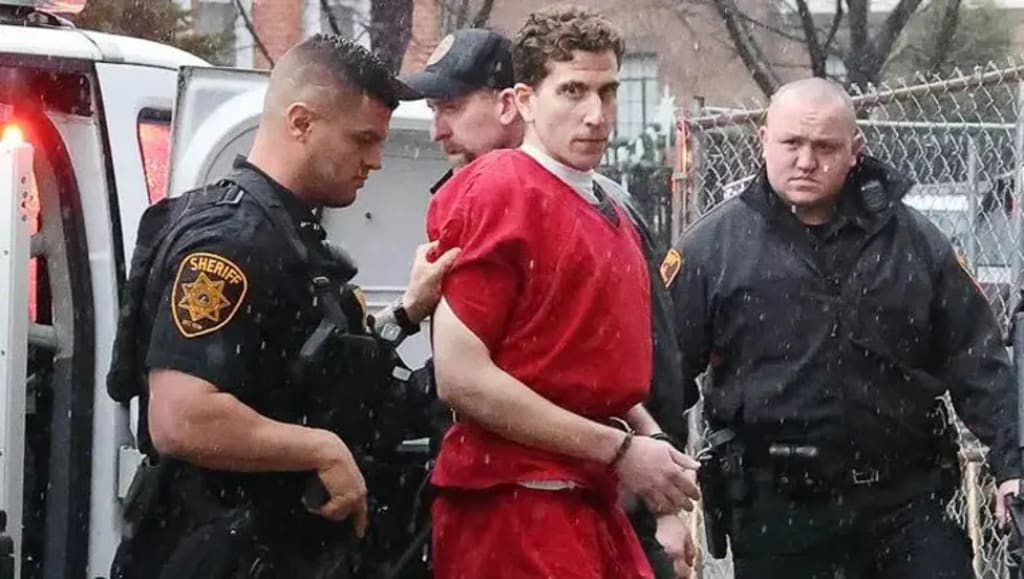
The case that gripped a nation still leaves us asking the same question: Why? Why would someone walk into a quiet off-campus home in the dead of night and end four lives in such a brutal, personal way? Bryan Kohberger’s name may forever be attached to this horrific crime, but his motive—if he is guilty—remains murky. And that’s what this article is about: the murk.
Because when there’s no clear motive, we try to find patterns. We search for something—anything—that helps us understand. This isn’t a declaration of guilt or innocence. Kohberger hasn’t been convicted yet. This is theory. It’s perspective. It’s trying to make sense of the senseless.
The Weight of Control
Let’s start with something seemingly small: Kohberger’s strict veganism. Reports suggest he was so intense about it that he refused to eat from pots and pans that had ever touched meat. His family was allegedly told to throw them out.
Now, being vegan is a personal choice, and an ethical one for many. But that level of extremity? That’s not about tofu. That’s about control.
Controlling your environment that tightly—especially when you’re living with others—can signal more than a food preference. It can hint at someone who feels powerless in other areas of life. Someone who compensates for internal chaos by obsessing over what little they can dictate. In this case, dinnerware.
That might sound like a stretch. But when taken in context with other stories about Kohberger’s behavior, it becomes part of a larger, more troubling mosaic.
A Bully Masking His Insecurity
A former high school classmate described Kohberger as a bully. Not in the obvious, playground-pushing sense. But the kind of bully who uses your weaknesses against you to cover up his own. According to the classmate, Kohberger frequently mocked others’ intelligence—maybe because deep down, he was insecure about his own place in the world.
Think about that. A guy who allegedly teased others for being “slow-witted,” who couldn’t let go of what he hated about himself, and instead projected it. There’s pain in that. And resentment. That’s not just immaturity. That’s identity warfare.
Combine that with the idea that he may have struggled with his weight in the past, and you can start to sketch the outline of someone who didn’t fit in, who wanted desperately to feel superior—but couldn’t find a healthy way to get there.
The Social Mirror: Envy, Resentment, Rage
Kohberger’s alleged victims were, by all accounts, well-liked, attractive, outgoing college students. They were everything he may have struggled to be. Friends. Community. Confidence. Normalcy.
If you were someone who had long felt alienated, who believed life had handed you rejection while others coasted on charisma and looks—you might carry a growing resentment. One that festers. One that eventually boils.
That’s where I see the possible connection. I don’t think this was about a specific person. I don’t believe this was random. I think it was symbolic. These victims may not have been known to Kohberger personally, but they may have represented every person who had ever made him feel invisible. Or stupid. Or unwanted.
The rage? It wasn’t about who they were. It was about what they represented.
It’s the same psychological wiring that experts have identified in certain school shooters: a deeply antisocial mindset, coupled with an inability to form meaningful bonds, and a long-harbored anger aimed at the popular crowd.
Only this time, it wasn’t a school. It was a quiet house in Moscow, Idaho.
A Crime of Passion—Without Passion?
Law enforcement initially considered this a “crime of passion,” which often implies a personal connection between the perpetrator and victim. But what if that connection wasn’t tangible? What if it wasn’t about knowing the victims—but knowing who they reminded him of?
The idea of a crime of passion doesn’t necessarily need to involve romance or betrayal. It can also stem from deep emotional hatred—the kind of hatred that builds slowly, over years of social rejection or psychological pain.
This theory makes the most sense to me. Because let’s be honest: “He killed just for the thrill” is too simplistic. It reduces the act to something clinical, or cinematic, when human beings are rarely that flat. Especially ones who plan things out.
There’s history here. And if you look hard enough, it’s not hard to imagine what that story might look like.
The Need to Be Seen
There’s another layer to all of this—the desire to be understood, even if it's in the most twisted way imaginable. Some people seek connection through conventional means. Others seek it through violence.
If Kohberger is guilty, I wonder if part of him wanted to be caught. Not immediately, of course. But maybe on some level, the fantasy was to outsmart the system… and if that failed, at least the world would finally look his way.
Isn’t that the cruel irony of infamy? That it offers the validation society never gave you?
Final Thoughts: A Theory, Not a Verdict
This is not a diagnosis. I don’t have a PhD in psychology or criminal profiling. But I’ve read enough, watched enough, and thought enough about this case to land here:
If Bryan Kohberger committed this crime, I believe it was targeted in spirit, if not in person.
I believe he may have projected years of personal failure, self-loathing, and social rejection onto a group of young people who represented everything he felt excluded from. The crime wasn't about them. It was about him.
Still, I’ll leave room for the trial. I’ll leave room for the possibility—however slim—that this theory is wrong. But until we hear all the evidence, all we have are theories. And this one? It’s the one that makes the most sense to me.
What Do You Think?
Do you believe Kohberger stalked his victims beforehand? Was this about power? Projection? Or something darker and simpler?
Let me know what you think in the comments. Because the only way we really understand cases like this is when we try to put the pieces together—together.
About the Creator
Lawrence Lease
Alaska born and bred, Washington DC is my home. I'm also a freelance writer. Love politics and history.
Keep reading
More stories from Lawrence Lease and writers in Criminal and other communities.
The Capture of Robert Hanssen: A Shocking Betrayal that Shaped the FBI’s Future
The arrest of Robert Hanssen, a veteran FBI agent turned Russian spy, stands as one of the most significant betrayals in the history of U.S. intelligence. His capture, in 2001, marked the end of a nearly 20-year espionage campaign that had compromised U.S. security on multiple fronts. The impact of his actions reverberated throughout the FBI and the broader intelligence community, forcing major reforms and a reevaluation of internal security practices. Hanssen's story is not just one of espionage, but of systemic flaws within the FBI and the intelligence community, lessons from which continue to shape practices today.
By Lawrence Leaseabout a year ago in Criminal
Inside the House of Skulls: The Full Timeline of the Jonathan Gerlach Case
The Tuesday Morning Raid It started on Tuesday, January 6, 2026. Residents of Washington Avenue in Ephrata, Pennsylvania, are used to quiet mornings. But that day, the street was lined with unmarked cars. These weren't Ephrata police cruisers; they were detectives from the Yeadon Police Department in Delaware County, backed by state authorities.
By Sunshine Firecrackera day ago in Criminal
Multinational Crisis
Part One: Nigeria You have all heard about Nigerians, Nigeria in general. The infamous scammer country. But let’s have a real conversation. Let me give you some extremely boring stats, so we are on a level playing field, on my thoughts. I’ll be as brief as possible considering, no one wants an hour long dissertation on economic issues.
By Alexandra Grantabout 20 hours ago in Criminal




Comments
There are no comments for this story
Be the first to respond and start the conversation.