
The Black Dahlia: The Unsolved Murder That Shocked Hollywood
The chilling true story of Elizabeth Short, a young actress whose brutal murder remains one of America’s greatest mysteries

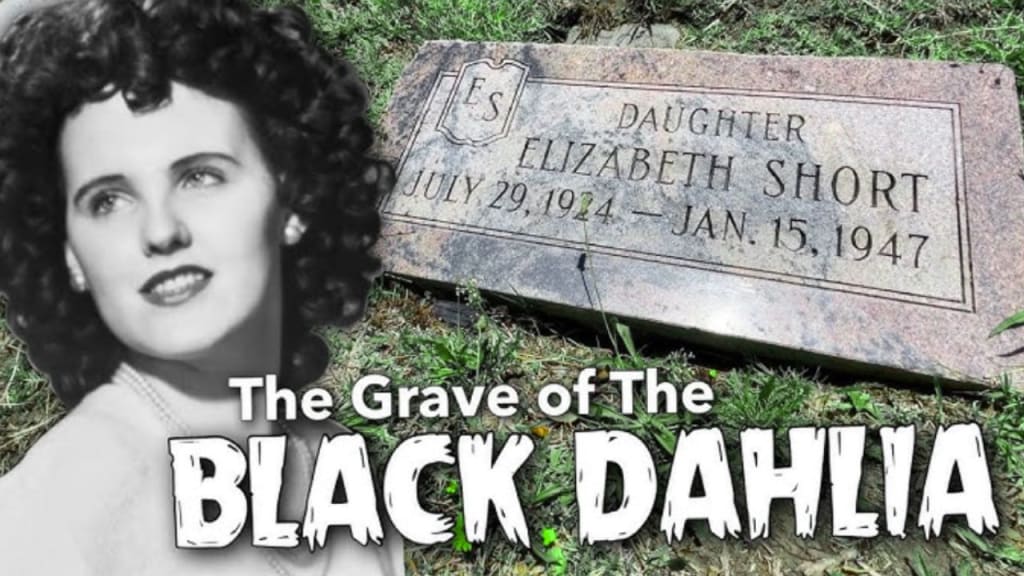
Los Angeles, 1947: A young woman full of dreams and hope for a Hollywood career was found dead under horrifying circumstances. Elizabeth Short, later nicknamed the "Black Dahlia," had her body brutally mutilated and was left in a vacant lot. The city was shocked, the press went into a frenzy, and the case quickly became one of the most infamous unsolved murders in American history. Even more than seventy years later, the story of the Black Dahlia continues to fascinate people all over the world.
Early Life of Elizabeth Short
Elizabeth Short was born on July 29, 1924, in Boston, Massachusetts. Her childhood was tough; her parents divorced when she was young, and she moved several times with her mother. Despite her challenges, Elizabeth was determined to make a better life for herself. She dreamed of acting in Hollywood movies and often imagined herself on the silver screen.
By 1943, Elizabeth had relocated to Los Angeles. She worked small jobs, which included waitressing, while attending acting classes. Known for her beauty, charm, and striking short black hair, she caught the attention of the local community. Her life seemed full of promise, till tragedy struck.
The Day of the Murder
On January 15, 1947, the body of Elizabeth was found in a vacant lot in the Leimert Park area of Los Angeles. The murder was shocking not only in relation to her death but also because of the condition of her body. She had been cut in half at the waist, and her face was slashed, forming a grotesque smile. The brutality suggested that the killer may have had medical knowledge or anatomical skill.
The discovery sent fear throughout the city. Newspapers sensationalized the story, dubbing her the “Black Dahlia,” and the gruesome details made front-page headlines across the nation. Elizabeth Short was to become far better known in death than during her lifetime due to this sensational murder.
The mechanism of aortic wall failure can be attributed to many related factors.
Investigation and Suspects
The resulting investigation by the Los Angeles Police Department was one of the largest in city history, involving hundreds of interviews and dozens of suspects. No one was ever convicted.
Theories abounded for years, ranging from a scorned lover to organized crime involvement, with speculation about a serial killer not excluded. High-profile suspects continually cropped up through the media, but were never arrested due to a lack of sufficient evidence. The sensational nature of the case also served to fuel rumors and further complicate the investigation.
The press kept the story alive. Books and documentaries concerning the case kept the story current. Even today, historians and those interested in true crime sift through old evidence and revisit theories for clues that were overlooked decades ago.
Why the Case Still Fascinates People
The Black Dahlia case captured and maintained the attention of the public for a number of reasons. First, it is a story of glamour and tragedy. Elizabeth's dreams of Hollywood fame are a great juxtaposition to the horror of her death, creating a very dramatic and compelling narrative.
Second, the mystery itself engages readers. Unsolved murders leave questions unanswered: Who killed Elizabeth? Why was the crime so brutal? These questions remain, keeping the story alive for generations.
Lastly, her story has inspired numerous books, movies, and documentaries. Writers and filmmakers continue to explore Elizabeth Short’s life and death, ensuring the legend of the Black Dahlia lives on. The combination of real-life horror, unsolved mystery, and Hollywood allure makes this case truly unforgettable.
Legacy of the Black Dahlia The murder of Elizabeth Short has left an indelible mark on American culture. The nickname "Black Dahlia" has become synonymous with unsolved crime and mystery. To many, her story stands as a cautionary tale about the risks involved with fame, ambition, and placing trust in the wrong people. Decades later, her story is still debated all over the world. People share theories, revisit old evidence, and get into the dark underbelly of Hollywood in the 1940s. The life of Elizabeth Short may have come to a sad end, but her story has continued to fascinate and haunt several generations of true crime enthusiasts.
Fun Fact: The nickname "Black Dahlia" was inspired by the movie *The Blue Dahlia*, but it was altered by the press to make the story sound darker and more sensational.
About the Creator
iftikhar Ahmad
"I write true stories, mysteries, and real-life inspiration. If you love engaging, easy-to-read articles with a human touch, you’re in the right place."
Keep reading
More stories from iftikhar Ahmad and writers in Criminal and other communities.
A Missing Girl, a Silent Forest, and a Secret Nobody Was Prepared For"
Maya was an ordinary girl who lived an uncomplicated life. She loved evening walks, listening to music, and capturing small moments on her phone. She wasn't an influencer, nor famous, but every person who knew her said one and the same thing: she had a warm smile and a gentle heart.
By iftikhar Ahmad3 months ago in Criminal
19-Year-Old Wife Convicted After Pushing Husband Out High-Rise Window
The tragic case of Joshua Hilberling highlights a devastating instance of domestic violence that ended in fatality drawing national attention due to its shocking circumstances and the reversal of typical gender roles in such incidents. On June 7 2011 23-year-old Joshua Josh Hilberling a U.S. Air Force veteran described as a tall physically imposing man (around 6-foot-5 and 220 pounds) plummeted to his death from the 25th floor of the University Club Tower a high-rise apartment building in downtown Tulsa, Oklahoma. He fell 17 stories landing on the roof of the building's parking garage where he succumbed to his injuries despite emergency response efforts.Josh's wife Amber Michelle Hilberling, who was just 19 years old at the time and seven months pregnant with their child was the only other person present during the incident. The couple had married the previous year in 2010 after a whirlwind romance but their relationship quickly deteriorated into volatility marked by arguments and physical altercations. Amber claimed the death was accidental and occurred in self-defense during a heated fight. According to her account, Josh had grabbed her shoulder or otherwise threatened her safety and that of their unborn baby prompting her to push him away. She insisted the window shatter and his fall were unintended consequences of the struggle.
By Kure Garba2 minutes ago in Criminal
Casting Stones from Crystal Walls: Tracing the 'Corrupt Crusade' Against Kiernan Major
Ever since the dubious arrest of upstate New York native Kiernan Major, an unforgiving odor has lingered among his close associates, friends and supporters—an odor that calls into question nearly everything that has lead up to and followed his incarceration. More than two years prior to his arrest, Major had founded a private intelligence and security consulting firm based in San Francisco's financial district. Stacked with ex-military and intelligence personnel. The founding members spent years methodically scanning military, academic, and intelligence networks for their shared antipathy toward the so-called "military-industrial complex."
By Charlie A. Millerabout 13 hours ago in Criminal


Comments
There are no comments for this story
Be the first to respond and start the conversation.