
The Autumn of Terror: Jack the Ripper’s 1888 Killing Spree Blow By Blow
Whitechapel: Tracing the Unsolved 1888 Ripper Murders

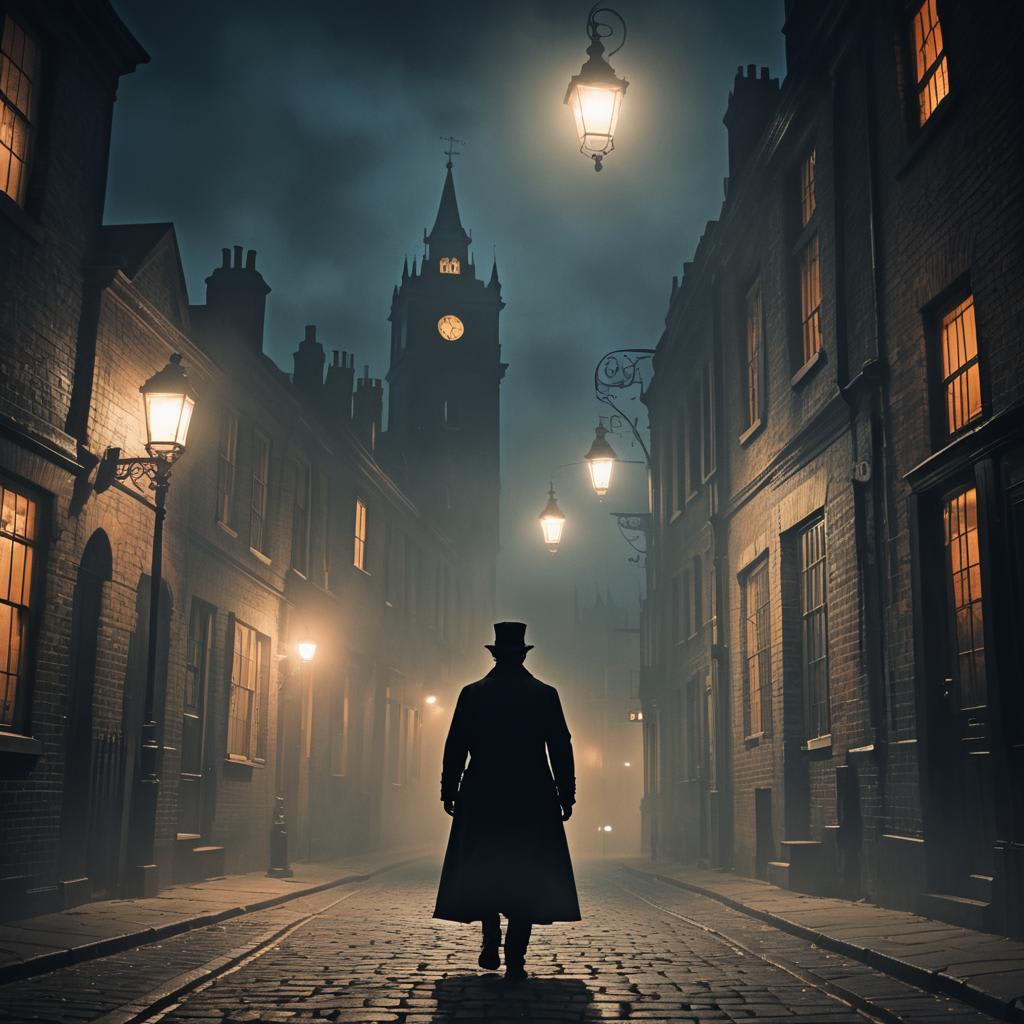
London’s East End, 1888. Let us draw a picture in our minds. A dense fog hangs heavy in the air, clinging to the narrow, cobbled streets of Whitechapel. The air is thick with the stench of poverty, unwashed bodies, and the ever-present coal smoke. Whitechapel is teeming with life yet stalked by death. This is the stage for one of history’s most infamous and chilling series of unsolved murders — the killings of Jack the Ripper. Is that picture good enough to continue?
The First Killing: Mary Ann Nichols
It begins in the early hours of Friday, August 31st, 1888. The body of Mary Ann Nichols, a 43-year-old prostitute known as “Polly,” is discovered in Buck’s Row (now modern-day Durward Street), a dark and desolate backstreet. Her throat has been slashed twice, with a deep, savage cut severing her windpipe and reaching her spine. But the horror doesn’t end there. Her abdomen has been mutilated, ripped open with a jagged, upward motion. The brutality is shocking, even for this hardened district of the city used to violence.
The police investigation, led by Inspector Frederick Abberline, is baffled from the beginning. This level of violence is unprecedented. They interview witnesses, primarily other prostitutes, and residents of the area. Some report hearing nothing; others claim to have seen a man with Polly earlier that night, but descriptions are vague and unreliable, and there is nothing the police could call a solid lead. The prevailing theory becomes that the killer is a local, someone familiar with the back alleys and dark corners of Whitechapel.
The Terror Escalates: Annie Chapman
A week later, the killer strikes again on Saturday, September 8th. Annie Chapman, another prostitute in her late 40s, is found near a doorway in the backyard of 29 Hanbury Street. The scene is even more gruesome than the first. Her throat is cut similarly to Nichols, but the abdominal mutilations are far more extensive. Her intestines have been pulled out and placed over her shoulder. Some reports even whisper of missing organs, a detail that fuels the growing public hysteria. Is the killer collecting human organs?
The police lick it up a notch. Detectives round up known criminals, the usual suspects, and “suspicious characters,” but the investigation is hampered by the sheer number of people living in the overcrowded slums. False leads and misinformation abound. Sensing a sensational story, the press plays a significant role, publishing lurid details and fueling the panic. The name “Leather Apron” is briefly associated with the killer, based on a rumor of a local man who was known to extort prostitutes, but this lead quickly leads nowhere.
The “Double Event”: Elizabeth Stride and Catherine Eddowes
The night of Sunday, September 30th, 1888, becomes known as the “Double Event,” marking the peak of the Ripper’s terror. First, the body of Elizabeth Stride, a 44-year-old Swedish immigrant and sometime prostitute, is found in Dutfield’s Yard, off Berner Street (now Henriques Street). Her throat is cut, but her body is otherwise untouched. It’s believed the killer was interrupted, possibly by the arrival of Louis Diemschutz, a steward of a nearby working men’s club.
Less than an hour later, and just a short distance away in Mitre Square, the mutilated body of Catherine Eddowes, a 46-year-old prostitute, is discovered. The scene is horrific, mirroring the brutality of the Chapman murder. Her throat is slashed, and her abdomen is extensively mutilated. Her face is also disfigured, with cuts to her eyelids and nose. A piece of her apron is found near a doorway on Goulston Street, along with a chilling piece of graffiti on the wall: “The Juwes are the men that Will not be Blamed for nothing.” This message, possibly written by the killer, adds a layer of anti-Semitic speculation to the case, though its true meaning remains debated to this day.
The discovery of two victims in such close proximity sends shockwaves through London. The police are under more and more immense pressure to catch the killer. Vigilante groups form, patrolling the streets at night. Public fear reaches fever pitch. Letters, supposedly from the killer, begin to arrive at newspapers and the police. One, addressed “From Hell,” even contains half a human kidney, purportedly taken from victim Catherine Eddowes. While many of these letters are considered hoaxes, they contribute to the growing legend of “Jack the Ripper,” a name taken from one of the more infamous letters.
The Final Victim: Mary Jane Kelly
The final and most gruesome murder attributed to Jack the Ripper occurred on Friday, November 9th, 1888. Mary Jane Kelly, a younger prostitute in her mid-20s, is found murdered in her single-room flat at 13 Miller’s Court, off Dorset Street. Unlike the previous victims, who were killed outdoors, Kelly is murdered in the relative privacy of her lodgings. The scene is beyond description. Her body is virtually dismembered, her organs scattered around the room. The killer has spent hours mutilating her, leaving a scene of unimaginable carnage.
The Kelly murder marks the end of the “canonical five” victims generally attributed to Jack the Ripper. There are other murders in the Whitechapel area around this time, but they lack the distinctive characteristics of the Ripper’s handiwork.
The Aftermath and Unanswered Questions
Despite the massive police investigation, numerous suspects, and countless theories, we know Jack the Ripper is never caught. The case officially remains unsolved. The lack of forensic science at the time, the chaotic nature of the East End, and the sheer volume of misinformation all contribute to the unsolved mystery.
Theories abound, ranging from the plausible to the outlandish. Was the killer a doctor, a butcher, a sailor, or a member of the royal family? Was he a lone madman, or were the murders the work of a conspiracy? The lack of definitive answers has only fueled the Ripper’s legend, making him a figure of enduring fascination and horror.
The Jack the Ripper case is a dark chapter in London’s history. It exposed the vulnerability of the marginalized, the limitations of Victorian policing, and the power of fear and the unknown. The fog that shrouds Whitechapel comes and goes, but the shadow of Jack the Ripper continues to haunt us to this day. At the time, he served as a stark reminder of the need to rid the streets of the filth, crime, and degradation that permeated London’s East End. The crimes also served to energize social reform, and the outrage surrounding the Whitechapel Murders highlighted the desperate situation and need for reform.
About the Creator
MJonCrime
My 30-year law enforcement career fuels my interest in true crime writing. My writing extends my investigative mindset, offers comprehensive case overviews, and invites you, my readers, to engage in pursuing truth and resolution.
The Global Power Struggle in 2026: Why Are Tensions Rising Between the United States, Russia, China, and Venezuela?
f tensions between the United States and each of Russia, China, and Venezuela. These tensions cannot be understood as isolated events or temporary crises; rather, they are a direct reflection of a deeper struggle over global influence, strategic resources, and the future shape of the international order. At the center of this complex scene, Venezuela has emerged as a major flashpoint, while Russia and China play the role of supporters and counterweights to U.S. actions.
By America today 6 days ago in Criminal
Two Teens, One Bus, and a Nation Watching
Hello, and welcome to “The True Crime Reader,” where we dig beneath the headlines to unravel the stories that shape our understanding of crime, justice, and society. Today’s episode takes us to Oakland, California, for the story behind Dashka Slater’s powerful nonfiction book, “The 57 Bus”—a case that stunned the Bay Area and reverberated across the country.
By Kristen Barenthaler4 days ago in Criminal


Comments
There are no comments for this story
Be the first to respond and start the conversation.