
Unraveling the Mystery of the Tylenol Murders
The Infamous Case That Changed the Way Companies Manufacture and Package Their Products and Redefined Corporate Responsibility

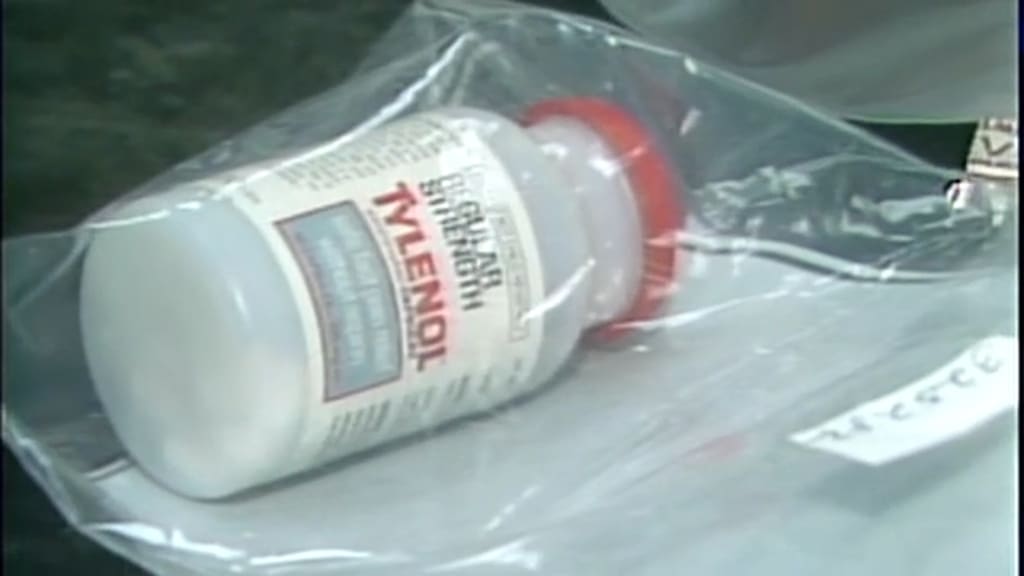
On the morning of September 29, 1982, 12-year-old Mary Kellerman woke up complaining of a headache. Her parents, Adam and Teresa, gave her a Tylenol capsule, thinking it would ease her pain. Within hours, Mary was dead. Later that day, a young postal worker named Adam Janus also took a Tylenol capsule and died shortly thereafter. It was soon discovered that both capsules had been laced with cyanide. Thus began one of the most infamous murder cases in American history: the Tylenol murders.
Over the next several days, six more people in the Chicago area would die after taking Tylenol capsules that had been tampered with. Panic gripped the nation as news of the deaths spread, and people began dumping their Tylenol supplies in droves. Johnson & Johnson, the parent company of Tylenol, responded by issuing a nationwide recall of all Tylenol capsules and offering a $100,000 reward for information leading to the arrest and conviction of the person or persons responsible for the poisonings.
As the investigation into the murders got underway, police initially had few leads to go on. There was no clear motive for the killings, and no obvious suspects emerged. It was only after a detailed analysis of the crime scenes that investigators realized that the capsules had been tampered with after they had left the factory.
This discovery led Johnson & Johnson to completely overhaul their packaging and safety procedures. They began manufacturing Tylenol in a solid, tamper-resistant caplet form instead of capsules. They also introduced tamper-evident packaging, which included a plastic seal over the bottle cap and a warning label that instructed consumers to not use the product if the seal was broken.
The Tylenol murders also led to sweeping changes in safety regulations. In 1983, the U.S. Congress passed the Tylenol Bill, which made it a federal crime to tamper with consumer products. The bill required tamper-evident packaging on a variety of products, including over-the-counter medications, and set penalties for violators.
The case remains unsolved to this day, although a number of suspects have been identified over the years. In 2011, the FBI announced that they were reopening the investigation, hoping that advances in forensic technology would allow them to finally solve the case.
The Tylenol murders had a profound impact on public perception of product safety and led to changes in the way companies manufacture and package their products. It also had a lasting impact on the Johnson & Johnson brand, which had previously been seen as a paragon of corporate responsibility. The company's swift and decisive response to the crisis helped to mitigate some of the damage, but the incident remains a cautionary tale for businesses of all kinds.
One of the key takeaways from the Tylenol murders is the importance of crisis management. Johnson & Johnson's handling of the situation is often cited as a textbook example of how to respond to a crisis, with the company putting the safety of its customers first and taking swift action to address the problem. This included recalling all Tylenol capsules from store shelves, halting production of the product, and introducing new safety measures to prevent future tampering.
The Tylenol murders also highlighted the importance of public trust in corporate brands. Johnson & Johnson's response to the crisis was widely praised, and the company eventually regained the trust of its customers. However, the incident had a lasting impact on the company's reputation and serves as a reminder that companies must be vigilant about product safety and must act quickly and decisively in the event of a crisis.
In the years since the Tylenol murders, product safety regulations have continued to evolve. The Food and Drug Administration (FDA) now requires tamper-evident packaging on many over-the-counter medications, and companies have implemented additional safety measures to prevent tampering and contamination. Despite these improvements, the threat of product tampering and contamination remains a constant concern for consumers and manufacturers alike.
The Tylenol murders also had a significant impact on the field of criminal investigation. The case represented a major challenge for law enforcement, as the perpetrator had left little evidence behind and there was no clear motive for the killings. However, the investigation ultimately led to the development of new forensic techniques, including DNA analysis, which have since become standard tools in criminal investigations.
The case also highlighted the importance of collaboration between law enforcement and private industry. Johnson & Johnson worked closely with law enforcement throughout the investigation, providing access to company records and offering assistance in any way possible. This cooperation was instrumental in helping to solve the case, and it has since become a model for how private industry and law enforcement can work together to solve complex crimes.
Despite the many positive outcomes of the Tylenol murders, the case also raised a number of ethical and legal questions. One of the key issues was the question of who was ultimately responsible for the deaths of the seven victims. While the perpetrator was clearly responsible for the murders, there were also questions about whether Johnson & Johnson bore any responsibility for the deaths, given that the company had failed to prevent tampering with its products.
In response to these concerns, some legal experts argued that companies have a duty to ensure the safety of their products and to take reasonable steps to prevent tampering and contamination. Others argued that companies cannot be held responsible for the actions of criminal third parties, and that the responsibility for the Tylenol murders lay solely with the perpetrator.
The Tylenol murders were a tragedy that shocked the nation and changed the way companies think about product safety. The swift and decisive response of Johnson & Johnson helped to mitigate some of the damage, and the incident ultimately led to sweeping changes in packaging and safety regulations. While the case remains unsolved to this day, it continues to serve as a cautionary tale for businesses of all kinds and a reminder of the importance of crisis management, public trust, and collaboration between industry and law enforcement.
About the Creator
Keerthana Thirumalairaj
An Independent Solitude girl, who recently found the interests in writings and converts Facts and imaginations into writings.
Keep reading
More stories from Keerthana Thirumalairaj and writers in Criminal and other communities.
The Satanic Panic: The Terrifying Miscarriage of Justice in the West Memphis Three Case
Introduction The West Memphis Three case is one of the most infamous miscarriages of justice in modern American history. It involves the wrongful conviction of three teenagers, Damien Echols, Jason Baldwin, and Jessie Misskelley Jr., for the brutal murder of three young boys in West Memphis, Arkansas, in 1993. The case gained widespread media attention and has been the subject of numerous books, documentaries, and films.
By Keerthana Thirumalairaj3 years ago in Criminal
The "Revitalization" Lie: How Ephrata’s Obsession with 'Curb Appeal' Hid a House of Horrors
The Brand vs. The Bodies If you walk down Main Street today, you will see the banners. You will see the matching flower pots. You will see the "Welcome to Ephrata" signs designed to project an image of quaint, small-town prosperity.
By Sunshine Firecracker4 days ago in Criminal




Comments
There are no comments for this story
Be the first to respond and start the conversation.