
Terror: Dr. Satan's Crimes
Marcel Petiot, dubbed "Dr. Satan," was a French doctor who turned into a World War II serial killer.
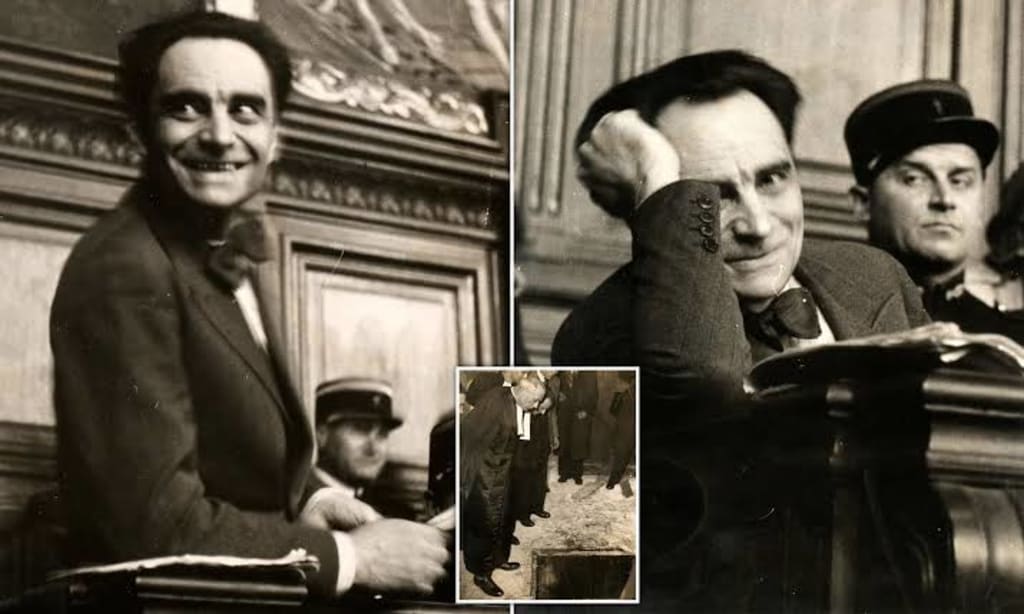
Marcel Petiot, infamously known as Dr. Satan was a French doctor and serial killer who terrorized Paris during World War II. Born on January 17 1897 in Auxerre, France, Petiot exhibited a facade of medical expertise that concealed his sinister and homicidal nature. Petiot's criminal activities came to light in 1944 when police were alerted to the foul smell emanating from his residence at 21 Rue le Sueur in Paris. Upon investigation they discovered a gruesome scene: a macabre collection of body parts, discarded clothing, and even a lime pit for dissolving corpses. This marked the beginning of the unraveling of Petiot's intricate web of deceit and murder.
Operating under the guise of a physician Petiot lured vulnerable individuals seeking refuge from the chaos of the war. He promised them safe passage out of the occupied city, exploiting their desperation for his own financial gain. He charged exorbitant sums for these supposed escape services and convinced his victims to hand over their valuables before their departure. Tragically, none of his victims ever reached their intended destinations. Petiot's modus operandi was chillingly calculated. Once his victims were in his grasp he injected them with lethal doses of poison, often a combination of cyanide and morphine, under the pretense of administering vaccinations to ensure their health during their supposed journey. The victims would die rapidly, and Petiot would proceed to loot their possessions, stripping them of any valuables.
As more evidence emerged, it became apparent that Petiot had killed dozens of people, possibly exceeding 60 victims, though the exact number remains uncertain due to the chaotic wartime circumstances. His actions were fueled by greed sadism, and a warped sense of superiority. He reveled in his ability to manipulate and destroy lives, seemingly unaffected by the suffering he caused.Petiot's arrest and subsequent trial garnered significant attention both in France and internationally. The horror of his crimes, combined with the wartime context, captivated the public's imagination. During the trial Petiot's defense attempted to paint him as a Resistance hero, suggesting that his actions were part of an elaborate scheme to eliminate Nazi collaborators. However, this assertion was quickly debunked, and the evidence overwhelmingly pointed to his guilt as a cold-blooded murderer.
In 1946, Marcel Petiot faced the consequences of his heinous acts as he stood trial for 27 counts of murder. The trial captured the world's attention serving as a grim reminder of the depths to which human depravity can sink. The court found him guilty on all counts, and on May 31 1946, he was sentenced to death by guillotine.Marcel Petiot's case left a lasting impact on criminal justice and public perception of serial killers. His calculated manipulation, disregard for human life, and audacious attempts at deception highlighted the need for comprehensive investigations and the importance of uncovering hidden motives behind seemingly noble actions.
The case also highlighted the ethical complexities surrounding the concept of evil. Petiot's façade as a doctor, someone trusted to heal and protect, shattered the traditional understanding of good and evil. This prompted discussions about the nature of evil, the blurred lines between normalcy and malevolence, and the potential for darkness to reside within even the most respected professions.Marcel Petiot's legacy endures as a chilling reminder of the capacity for evil that exists within humanity. His crimes, motives, and the trial that followed continue to be subjects of analysis in criminology psychology, and legal studies. The name "Dr. Satan" remains synonymous with deception, cruelty, and the depths of human malevolence that can emerge, even in the midst of global turmoil.
About the Creator
Keep reading
More stories from Kure Garba and writers in Criminal and other communities.
"Ruthless "Werewolf" Killer"
Mikhail Popkov, infamously known as The Werewolf is a former Russian police officer turned serial killer who terrorized Siberia with a reign of brutality that lasted over a decade. His heinous crimes shocked the world and earned him the moniker "The Werewolf" due to the ferocity and frequency of his attacks. Popkov's case serves as a grim reminder of the capacity for darkness that exists within the human psyche. Born on March 7, 1964, in Angarsk, Russia, Popkov grew up in a working-class family. He joined the police force in the late 1980s, a career that ironically granted him access to both knowledge of investigative techniques and intimate knowledge of the local area, which he later exploited to evade capture. His murder spree began in the late 1990s and continued until his eventual arrest in 2012.
By Kure Garba3 years ago in Criminal
The Last Train from Platform Seven
M Mehran Every night at 11:40 PM, the last train departed from Platform Seven. Commuters rushed aboard with tired eyes and half-finished thoughts. The station lights hummed. The city slowed. Routine settled over everything like dust. Nothing unusual ever happened on the last train. Until the night one passenger never arrived — yet his briefcase did. By sunrise, the case was linked to one of the most calculated crimes the city had ever seen. The Routine That Made It Possible Central Station was a monument to predictability. Security cameras rotated in fixed patterns. Patrol officers walked identical routes. Ticket scanners recorded entries down to the second. Routine keeps cities moving. But routine also creates patterns. And patterns can be exploited. For six months, someone had been studying Platform Seven — timing security rotations, passenger flow, and maintenance shutdowns. They weren’t looking for a victim. They were engineering an opportunity. The Man with the Silver Briefcase Witnesses remembered him clearly because he appeared forgettable. Mid-forties. Gray coat. Clean-shaven. No distinguishing features except a polished silver briefcase that never left his hand. Every weekday for three weeks, he boarded the last train and exited three stops later. He spoke to no one. Made no phone calls. Kept his gaze lowered. Invisible. Reliable. Predictable. Exactly what he wanted to be. The Night Everything Changed On Tuesday evening, the station was unusually crowded after a football match. Noise echoed through the terminal. Announcements overlapped. Security struggled to manage the surge of passengers. At 11:38 PM, the man with the silver briefcase entered through Gate C. At 11:39 PM, surveillance cameras briefly lost signal during a system reboot. At 11:40 PM, the last train departed. But the man never boarded. The briefcase did. Discovery at Dawn The train completed its route without incident. It was cleaned overnight and prepared for morning service. At 5:12 AM, a maintenance worker discovered the briefcase beneath a seat in the second carriage. Inside were neatly arranged bundles of cash, multiple passports, and a sealed envelope containing a handwritten message: “This is only the beginning.” Within hours, investigators confirmed the money totaled €780,000 — linked to a corporate embezzlement case that had gone unsolved for eight months. The case had just reopened itself. A Crime Beyond Theft Detective Lena Vogt quickly determined the briefcase was not abandoned. It was delivered. The cash belonged to Helios Infrastructure Group, a multinational engineering firm under investigation for financial irregularities. Funds had disappeared through layered shell companies and offshore accounts. No arrests had ever been made. Until now, someone wanted attention. But why return stolen money? And why in such a theatrical way? The Hidden Message Forensic analysis revealed microscopic markings inside the envelope — numbers written in nearly invisible ink. They corresponded to internal project codes within Helios Infrastructure. Each code linked to construction sites across Europe. Each site had cost overruns totaling millions. This wasn’t a confession. It was an accusation. Someone was exposing a system. The Whistleblower Who Became a Criminal Authorities soon identified the man with the silver briefcase as Markus Feldmann, a former financial auditor employed by Helios. Two years earlier, Markus had raised concerns about irregular financial transfers tied to subcontractors. His warnings were ignored. Months later, his position was eliminated during “restructuring.” After losing his job, Markus disappeared from professional networks. But he hadn’t vanished. He had been collecting evidence. Crossing the Line Investigators believe Markus initially intended to expose corporate fraud legally. But when regulatory complaints stalled and legal threats mounted, he chose a different path. He hacked internal systems. Intercepted transfers. Redirected illicit funds. Then redistributed portions to anonymous charity networks. And finally, he staged the Platform Seven drop — returning part of the money to authorities while exposing the corruption behind it. His actions blurred the line between criminal and whistleblower. He committed cybercrime, fraud, and financial theft. Yet he also revealed a corruption network worth hundreds of millions. The Citywide Manhunt When news broke, public opinion fractured. Some called Markus a criminal mastermind. Others called him a hero. Helios Infrastructure denied wrongdoing, but European regulators reopened investigations across multiple jurisdictions. Meanwhile, Markus remained missing. Authorities tracked digital traces through encrypted networks, but he stayed ahead — using public terminals, temporary devices, and anonymized routing. He understood systems. He understood surveillance. And he understood how to disappear inside modern infrastructure. The Platform Seven Sighting Three weeks later, a transit officer reported seeing a man matching Markus’s description standing near Platform Seven minutes before midnight. By the time officers arrived, he was gone. But this time, he left something behind. A folded newspaper with a circled headline: “Audits Expanded Across Three Countries.” Inside the paper was a single handwritten line: “Truth arrives on schedule.” Crime, Morality, and the Gray Zone Markus Feldmann’s actions ignited debate across legal and ethical communities. Was he a criminal who stole and hacked his employer? Or a whistleblower forced into illegal methods by institutional silence? Modern crime is no longer defined solely by violence or theft. It now exists in complex gray zones where digital access, corporate secrecy, and systemic corruption intersect. Markus broke the law. But he also broke open a system designed to protect itself. Why Stories Like This Captivate Us Criminal stories resonate because they challenge our understanding of right and wrong. They expose the fragility of systems we trust — financial institutions, corporate governance, public infrastructure. They force us to confront uncomfortable questions: Is breaking the law ever justified? Who decides what justice looks like? And how far would someone go to expose the truth? The Train Still Runs Platform Seven remains operational. The last train still departs at 11:40 PM. Passengers still glance at their phones, lost in routine. But some nights, commuters pause and look around — wondering if the man with the silver briefcase might step from the shadows once more. Because in a world built on systems and schedules, the most disruptive force is not chaos. It is precision. And somewhere, someone may still be watching the clock.
By Muhammad Mehran6 days ago in Criminal
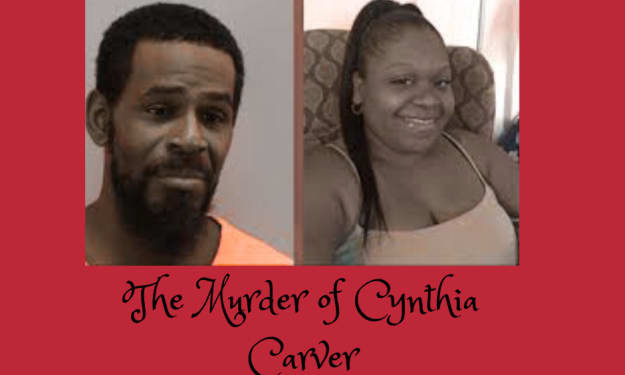
The Murder of Cynthia Carver
Cynthia Carver’s mother, Ann, knew immediately something was wrong when her daughter failed to show for her new job on February 22, 2019. She spoke to Cynthia the night before; she was excited. Around 1 p.m., she drove past Cynthia’s house in Newsoms, Virginia, and saw the front door open. She stopped to investigate, as any mother would. Already frightened, her fears were exasperated when she saw blood at the front door. More blood spatter in the living room. A knife is sitting in front of the sofa. The 35-year-old mother of two is nowhere to be found. Ann called the police.
By Criminal Mattersa day ago in Criminal
Trickle Them Down, But Not Out
The thing about smart people is that they should know better, but alas, intelligence is not the same as wisdom. Not only do the mistakes of experts too short on vision—when they are not corrected—have the potential to do great and far-reaching damage, but they also undermine public confidence in the very notion of expertise. This is particularly so when expertise is wielded in defence of the rich and powerful as a cudgel against those laid low. As an academic, this lack of faith in “so-called experts” is painful to see as it plays out in the spread of dis-/misinformation, conspiracy theories, and anti-intellectualism writ large. But it is also an understandable impulse given the catastrophic failure of an economic ideology pushed by certain economic experts. Supply-side economics has shaped a broken system for the last half-century and has arguably done more to undermine the fabric of the American Dream than any policy framework of the past century.
By Cory Wright-Maley6 days ago in Humans



Comments
There are no comments for this story
Be the first to respond and start the conversation.