
Pablo Escobar: The Kingpin Who Shaped the Modern Drug Trade
From a small-time smuggler to the ruthless leader of the Medellín Cartel, Pablo Escobar’s empire left an indelible mark on Colombia and the world — a story of violence, power, and legacy
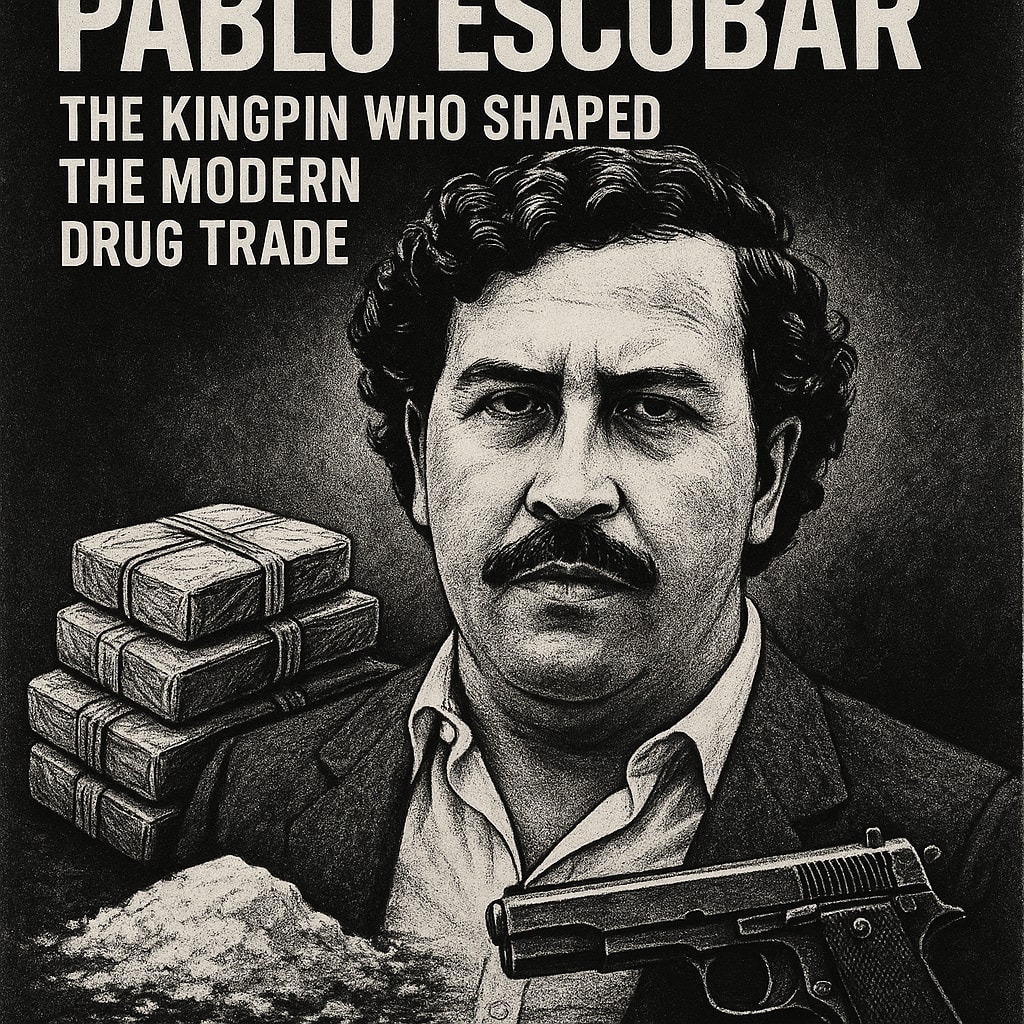
Pablo Escobar: The Kingpin Who Shaped the Modern Drug Trade
Pablo Emilio Escobar Gaviria remains one of the most notorious figures in criminal history. Known as the “King of Cocaine,” Escobar rose from humble beginnings in Colombia to become the leader of the Medellín Cartel, dominating the global cocaine trade in the 1980s. His story is a compelling tale of ambition, brutality, and complex legacy—one that shaped Colombia’s social, political, and economic landscape for decades.
Early Life and Humble Beginnings
Pablo Escobar was born on December 1, 1949, in Rionegro, Colombia, and grew up in the nearby city of Medellín. His family was working-class, and from an early age, Escobar showed a knack for entrepreneurship and risk-taking. In his youth, he engaged in petty crimes such as smuggling and selling contraband cigarettes and fake lottery tickets. These small ventures eventually led him to the cocaine business, which would change the course of his life—and the world.
Escobar’s ability to navigate the shadowy intersections of crime and commerce helped him quickly ascend the ranks of Colombia’s growing drug trade.
Rise of the Medellín Cartel
By the late 1970s, Escobar had formed the Medellín Cartel, a drug trafficking organization that would come to dominate cocaine distribution to the United States and beyond. His cartel controlled nearly 80% of the global cocaine market at its peak, generating estimated annual revenues of up to $30 billion.
Escobar’s operation was vast and sophisticated. He controlled everything from cocaine production in the jungles of Colombia to smuggling routes via planes, boats, and underground tunnels. The sheer scale of his enterprise was unprecedented, and his wealth grew exponentially—making him one of the richest men in the world.
The Duality of Power: Robin Hood and Ruthless Criminal
Escobar was a complex figure. To many poor Colombians, he was a hero who built housing, soccer fields, and schools in neglected neighborhoods of Medellín. His philanthropic efforts earned him popular support, often shielding him from authorities and complicating efforts to capture him.
However, Escobar’s public generosity was starkly contrasted by his brutal approach to power. He was responsible for thousands of deaths, including judges, politicians, police officers, and innocent civilians caught in the crossfire of his violent war against the Colombian state. His tactics included bombings, assassinations, and intimidation on an unimaginable scale.
The phrase “plata o plomo” (“silver or lead”) symbolized his method: accept his bribes or face deadly consequences. Escobar’s influence permeated every aspect of Colombian society and government, leading to widespread corruption and instability.
Escalation of Violence and Government Crackdown
During the 1980s, as Escobar’s cartel expanded, so did the violence. Rival drug cartels and paramilitary groups engaged in bloody turf wars. Colombia became one of the most dangerous countries in the world, with bombings and assassinations becoming tragically routine.
The Colombian government, with support from the United States, launched intense campaigns to dismantle the cartel. Escobar was placed on the FBI’s Ten Most Wanted list, and efforts to capture him intensified. Despite this, Escobar’s influence remained strong, and he evaded capture for years.
One of the pivotal moments came in 1991, when Escobar surrendered to authorities under the condition he would serve time in a luxurious, self-designed prison called La Catedral. However, when he continued to run his empire from inside, the government attempted to transfer him, prompting Escobar to escape in 1992.
Death and Legacy
On December 2, 1993, Pablo Escobar was killed in a shootout with Colombian security forces in Medellín, just one day after his 44th birthday. His death marked the symbolic end of the Medellín Cartel’s dominance.
However, the legacy of Escobar is far-reaching. His life highlighted the complex interplay between poverty, politics, and crime in Colombia. The violence and corruption of his era set the stage for continued struggles with drug trafficking and organized crime in the region.
Moreover, Escobar’s story has permeated popular culture worldwide—through documentaries, films, and TV series—cementing his status as an almost mythic figure of crime.
Conclusion
Pablo Escobar’s life is a cautionary tale about the dangers of unchecked ambition and power. He transformed the drug trade into a global business, built an empire from illicit trade, and wielded influence that shook governments. Yet, his reign brought immense suffering to Colombia and exposed deep societal fractures.
Despite his death decades ago, Escobar’s shadow still looms over Colombia and the global narcotics trade. His story remains a powerful reminder of how crime and violence can intertwine with politics and economics—shaping nations and leaving lasting scars.
About the Creator
Keep reading
More stories from Anwar Jamil and writers in Criminal and other communities.
The Evidence Speaks
Detective Lila Monroe had learned early in her career that people lie — often. But evidence? Evidence rarely did. On a rainy Thursday morning, Lila was called to the scene of a robbery-turned-homicide at a small jewelry store downtown. The victim was the store’s owner, Harold Preston, a man known for his sharp business mind and a somewhat abrasive personality.
By Anwar Jamil7 months ago in Criminal
Donald Trump and the Iranian File: Policies, Tensions, and Public Questions
Donald Trump and the Iranian File: Policies, Tensions, and Public Questions Donald Trump’s approach to the Iranian file marked one of the most controversial chapters in modern US foreign policy. During his presidency, relations between the United States and Iran shifted dramatically, moving away from diplomacy toward pressure and confrontation. Trump’s decisions reshaped the Middle East landscape, affected global energy markets, and sparked intense debate both inside and outside the United States. Understanding Trump and the Iranian file requires examining his strategy, its consequences, and the questions people most frequently ask.
By America today 6 days ago in Criminal



Comments
There are no comments for this story
Be the first to respond and start the conversation.