
Tears of Qiandao Lake: A Massacre on Emerald Waters, a Cross-Strait Mystery
In 1994, 32 lives vanished amidst picturesque scenery, the truth remains shrouded in mist


Imagine the Jiangnan region in the warmth of spring, the vast, emerald waters of Qiandao Lake (Thousand Island Lake) in Zhejiang province, dotted with over a thousand verdant islets – a paradise on Earth. A group of tourists from Taiwan, filled with anticipation for the beautiful landscapes, boarded a pleasure boat named the "Hairui," looking forward to a delightful journey. However, none of them could have imagined that these seemingly tranquil waters would soon engulf their lives, triggering a monstrous wave that would crash across the Taiwan Strait. This is the Qiandao Lake Incident, a case still riddled with doubts, a source of heartache and regret for countless people.
Let's rewind to March 31, 1994. Twenty-four members of a Taiwanese tour group organized by Taipei's Chang Feng Travel Agency, along with two mainland Chinese tour guides and six crew members – 32 people in total – boarded the "Hairui." They planned to enjoy the scenery of Qiandao Lake and arrive at the scheduled Maozhuyuan dock by evening, checking into the Qingxin Hotel. However, as night fell, the hotel waited in vain for the tourists. The entire tour group, which should have been filled with laughter and joy, along with the boat itself, vanished as if evaporated into thin air upon the vast lake.
News of the disappearance quickly reached Taiwan. Anxious families sought help from the mainland's Association for Relations Across the Taiwan Straits (ARATS) via Taiwan's Straits Exchange Foundation (SEF). On April 1st, the Chinese side began the search, but the initial information was chaotic and contradictory. Zhejiang province first suggested it might have been an "accident" caused by strong winds and waves, a claim quickly refuted by meteorological data. Soon after, the "Hairui" was discovered in the waters near Shendu Town, Anhui Province, in the northwest corner of Qiandao Lake. The hull showed clear signs of burning, but a more horrifying scene awaited in the boat's lower cabin – all 32 missing individuals were found dead there.
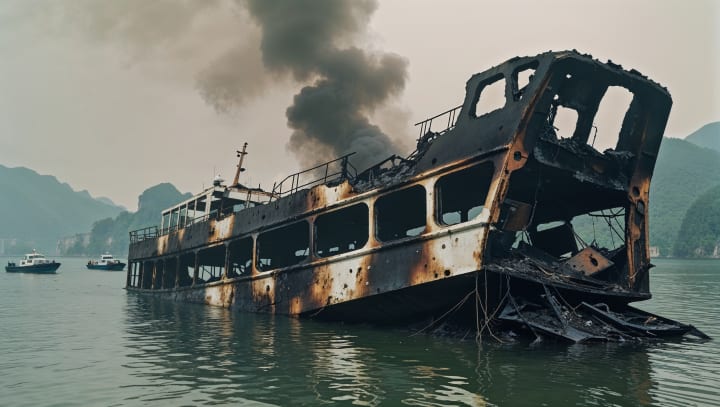
Suspicion arose the moment the bodies were found and continued to mount. According to information gradually disclosed and the accusations of the families, the victims did not die in a simple fire accident. Numerous signs pointed to a brutal robbery and murder:
Bodies Concentrated in the Lower Cabin: All remains were discovered in the cramped lower cabin, and the entrance was locked from the outside.
Suspected Bullet Holes and Knife Wounds: Some autopsy reports and family observations indicated holes consistent with gunshot wounds and possible knife injuries on the bodies (though official reports strongly denied this).
Valuables Missing: Most of the cash, jewelry, cameras, and other valuables carried by the victims were gone. Paradoxically, however, some banknotes left at the scene showed no signs of burning.
Suspicious Boat Condition: Bullet holes and traces of explosives were reportedly found on the boat. Only the lower passenger cabin and the crew rest area were burned; the wheelhouse remained relatively intact.
The handling of the incident by Chinese officials further fueled dissatisfaction and suspicion in Taiwanese society. From the initial information blockade and delayed notification to later framing the event as an "accidental fire," then refusing Taiwanese journalists, families, and SEF personnel immediate access to inspect the boat scene, and even hastily cremating the bodies and cleaning the vessel without family consent – the intention to destroy evidence seemed blatant. The official explanation that "washing the boat hull was to lower the cabin temperature" was riddled with inconsistencies and deemed utterly unconvincing.
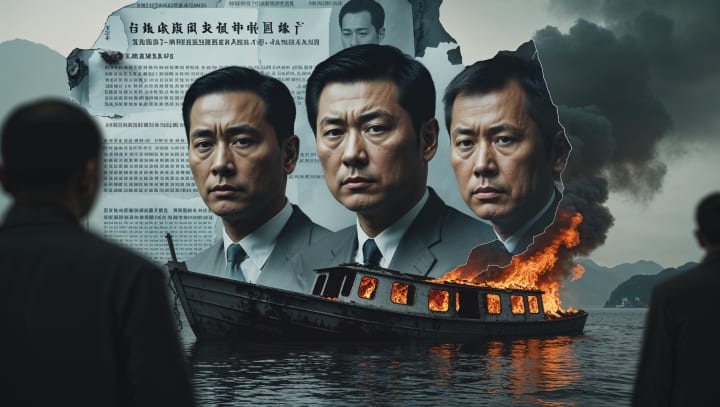
Facing immense pressure and strong questioning from Taiwan, the Chinese official stance shifted from "accident" to acknowledging it as a "major case of robbery, arson, and murder." On April 17th, the day before the families returned to Taiwan, officials suddenly announced the case was solved, arresting three local young men: Wu Lihong, Hu Zhihan, and Yu Aijun. They claimed these individuals used a motorboat, boarded the "Hairui" with shotguns and axes to rob the passengers, and then set the boat on fire to silence witnesses. The entire investigation, prosecution, and trial process was extraordinarily swift. Just two months later, the three were sentenced to death and executed.
This "highly efficient" resolution, far from dispelling doubts, raised even more questions. Could merely three young criminals easily overpower 32 people on board? How could they precisely herd everyone into the small lower cabin? Why choose arson, a method prone to leaving evidence? Was the completion of such a complex crime and their subsequent rapid arrest too coincidental?
Furthermore, Taiwan's National Security Bureau Director, Yin Tsung-wen, revealed at the time that the perpetrators were not ordinary civilians, potentially involving members of the People's Liberation Army or the People's Armed Police. Legislator Shen Chih-hui even pointed out the involvement of eight armed police officers. Criminology expert Hsieh Jui-chih also analyzed that the incident was definitely not a simple accident and the Chinese authorities' efforts to cover it up were unreasonable.
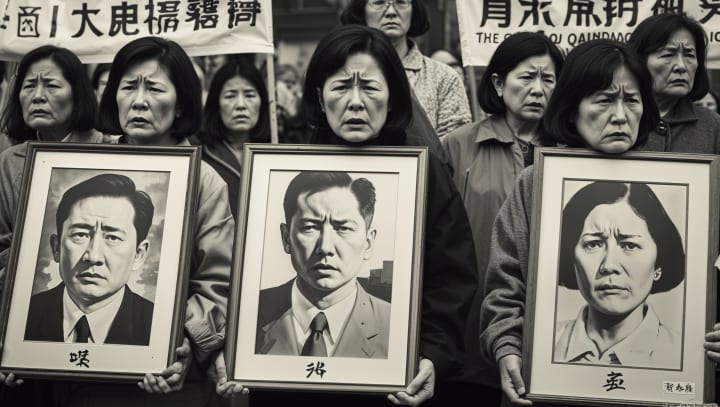
All these signs led many to believe that the three culprits announced by the officials might have been mere scapegoats. Was the incident related to larger organized crime? Were military or police personnel involved? Or was it all an attempt to conceal a scandal at a higher level? Because the Chinese side consistently refused more transparent investigation and cooperation, and key evidence appeared to have been destroyed, these questions may remain forever unanswered.
The Qiandao Lake Incident is not just a tragedy of 32 innocent lives lost; it became an unhealable scar across the Taiwan Strait. It exposed the lack of transparency in China's judicial system and information flow at the time, severely damaging the trust of the Taiwanese people in the Chinese government and causing the once-warming cross-strait exchanges to plummet to a freezing point. To this day, amidst the enduring beauty of Qiandao Lake, its deep waters seem to echo the silent cries and unresolved mysteries of that fateful day.
About the Creator
Asia Mystery
We’re a team dedicated to sharing major mysteries and cases from Asia and around the world. We hope to spark your curiosity and help you better understand events happening across the globe.
Keep reading
More stories from Asia Mystery and writers in Criminal and other communities.
The Smiling Poisoner: Unmasking Thailand's Chilling Cyanide Serial Killer
Have you ever imagined that a long-time friend with a warm smile, or even the person you love most, could one day become the demon who takes your life? It sounds like the plot of a horror film, yet it unfolded with terrifying reality under the bright Thai sun. A serial murder case that shocked the nation, with up to 15 confirmed victims, possibly more, and the perpetrator? A seemingly ordinary pregnant woman. How did she do it? And what drove her to ruthlessly murder those closest to her? Brace yourself, the twists, turns, and sheer darkness of this case will defy your imagination.
By Asia Mystery9 months ago in Criminal




Comments (1)
This was such an engaging read! I really appreciated the way you presented your thoughts—clear, honest, and thought-provoking. Looking forward to reading more of your work!