
Surviving Captivity: Jaycee's Journey
Jaycee Lee Dugard was kidnapped at 11 and endured 18 years of captivity by Phillip and Nancy Garrido. Her 2009 rescue revealed the horrors she endured in a hidden compound.

Jaycee Lee Dugard's abduction and recovery is a harrowing and inspiring tale that captivated the world's attention. In 1991, when she was just 11 years old, Jaycee was abducted from her South Lake Tahoe, California, home by Phillip and Nancy Garrido. This tragic event marked the beginning of an 18-year ordeal that would see Jaycee enduring unimaginable circumstances.
Jaycee was held captive in a hidden backyard compound constructed by the Garridos. During her captivity, she was subjected to physical, emotional, and psychological abuse. She was kept hidden from the world, and her abductors manipulated her into believing that she could never escape. The Garridos went to great lengths to avoid detection, even using false identities and providing a makeshift education for Jaycee's two daughters, who were born during her captivity.
It wasn't until 2009 that Jaycee's story took a remarkable turn. Two campus police officers at the University of California, Berkeley, noticed Phillip Garrido behaving suspiciously with his two daughters while distributing religious literature. Their instincts led them to initiate a conversation that eventually unveiled Jaycee's true identity. The subsequent investigation revealed the horrifying truth about Jaycee's abduction and captivity.
Jaycee's recovery was a testament to her strength and resilience. Reuniting with her family after 18 long years was a bittersweet moment. While her return was filled with joy, it was also marked by the challenges of adapting to a world that had evolved during her absence. Jaycee had to navigate the complexities of reestablishing connections with her family and readjusting to life outside captivity.
In the aftermath of her rescue, Jaycee Lee Dugard became a symbol of hope and survival. She wrote a memoir titled "A Stolen Life," in which she candidly shared her experiences and emotions during her captivity. The book shed light on the indomitable human spirit's ability to endure adversity and find healing.
Furthermore, Jaycee established the JAYC Foundation (Just Ask Yourself to Care) to support families dealing with abduction and trauma. Through this organization, she aimed to provide resources and assistance to survivors, helping them overcome the challenges of reintegrating into society.
The case also shed light on flaws within the criminal justice and parole systems. It was revealed that Phillip Garrido had been a registered sex offender before the abduction, raising questions about the effectiveness of monitoring and supervision. The case prompted discussions about improving the tracking and management of sex offenders to prevent such tragedies from recurring.
Jaycee's story also fueled conversations about the importance of community vigilance and swift action in cases of suspected abductions. The alertness of the two Berkeley police officers played a crucial role in her rescue, underscoring the need for public awareness and engagement in reporting suspicious activities.
In the years following her recovery, Jaycee Lee Dugard has continued to share her journey and advocate for survivors of abduction and trauma. Her strength in overcoming unimaginable challenges has inspired countless individuals to find hope in the face of adversity. Her story has served as a reminder that even in the darkest of circumstances, the human spirit has the capacity to endure, heal, and thrive.
In conclusion, Jaycee Lee Dugard's abduction and recovery is a story of resilience, survival, and the power of the human spirit. Her 18-year captivity and subsequent reintegration into society highlighted the challenges faced by survivors of abduction, while also inspiring hope and change. Through her advocacy and foundation, Jaycee has left an indelible mark on the world, reminding us all of the importance of compassion, vigilance, and the potential for healing in the face of unimaginable trauma.
About the Creator
Keep reading
More stories from Kure Garba and writers in Criminal and other communities.
Surviving Captivity: Elizabeth Smart
Elizabeth Smart's kidnapping and subsequent survival is a harrowing story that captivated the nation's attention in 2002. At the age of 14, Smart was abducted from her family's home in Salt Lake City, Utah, by Brian David Mitchell and his wife, Wanda Barzee. The case shocked the world and raised concerns about child safety, while also highlighting the resilience of the human spirit.
By Kure Garba3 years ago in Criminal
The Last Train from Platform Seven
M Mehran Every night at 11:40 PM, the last train departed from Platform Seven. Commuters rushed aboard with tired eyes and half-finished thoughts. The station lights hummed. The city slowed. Routine settled over everything like dust. Nothing unusual ever happened on the last train. Until the night one passenger never arrived — yet his briefcase did. By sunrise, the case was linked to one of the most calculated crimes the city had ever seen. The Routine That Made It Possible Central Station was a monument to predictability. Security cameras rotated in fixed patterns. Patrol officers walked identical routes. Ticket scanners recorded entries down to the second. Routine keeps cities moving. But routine also creates patterns. And patterns can be exploited. For six months, someone had been studying Platform Seven — timing security rotations, passenger flow, and maintenance shutdowns. They weren’t looking for a victim. They were engineering an opportunity. The Man with the Silver Briefcase Witnesses remembered him clearly because he appeared forgettable. Mid-forties. Gray coat. Clean-shaven. No distinguishing features except a polished silver briefcase that never left his hand. Every weekday for three weeks, he boarded the last train and exited three stops later. He spoke to no one. Made no phone calls. Kept his gaze lowered. Invisible. Reliable. Predictable. Exactly what he wanted to be. The Night Everything Changed On Tuesday evening, the station was unusually crowded after a football match. Noise echoed through the terminal. Announcements overlapped. Security struggled to manage the surge of passengers. At 11:38 PM, the man with the silver briefcase entered through Gate C. At 11:39 PM, surveillance cameras briefly lost signal during a system reboot. At 11:40 PM, the last train departed. But the man never boarded. The briefcase did. Discovery at Dawn The train completed its route without incident. It was cleaned overnight and prepared for morning service. At 5:12 AM, a maintenance worker discovered the briefcase beneath a seat in the second carriage. Inside were neatly arranged bundles of cash, multiple passports, and a sealed envelope containing a handwritten message: “This is only the beginning.” Within hours, investigators confirmed the money totaled €780,000 — linked to a corporate embezzlement case that had gone unsolved for eight months. The case had just reopened itself. A Crime Beyond Theft Detective Lena Vogt quickly determined the briefcase was not abandoned. It was delivered. The cash belonged to Helios Infrastructure Group, a multinational engineering firm under investigation for financial irregularities. Funds had disappeared through layered shell companies and offshore accounts. No arrests had ever been made. Until now, someone wanted attention. But why return stolen money? And why in such a theatrical way? The Hidden Message Forensic analysis revealed microscopic markings inside the envelope — numbers written in nearly invisible ink. They corresponded to internal project codes within Helios Infrastructure. Each code linked to construction sites across Europe. Each site had cost overruns totaling millions. This wasn’t a confession. It was an accusation. Someone was exposing a system. The Whistleblower Who Became a Criminal Authorities soon identified the man with the silver briefcase as Markus Feldmann, a former financial auditor employed by Helios. Two years earlier, Markus had raised concerns about irregular financial transfers tied to subcontractors. His warnings were ignored. Months later, his position was eliminated during “restructuring.” After losing his job, Markus disappeared from professional networks. But he hadn’t vanished. He had been collecting evidence. Crossing the Line Investigators believe Markus initially intended to expose corporate fraud legally. But when regulatory complaints stalled and legal threats mounted, he chose a different path. He hacked internal systems. Intercepted transfers. Redirected illicit funds. Then redistributed portions to anonymous charity networks. And finally, he staged the Platform Seven drop — returning part of the money to authorities while exposing the corruption behind it. His actions blurred the line between criminal and whistleblower. He committed cybercrime, fraud, and financial theft. Yet he also revealed a corruption network worth hundreds of millions. The Citywide Manhunt When news broke, public opinion fractured. Some called Markus a criminal mastermind. Others called him a hero. Helios Infrastructure denied wrongdoing, but European regulators reopened investigations across multiple jurisdictions. Meanwhile, Markus remained missing. Authorities tracked digital traces through encrypted networks, but he stayed ahead — using public terminals, temporary devices, and anonymized routing. He understood systems. He understood surveillance. And he understood how to disappear inside modern infrastructure. The Platform Seven Sighting Three weeks later, a transit officer reported seeing a man matching Markus’s description standing near Platform Seven minutes before midnight. By the time officers arrived, he was gone. But this time, he left something behind. A folded newspaper with a circled headline: “Audits Expanded Across Three Countries.” Inside the paper was a single handwritten line: “Truth arrives on schedule.” Crime, Morality, and the Gray Zone Markus Feldmann’s actions ignited debate across legal and ethical communities. Was he a criminal who stole and hacked his employer? Or a whistleblower forced into illegal methods by institutional silence? Modern crime is no longer defined solely by violence or theft. It now exists in complex gray zones where digital access, corporate secrecy, and systemic corruption intersect. Markus broke the law. But he also broke open a system designed to protect itself. Why Stories Like This Captivate Us Criminal stories resonate because they challenge our understanding of right and wrong. They expose the fragility of systems we trust — financial institutions, corporate governance, public infrastructure. They force us to confront uncomfortable questions: Is breaking the law ever justified? Who decides what justice looks like? And how far would someone go to expose the truth? The Train Still Runs Platform Seven remains operational. The last train still departs at 11:40 PM. Passengers still glance at their phones, lost in routine. But some nights, commuters pause and look around — wondering if the man with the silver briefcase might step from the shadows once more. Because in a world built on systems and schedules, the most disruptive force is not chaos. It is precision. And somewhere, someone may still be watching the clock.
By Muhammad Mehran7 days ago in Criminal
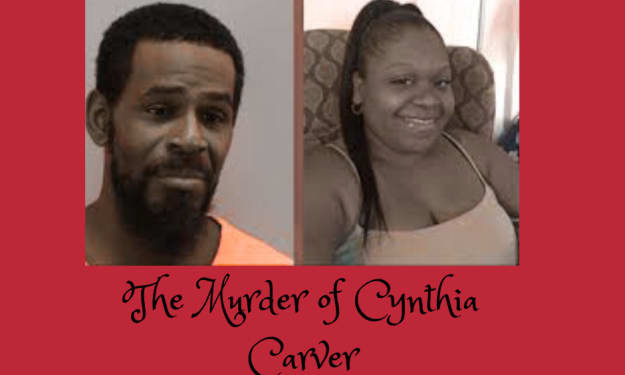
The Murder of Cynthia Carver
Cynthia Carver’s mother, Ann, knew immediately something was wrong when her daughter failed to show for her new job on February 22, 2019. She spoke to Cynthia the night before; she was excited. Around 1 p.m., she drove past Cynthia’s house in Newsoms, Virginia, and saw the front door open. She stopped to investigate, as any mother would. Already frightened, her fears were exasperated when she saw blood at the front door. More blood spatter in the living room. A knife is sitting in front of the sofa. The 35-year-old mother of two is nowhere to be found. Ann called the police.
By Criminal Matters3 days ago in Criminal



Comments
There are no comments for this story
Be the first to respond and start the conversation.