
Supreme Court Greenlights Trump’s Move to End Protections for Venezuelans.
Ruling Allows Termination of Temporary Protected Status for Over 350,000 Amid Ongoing Legal and Humanitarian Concerns.
Certain
Supreme Court Permits Trump Administration to Revoke Protections for 350,000 Venezuelans
May 20, 2025
The U.S. Supreme Court has ruled in favor of the Trump administration’s decision to terminate Temporary Protected Status (TPS) for approximately 350,000 Venezuelan nationals residing in the United States. This landmark ruling marks a significant shift in U.S. immigration policy concerning Venezuelans, many of whom fled their country’s political and economic turmoil over recent years.
---
Background on TPS for Venezuelans
Temporary Protected Status is a humanitarian program established under the Immigration Act of 1990 that allows nationals from countries experiencing ongoing conflict, natural disasters, or other extraordinary conditions to live and work legally in the United States temporarily. It offers protection from deportation and access to work permits but does not provide a pathway to permanent residency or citizenship.
The designation for Venezuelans was first granted in March 2021 during the Biden administration, in response to Venezuela’s escalating humanitarian crisis. Years of hyperinflation, shortages of food and medicine, political repression under Nicolás Maduro’s regime, and widespread violence forced millions to flee the country. Many sought refuge in neighboring countries, but the United States became a key destination due to its established Venezuelan diaspora and relatively accessible immigration system.
At its peak, TPS covered roughly 350,000 Venezuelans living in the U.S. This protection allowed these individuals to rebuild their lives with legal status, find employment, and avoid the constant fear of deportation back to Venezuela, where many faced persecution or severe economic hardship.
---
Trump Administration’s Move to Terminate TPS
Following former President Donald Trump’s return to office in early 2025, his administration prioritized rolling back several immigration policies implemented by his predecessor. Among these efforts was the plan to terminate TPS for Venezuelan nationals.
The administration argued that the conditions which initially justified TPS designation no longer existed. Citing reports from the State Department and other U.S. government agencies, officials claimed that Venezuela had stabilized politically and economically to a degree that safe repatriation was now feasible. Furthermore, they asserted that the original TPS designation had been improperly influenced by political considerations rather than strictly humanitarian criteria.
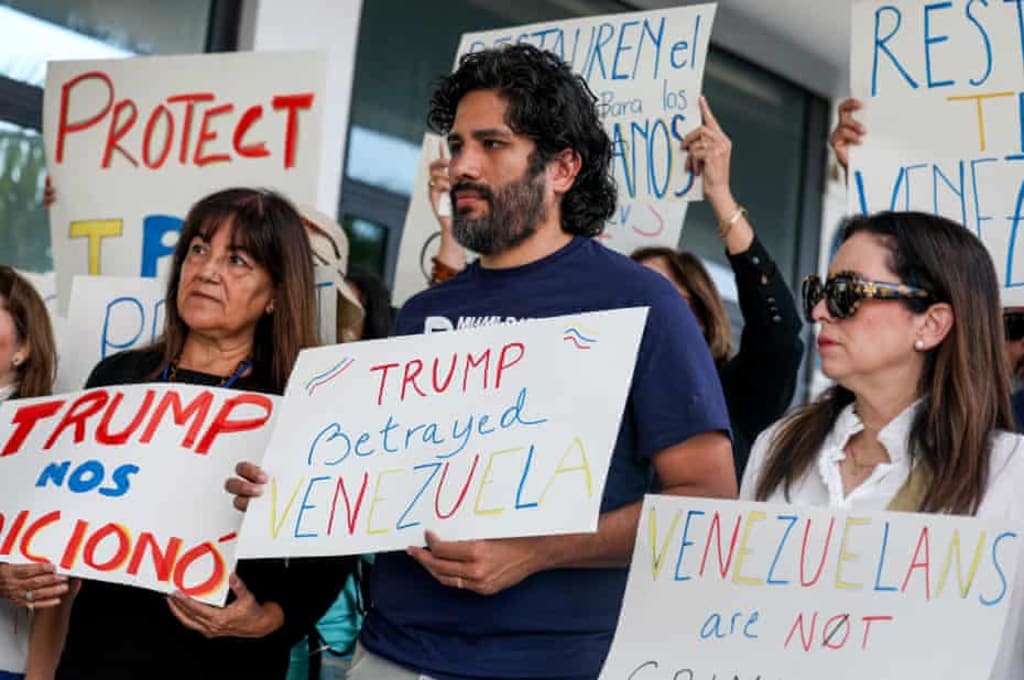
The Trump administration’s stance reflected its broader approach to immigration: a focus on enforcement and reducing temporary protections it deemed excessive or unjustified. The move to revoke TPS for Venezuelans was controversial, sparking immediate backlash from immigrant rights advocates, human rights organizations, and many members of Congress.
---
Supreme Court’s Decision
The case reached the Supreme Court after lower courts blocked the administration’s attempt to end TPS protections, citing concerns about procedural fairness and the ongoing humanitarian crisis in Venezuela. The legal battle centered on whether the administration had followed proper protocols in ending TPS and whether the conditions in Venezuela truly warranted termination.
In a 5-4 decision, the Supreme Court ruled in favor of the Trump administration. The majority opinion held that the executive branch has broad discretion to designate and terminate TPS under existing immigration law. The Court also found that the administration had sufficiently demonstrated a change in circumstances in Venezuela to justify the termination.
Justice Samuel L. Jackson, writing for the majority, emphasized the separation of powers, stating: “It is Congress’s role to set immigration policy, and within the framework established by law, the Executive has the authority to adjust TPS designations based on current facts.”
The dissenting justices warned that the decision ignored the real and ongoing dangers faced by Venezuelan migrants and risked exposing hundreds of thousands to forced deportation to a country still fraught with instability and human rights abuses.
---
Legal and Humanitarian Concerns
The Supreme Court’s ruling has intensified debates over the legal and humanitarian implications of revoking TPS protections for Venezuelans. Human rights organizations argue that Venezuela remains unsafe due to ongoing political repression, economic collapse, and widespread violence. Amnesty International and Human Rights Watch have issued statements condemning the decision, warning it will force vulnerable individuals back into dangerous conditions.
From a legal perspective, critics contend the administration failed to adequately consider the full scope of Venezuela’s crisis, particularly the worsening shortages of medical supplies and continued persecution of dissidents. They also argue that the termination process lacked transparency and meaningful consultation with affected communities.
Immigrant advocates worry the ruling sets a precedent that could undermine TPS protections for other groups from countries with unresolved conflicts, such as Haiti and Syria.
---
Ongoing Legal Challenges
Despite the Supreme Court’s ruling, legal battles over TPS for Venezuelans are far from over. Several lawsuits remain pending in lower courts challenging the termination on procedural grounds and arguing for extension of protections due to humanitarian concerns.
Nonprofit legal groups have pledged to continue fighting on behalf of Venezuelan migrants, seeking injunctions to halt deportations and demanding congressional action to provide a permanent legislative solution for TPS holders.
Lawmakers in both parties have introduced bills aimed at creating a pathway to permanent residency for Venezuelans currently protected under TPS. However, political divisions on immigration reform and border security remain obstacles to swift legislative action.
---
Impact on Venezuelan Migrants
For the approximately 350,000 Venezuelans who had relied on TPS, the Supreme Court’s decision introduces profound uncertainty and hardship. Many have built lives, families, and careers in the United States over the past several years and now face the prospect of losing their legal status.
Without TPS, these individuals risk deportation to Venezuela, where conditions remain precarious. Deportations could result in family separations, loss of income, and exposure to persecution or violence. Furthermore, the sudden withdrawal of work authorization threatens not only migrants’ livelihoods but also the local economies that rely on their labor.
The ruling has also sparked fear and anxiety within Venezuelan communities across the U.S., particularly in states with large Venezuelan populations such as Florida, Texas, and New York. Community organizations have mobilized to provide legal assistance and support services, but the challenges remain daunting.
---
Conclusion
The Supreme Court’s decision to allow the Trump administration to revoke TPS protections for Venezuelans marks a critical moment in U.S. immigration policy and highlights the ongoing tension between immigration enforcement and humanitarian obligations.
While the administration asserts that conditions in Venezuela no longer warrant TPS, many experts, advocates, and migrants themselves argue that the crisis is far from resolved. The ruling raises urgent questions about the future of hundreds of thousands of Venezuelans who have sought safety and stability in the United States and underscores the need for comprehensive immigration reform that balances security with compassion.
As the legal battles continue and affected communities brace for what lies ahead, the fate of Venezuelan migrants in the U.S. remains uncertain — a stark reminder of the complex challenges facing immigration policy in an ever-changing global landscape.
--
Woul
About the Creator
Keep reading
More stories from writers in Criminal and other communities.
The $23,000-a-Day Question: Ephrata spends $8.5 million a year for police. What are we actually buying?
The Invoice Arrives Every year, Ephrata property owners receive a tax bill. A massive chunk of that bill goes to one place: The Police Department. We are told this is the price of safety. We are told that we have a "Gold Standard" department that warrants premium funding.
By Sunshine Firecracker3 days ago in Criminal
Man Escaped Death Row, But He Could Not Escape Death: The Story of Troy Leon Gregg
The story of Troy Leon Gregg is one of the most haunting and ironic episodes in the history of the American criminal justice system. It is a narrative that seems almost fictional in its cruel symmetry: a man sentenced to die by the state escapes death row mere hours before his scheduled execution only to lose his life later that same night in a violent confrontation. Gregg’s story continues to resonate not only because of its dramatic events, but also because of the deeper questions it raises about fate, justice, violence, and the limits of human escape.Troy Leon Gregg was a death row inmate in the state of Georgia, convicted of serious crimes that ultimately led to a capital sentence. After years of legal proceedings and appeals, his execution date was set. For the prison system it was meant to be the final chapter in a long process. For Gregg, however the night before his execution would take an unexpected and shocking turn.
By Kure Garbaabout 15 hours ago in Criminal
Ludacris and Nelly draw backlash over bookings at MAGA-coded music festival
Ludacris and Nelly headlining a mostly right-wing event is good for them. It’s also great for the genre of hip hop. The two rap veterans have showcased their talents on other stages. Why can’t they perform for mostly MAGA folks and grab that bag?
By Skyler Saunders5 days ago in Beat


Comments
There are no comments for this story
Be the first to respond and start the conversation.