
Stefan Fritzl: The Boy Who Survived 18 Years in Captivity with His Mother
Born into unimaginable darkness, Stefan Fritzl endured years of abuse and isolation before being freed from a cellar, beginning a long journey to recovery.

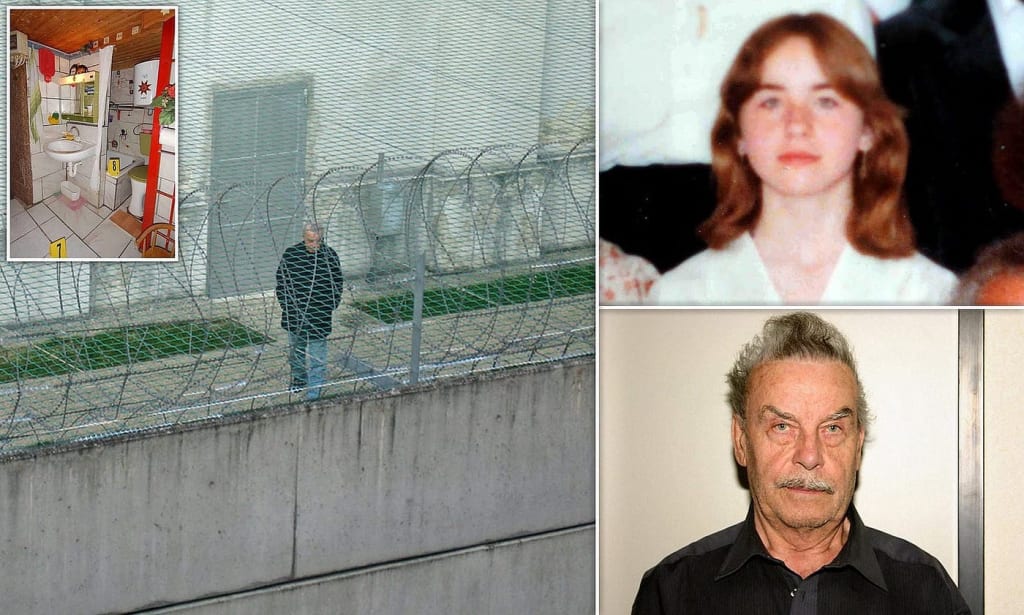
The story of Stefan Fritzl is one of unimaginable suffering, endurance, and survival. Born into one of the most horrifying and notorious cases of imprisonment and abuse, Stefan spent the first 18 years of his life in a dark and confined cellar beneath his family's home. His mother, Elisabeth Fritzl, had been held captive by his father, Josef Fritzl, for over two decades in the same grim space, enduring years of abuse, while Stefan was born in captivity, never knowing the outside world until he was finally freed. Their story is a chilling reminder of the depths of human cruelty and the incredible strength of the human spirit.
The Nightmare Begins: A Horrific Family Secret
The story begins in 1966, when Elisabeth Fritzl was born in Amstetten, Austria. Elisabeth’s early life appeared normal, but it soon took a tragic and horrific turn. Her father, Josef Fritzl, was a controlling, manipulative man with a history of sexual abuse. In 1978, when Elisabeth was just 11 years old, Josef began to sexually abuse her. This abuse escalated over time, and when Elisabeth was 18, her father lured her into the basement of their home, where he locked her away.
For 24 years, Josef held Elisabeth captive in a small, windowless cellar beneath their house. Over that time, she was repeatedly raped and subjected to various forms of physical and emotional abuse. Elisabeth gave birth to seven children, four of whom were raised by Josef and his wife, Rosemarie, while three others remained with Elisabeth in the cellar, never having the chance to experience the outside world. Stefan was one of these children.
Stefan’s Birth and Early Years in Captivity
Stefan was born in 1990, the third child of Elisabeth and Josef Fritzl. His birth in the confined cellar, surrounded by the constant presence of his abuser and the horrors of captivity, was a direct result of the ongoing sexual abuse Elisabeth endured. For the first 18 years of his life, Stefan’s entire world was the dark, oppressive space beneath the house.
Despite the overwhelming trauma of his environment, Stefan’s survival instincts kicked in. He grew up with his mother, who, despite the circumstances, tried her best to protect him. Elisabeth would sing to him, tell him stories, and make an effort to keep him as safe as possible, though her own suffering was immeasurable. Stefan’s reality was a small, isolated world where he had no understanding of the outside world or his place in it. He and his mother were utterly cut off from society, with no way to seek help or communicate with the outside world.
In the early years, Stefan was allowed minimal interaction with the outside world through brief visits from his grandfather, Josef, who would bring him food and other supplies. These visits were not without fear, as Stefan had no concept of normal life or social interaction. But as time passed, Stefan began to grow and develop, his physical and mental strength building in ways that would later help him survive.
The Breakthrough: Freedom and Rescue
In 2008, after 18 years of captivity, Stefan and his mother finally received their chance for freedom. The long-standing nightmare began to unravel when Elisabeth’s eldest daughter, Kerstin, fell gravely ill. Josef, fearing for his own safety, decided to take Kerstin to the hospital, leading to the eventual discovery of the family’s secret. During the hospital visit, it was revealed that Kerstin had been living in captivity for years, and Josef’s actions were soon uncovered.
Authorities were immediately alerted, and a massive investigation ensued. The horrifying truth about the Fritzl family’s captivity came to light, and on April 26, 2008, Elisabeth and her children were freed from the cellar where they had been held for nearly two decades.
Stefan, who had never known anything but the dark, confined space, was brought into the light of the outside world. The shock and trauma of the transition were immense for him. For the first time, Stefan saw the sun, the sky, and the world beyond the cellar. The people who had been trapped in the cellar for so long were now free, but their road to recovery would be a long and difficult one.
Life After Rescue: Coping with the Trauma
Following their rescue, Stefan and his family were placed into protective custody and given medical and psychological care. Stefan, like his mother and siblings, faced an incredibly difficult adjustment to the outside world. Having lived in near isolation for nearly two decades, he struggled with basic life skills that most children develop in their early years. He had no understanding of social norms, technology, or even the concept of a family outside of his own dysfunctional and abusive one.
Stefan also faced the immense trauma of learning the truth about his father’s role in his captivity. His father, Josef Fritzl, was arrested and charged with multiple offenses, including incest, rape, and the imprisonment of his daughter and grandchildren. He was convicted in 2009 and sentenced to life in prison. The fallout from his crimes would have long-lasting effects on Stefan, Elisabeth, and the entire family. Stefan had to come to terms with the fact that the man who had fathered him had also been his captor, and that realization would never be easy to bear.
Despite the immense challenges Stefan faced, he began to slowly rebuild his life. With the help of psychologists and social workers, Stefan was able to address some of the psychological damage he had endured during his years in captivity. However, the long-term effects of his experience would be with him forever.
Josef Fritzl’s Conviction and the Family's Journey Forward
Josef Fritzl was convicted in 2009 on charges related to the years of abuse and captivity he inflicted upon his daughter and grandchildren. He was sentenced to life in prison, where he would spend the rest of his life for the horrific crimes he had committed.
While Stefan and his mother were freed from the physical chains of their imprisonment, they still had a long road ahead of them emotionally. They had to navigate the complexities of rebuilding their lives and adjusting to a world that had moved on without them. Their story, though now known worldwide, was one they hoped to leave behind in the past.
Stefan, in particular, faced an uphill battle. In the years following his rescue, Stefan, along with his family, remained largely out of the public eye. His story, while one of survival and resilience, was also one of immense pain. The emotional scars left by his years in captivity were deep, and Stefan’s future remained uncertain as he struggled to understand his place in the world.
Moving Forward: Stefan’s Strength and Survival
As of today, Stefan Fritzl continues to lead a private life, away from the media attention that surrounded his family’s case. His mother, Elisabeth, has also lived a quiet life since the events that changed their world. While they have both sought therapy to cope with their trauma, the recovery process is ongoing, and it is likely that Stefan will continue to deal with the psychological ramifications of his experiences for the rest of his life.
Stefan Fritzl’s story is one of incredible survival, but it is also a heartbreaking reminder of the brutality that human beings can inflict upon one another. It is impossible to fully comprehend the suffering Stefan endured during his 18 years in captivity, but his eventual freedom represents a triumph of the human spirit over unimaginable cruelty. While the wounds of his past will never fully heal, Stefan’s story is one of resilience, and it serves as a powerful testament to the strength of those who survive the most harrowing of circumstances.
Conclusion: A Legacy of Hope and Survival
Stefan’s story is a tale of pain and perseverance, but also of hope. Against all odds, he survived the unimaginable horrors inflicted upon him and his family by his father, Josef Fritzl. His courage and his ability to adapt to a world he had never known are a testament to the strength of the human spirit. While Stefan's story is one of the darkest chapters in modern history, it also shines a light on the resilience and courage that can emerge from even the most devastating circumstances.
Thank you for reading! If you find this piece interesting, please leave a heart, comment, or even subscribe! Your support means a lot to me!
About the Creator
Victoria Velkova
With a passion for words and a love of storytelling.
Keep reading
More stories from Victoria Velkova and writers in Criminal and other communities.
Victor Salva, Hollywood Director And Convicted Pedophile
Victor Salva is a name synonymous with both the rise and fall of a Hollywood career, one that was marred by unspeakable crimes. The director, best known for his work on films like *Jeepers Creepers*, was not just a figure of cinematic achievement but also a man with a dark and sinister past. Salva’s career trajectory and criminal history are inextricably linked, forever tainting the legacy of the films he created. The story of Victor Salva is not just a tragic tale of a man’s rise to fame, but a disturbing reminder of how predators can sometimes lurk behind seemingly successful and talented individuals.
By Victoria Velkova11 months ago in Criminal
Two Teens, One Bus, and a Nation Watching
Hello, and welcome to “The True Crime Reader,” where we dig beneath the headlines to unravel the stories that shape our understanding of crime, justice, and society. Today’s episode takes us to Oakland, California, for the story behind Dashka Slater’s powerful nonfiction book, “The 57 Bus”—a case that stunned the Bay Area and reverberated across the country.
By Kristen Barenthaler4 days ago in Criminal
Robert William Fisher: The Unresolved Mystery Behind One of America’s Most Notorious Fugitives
Few criminal cases in the United States have remained as haunting and unresolved as that of Robert William Fisher. More than two decades after his disappearance, Fisher’s name continues to appear on the FBI’s Most Wanted list, symbolizing both a tragic family crime and one of the longest-running manhunts in modern American history. His case blends elements of domestic violence, psychological profiling, forensic investigation, and unanswered questions that still trouble law enforcement and the public alike.
By Salaar Jamaliabout 16 hours ago in Criminal


Comments
There are no comments for this story
Be the first to respond and start the conversation.