
SOS Redouble
When the TITANIC's lifeboats are for women and children only, what's a (con)man to do?

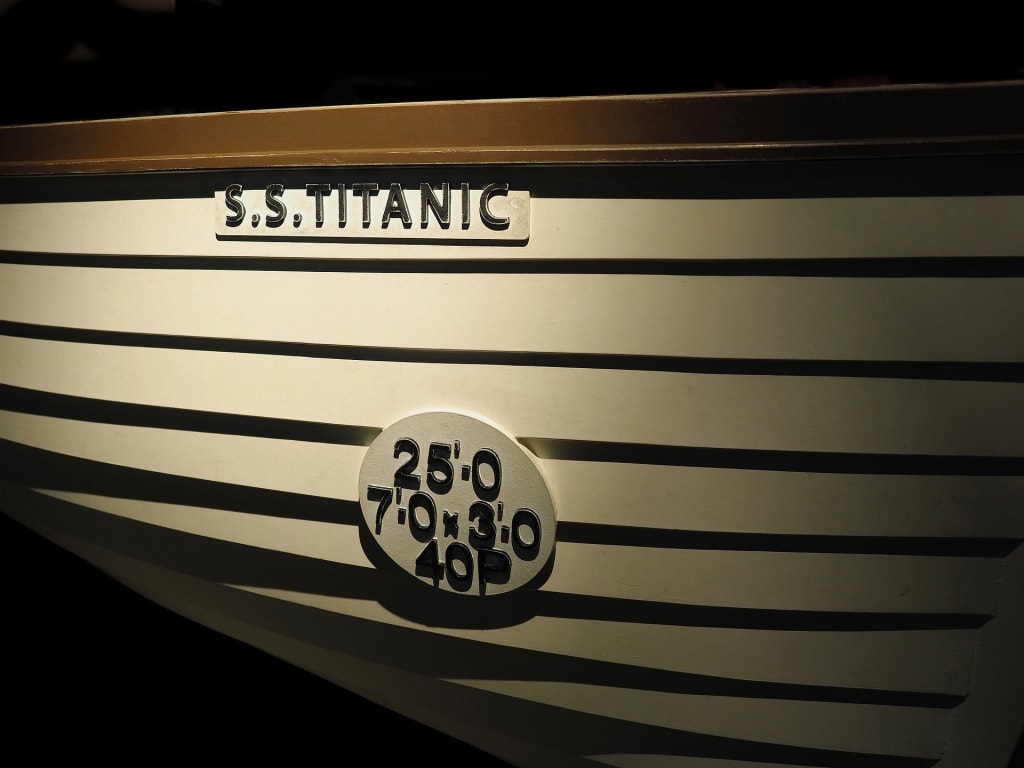
SOS Redouble
by Kit Mareska
Struck an iceberg — really. The fools.
He didn’t know who deserved the blame more, Captain Smith or Bruce Ismay, but the Titanic had been pushing her speed for days, which for him meant one thing: less time to earn the trust of his marks. Just minutes ago, he’d been so close with the railroad magnate’s big-eared son in the smoking room, purposely losing to him in bridge, laying the groundwork for the horse-racing scheme. Warmed by the fireplace, puffing on a cigar, wondering whether he’d be able to snag Mr. Clark’s senator uncle, as well. Now, here he was, pulling on layers of clothes all because some idiot hadn’t been able to spot an entire mountain of ice in time. Tonight was obviously lost, but if they could wrap up this silly evacuation drill, fix the ship and let everyone get to bed at a decent hour, he could work on young Mr. Clark tomorrow without the entire effort being . . . derailed.
He reached for his small black bible. Turned to the inside cover to check which name he was using this trip: Brayton. Not that he’d forgotten, but it never hurt to reinforce. There were a few other notes penciled in the pages, like the names of Clark’s wife and son, and the racehorse he planned to invent, but he didn’t review those. He turned to the inside back cover, where he’d pasted a pocket “to hold his prayer cards” — and the aces he pulled from the White Star deck he bought in the barber shop. Behind them, he tucked the biggest wad of cash he’d ever accumulated; London had been highly lucrative this time. He’d converted his winnings to large denomination American bills before boarding — banks charged less than ships — and still, the wad threatened to tear loose the pocket.
But pickpockets went after wallets, not bibles. So he pulled a ribbon from a pair of boots and tied it around the bible, double-knotting the silk. Then he pushed the bible into his inner breast pocket.
He reached for his Chesterfield coat, then remembered — the life jacket. White Star was insisting. Better he fasten it than some steward who might brush against the bulging bible and wonder. Over it went the Chesterfield, then a Homburg jammed on his head. He locked the cabin door behind him; no sense in making entry easy for looters.
Climbing the Grand Staircase, he grew heated, but as soon as he stepped onto the boat deck, the air slapped him with an icy palm. Born in Minnesota, yes, but his blood had grown used to the Los Angeles sunshine.
He spotted the Clarks — no mistaking those ears of his — conversing with no less than John Jacob Astor and his teenaged bride.
Well! This night need not be a waste after all. Just remember: Brayton, this time.
He took no more than five steps toward them, however, when he became aware of a pulling in his belly and legs, and a desire to lean away from the bow.
The ship was listing.
He veered toward the crew trying to load the starboard lifeboats. Most were shouting, some with life jacket instructions, others for women and children. All assured the passengers that the ship was fine, this was merely precaution. But Brayton had made his living reading people for twenty years. And while some of the crew seemed to believe their assurances . . . some were knowingly lying.
The officer yelling commands, Murdoch, was keeping his head well enough, but his voice kept cracking. Murdoch wasn’t unsure if the damage was minor. He knew it wasn’t.
The purser to whom Murdoch spoke next was deathly pale. And went even paler when Murdoch handed him a pistol, said something into his ear.
Guns.
This was no drill.
The Titanic was going down.
And if there were enough lifeboats for everyone, there’d be no need for guns.
Brayton trotted to the nearest lifeboat. Only to see it begin to descend before he arrived.
BOOM!
A star exploded high overhead, so bright that he saw no colors at all for a moment.
A distress rocket. Jesus H, they’re firing off distress rockets.
He quickened his steps, feeling drunk, though he’d had no more than a single whiskey. He found the pistol-toting purser at the next boat, kept his tone mild, non-threatening. “Think there might be room for me?”
“Sorry, sir, women and children only just now. Excuse me.” Without waiting to be excused, the purser broke away to speak with Bruce Ismay. Then Ismay himself began loading women into the boat — no mere drill indeed, when the chairman of the White Star Line bent his back.
Brayton managed to catch Ismay’s eye. “Any room for gentlemen?”
Ismay shook his head, his eyes shadowed. “Not yet. Later . . . perhaps.”
Brayton knew that expression. He’d left many a mark wearing it. Ismay had lost the one thing he couldn’t afford to lose.
It’s him — he’s the one who pushed our speed. Broke his shiny new toy right out of the box. If the rescue ships don’t arrive in time, this is all on him.
If the rescue ships don’t arrive in time . . . But they will. Of course they will. There are plenty of ships around —
The coal workers’ strike.
Queenstown’s docks had been packed full of boats whose owners couldn’t or wouldn’t afford the new minimum wage.
The seas were far emptier than usual.
BOOM!
This time he didn’t flinch, but he hurried to the next boat. Rejected again. Onto the . . .
Water. Not on the boat deck, yet, but so much closer than it should be.
Than it would be. Soon.
If we’re not rescued in time . . .
He was still vying for the attention of the most forward boat’s crew when a gunshot sounded. Then another. The purser had fired. Into the air, apparently, although he still looked wild-eyed as he shouted, “Get out of that boat this instant, sir!”
The sir obeyed. Brayton decided to head further back, where maybe they weren’t so aware of the seriousness.
The second lifeboat he’d tried had lowered past the railing. Hearing screams, Brayton leaned over to look for it, saw it hanging so unevenly that it was in danger of spilling its passengers, who all clutched the boat’s sides or each other. There was more than one male passenger aboard.
A strange mix of annoyance and hope sparked in him, and he hurried past an officer who was shouting, “You want me to lower away quickly? You’ll have me drown the lot of them!” at Ismay. Who . . . was wearing his bedroom slippers, the cuff of his pajama bottoms poking out beneath his suit pants. It seemed the detail of a dream.
Brayton wandered across the mid-deck. Was that . . . ? Yes. Somewhere, the ship’s string quintet was playing, a cheerful tune utterly at odds with gunfire.
I’m dreaming. This is all a nightmare. That’s how come so many are so calm. I’ll wake up in that wretched Southampton boarding house any moment and be so, so relieved. Although I’ll miss that fat wad of cash . . .
But . . . his breath. Had he ever seen his breath in a dream? Felt his cheeks stiffen with chill?
Back to work. Pick a boat and stay. Make them let you on.
The crewman in the next lifeboat was familiar — the smoking room steward he tipped so generously the first night, so that he would be seen tipping generously. If any man owed him . . .
He stepped close. “Excuse me — do you remember me?” The steward nodded once. “I need to get on this boat.”
“Sorry, Mr. Brayton, women and children —"
“I know, but I can’t swim.” Minnesota was full of lakes, every one of them cold.
“Life jacket will keep you afloat, should it come to that.”
Should it come to that. He suspects it will come to that.
“But I have a wife and children at home who depend on me!”
The steward helped a lady climb into the boat. “That’s not what you said in the smoking room two days ago, sir.”
So much for catching a break. “So what? I don’t deserve to live because I never wed or reproduced? And I have a cock?”
“I’d never say that, sir.” The steward turned his frown into a smile for the next passenger to step in, a child.
He has children.
Brayton lowered his voice. “How’d you like to make enough money so that you never have to put to sea again, could stay home with your family? You make what — four, five pounds a month? I’ll give you a thousand. Right now. Cash. That’s more money than you’ve ever seen in your life.”
There! I didn’t, strictly speaking, promise him pounds. If he doesn’t check which currency when dealing with an American, that’s his problem.
The steward snorted. “I work first class, sir. No, it isn’t. You’ve got a lot more than that, too, I’d wager, knowing how to deal from the bottom of the deck as you do.”
Observant bastard, isn’t he? Screw his disapproval. Focus on the potential. He can be bought, if I just find his price.
A pair of women boarded. Space was running out.
Brayton licked his upper lip, tasting salt in his mustache. As cold as it was, he was sweating. “Fine, then — five thousand.” Check and raise.
“Please step back, sir.”
Brayton did step away. Undid his life jacket to reach for his bible. He didn’t need to count how much was in its pocket, he counted every night. How much to offer, though? Five thousand hadn’t even tempted the steward. But then, he hadn’t actually seen the cash.
Yeah, but if I let him, he’ll know it’s in dollars. Worth only a fifth of the same amount in pounds. Time to bluff?
Another bright shower of stars. Another bright violin melody.
The tilt of the deck was getting worse.
And it’s going to keep getting worse. Til this ship is standing on its nose. And then . . .
He couldn’t help himself. He peered over the side, at the smooth black glass below.
Won’t be the water that breaks if I hit, though, it’ll be me. Bobbing like an apple and waiting to die.
No bluff. Have to go all in.
He shimmied the ribbon off the bible, thrust the book out til the steward took it. “Look inside the back cover. That’s all yours. Twenty thousand dollars, everything I have. If you just let me in that boat.”
The steward stared. “Women and children . . .” But it was weak. Distracted.
Brayton pressed. “Other men have gotten on boats. I’d be just one more.” He licked his lip. “Please. I just want to live.”
A flicker of beckoning fingers. While the steward stowed the bible inside his life jacket, Brayton got in, settling next to a woman in a mink.
“Are there any more women?” the wild-eyed purser shouted.
None came forward. The purser waved his arm, summoning.
A handful of men climbed into the lifeboat.
For free.
Brayton stood, rocking the boat, pushed through to the steward. “I think you owe me my bible back, don’t you?”
“No, sir, I don’t. Look around these lifeboats. Look at all the men still up there.”
Despite himself, Brayton glanced.
Clark. Jug-handle ears, strained smile, gaze fixed on another lifeboat. No hope for himself, only for his wife.
“A lot of widows and orphans will be made this night, Mr. Brayton. I can’t help that, but I can help, a little, by donating this money. Now, please: sit down.”
“Or what — you’ll shoot me?” He didn’t see a pistol.
“No. But I’ll toss the bible overboard rather than give it back to you.”
Determined gaze, steady voice. No bluff.
Brayton watched the black steel wall slide slowly past. Felt the lifeboat settle on the black glass. Then he turned his eyes on his fellow survivors, searching for a new mark.
About the Creator
Kit Mareska
writer of (mostly) medieval fiction, wife, mom, owned by 4 cats who think they come before all those other things. Working on a Wars of the Roses series centered around the friendship between King Edward IV and William Lord Hastings.
Keep reading
More stories from writers in Criminal and other communities.
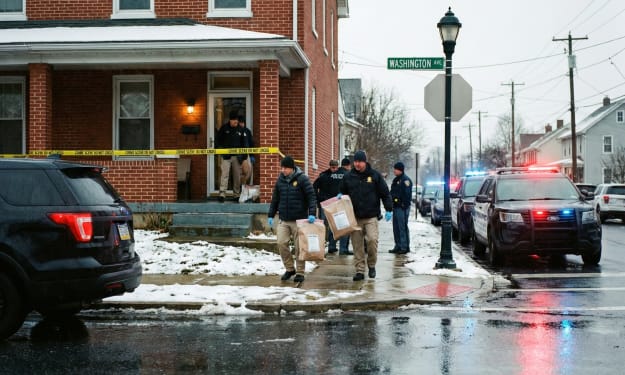
Inside the House of Skulls: The Full Timeline of the Jonathan Gerlach Investigation
INVESTIGATION TARGET: JONATHAN C. GERLACH INCIDENT LOCATION: 100 WASHINGTON AVENUE, EPHRATA PA CHARGES: ABUSE OF CORPSE (x100), THEFT, DESECRATION STATUS: INCARCERATED ($1M BAIL) KEYWORDS: #HouseOfSkulls #JonathanGerlach #EphrataCrime #MountMoriah
By Sunshine Firecracker6 days ago in Criminal
Multinational Crisis
Part One: Nigeria You have all heard about Nigerians, Nigeria in general. The infamous scammer country. But let’s have a real conversation. Let me give you some extremely boring stats, so we are on a level playing field, on my thoughts. I’ll be as brief as possible considering, no one wants an hour long dissertation on economic issues.
By Alexandra Grant6 days ago in Criminal
How, Too
Many people wonder how, too. You are not alone, and I am an expert. I will teach you how, too! First, you need to remit a small application fee and fill out an application describing the nature of your financial situation and how often payments will be made, as this will have great bearing on how well I teach you how, too.
By Harper Lewis4 days ago in Fiction



Comments
There are no comments for this story
Be the first to respond and start the conversation.