
Shootouts, Sex & Scandals: Crimes That Forever Haunted Small Towns
Ordinary towns with wounds that never healed.


Most small towns are known for their peace, routine, and tranquil predictability. But a few become known for something else entirely: dark crimes that unfold behind closed doors and echo for decades. From sexual undergrounds to vigilante justice and catastrophic cult collapses, these are the stories that turned quiet towns into global sensations.
The Enumclaw Horse Sex Scandal
Before 2005, Enumclaw, Washington, was known for farmland and mountain views. All of that changed with a death that became one of the most infamous sex scandals in U.S. history.
The man at the centre was Kenneth Pinyan, a Boeing engineer from Gig Harbor. After a motorcycle accident left him with reduced sensation, Pinyan increasingly pursued extreme sexual experiences. His interests eventually led him into an online underground community of men who practised zoophilia, and he began meeting others on a rural farm in King County, where they filmed sexual encounters with horses and circulated the footage online.
On July 2, 2005, Pinyan and two associates, including truck driver James Michael Tait, travelled to a barn on Southeast 444th Street. The group had previously crept into the neighbouring Arabian horse facility to engage in sexual acts with a particular stallion, a horse they crudely nicknamed “Big Dick.”
That night, Tait was first to be penetrated while the others filmed. When it was Pinyan's turn, Tait took over the camera. But something went wrong and Pinyan sustained catastrophic internal injuries during penetration.
Hours later, Douglas Spink rushed him to Enumclaw Community Hospital. But it was too late. He died soon after from acute peritonitis caused by a perforated colon.
News of Pinyan's death spread quickly. Reporters swarmed Enumclaw, talk shows and documentaries seized the story, and internet forums exploded with curiosity, disgust, and fascination. A quiet town had become the epicenter of one of the strangest scandals in modern history.

But it wasn't just the act that caused the scandal; the aftermath did as well. You see, at the time, Washington didn't have any laws banning bestiality. This oversight became glaringly obvious the day James Michael Tait stood before a Washington judge. Prosecutors wanted to charge him with animal abuse, but the horses weren't injured. With no law against having sex with a horse, the state could only charge Tait with trespassing.
Tait entered an Alford plea, acknowledging a jury would likely convict him without admitting guilt. For his acts, Tail received only a trespassing conviction, a year of probation, and a $300 fine.
On the bright side, the case did trigger a change, and Washington State criminalised bestiality shortly afterwards.
The Skidmore Bully Murder
Skidmore, Missouri, was once a typical farming town of a few hundred people until Ken McElroy blessed the Earth with his presence.
Born on June 16, 1934, Ken Rex McElroy was the fifteenth of sixteen children born to Tony and Mabel McElroy. In a family that large, most kids faded into the background. Ken did the opposite.
Illiterate and mean-spirited, he bullied classmates, stole lunch money, and shoplifted with total impunity. By age 13, the local police knew his name by heart. Skidmore, Missouri, already had a label for him: the town bully.
But this was no childhood bully. As he got older, the evil within him intensified. As he grew into adulthood, he was accused of nearly two dozen felonies: assault, arson, burglary, animal cruelty, cattle and hog rustling, child molestation, and statutory rape.
Yet none of the charges would stick. Why? Well, there were two reasons. His lawyer, Richard McFadin, kept McElroy out of prison so reliably that townsfolk whispered he must be mob-connected. The other reason? Fear. The 6-foot, 270-pound McElroy stalked witnesses, parked outside their homes for hours, and hunted down jurors’ addresses. More than one woke up to a rattlesnake in their mailbox.
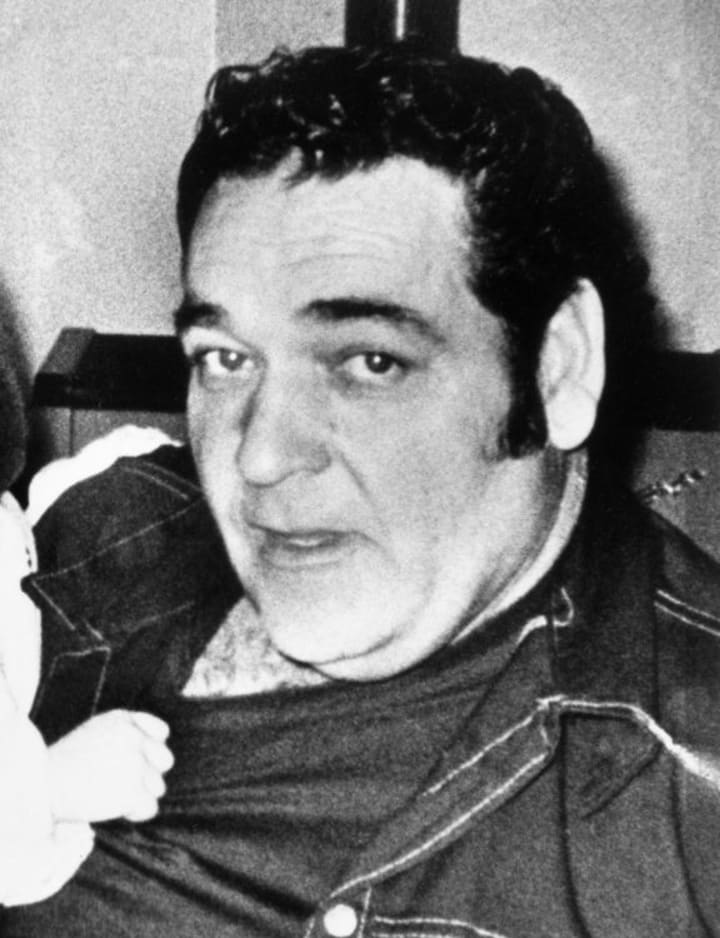
In terms of his "romantic" life, McElroy fathered more than ten children with different women. He would marry three times, with Trena McCloud being his third and final wife.
Predictably, like the other areas of his life, Ken couldn't even romance legally. Because young Trena McCloud first caught Ken Rex McElroy’s attention at the age of twelve. Yes, that’s right, twelve years of age! McElroy was soon so infatuated with his future child bride that he would follow her school bus, honking until the school bus driver let six-grader Trena McCloud out so he could pick her up.
Once Trena McCloud was in his clutches, McElroy would rape her several times, leading to her becoming pregnant at the grand age of fourteen.
Of course, this was all illegal. Thus, McElroy divorced his second wife, Alice, and married Trena to avoid statutory rape charges.
Both his current wife and his ex-wife knew they had to escape him. Just sixteen days after Trena gave birth, she and Alice fled to her mother and stepfather’s house, desperate for safety. According to court records, McElroy tracked them down and captured them. Then, while Trena’s parents were away, he returned to their home, shot the family dog, and burned the house to the ground.
By this point, nearly everyone in Skidmore lived in fear of Ken McElroy.
Nearly everyone.
The one man who refused to back down was 70-year-old grocer Ernest “Bo” Bowenkamp. When Bo’s store accused one of McElroy’s daughters of stealing candy, McElroy responded with shocking violence. He walked straight up to the elderly shopkeeper and shot him in the neck. Bo survived, but the attack sent a wave of terror through the town. Many believed this would finally be the moment McElroy faced real consequences.
He did not.
McElroy was convicted of second-degree assault and sentenced to two years in jail. Just one week later, he appealed and was released on bail. The very next day, he marched into the D&G Tavern carrying a rifle fitted with a bayonet, a clear violation of his bond, and openly bragged that he would finish the job and kill the Bowenkamps. Everyone believed him.
That was the final tipping point.
On the morning of July 10, 1981, townspeople gathered with the sheriff to discuss how to protect their families. While they met, McElroy was already in town, sitting in the tavern and drinking beer. The sheriff advised against confronting him and suggested forming a neighbourhood watch. Then he got in his cruiser and left town.
A large group of townspeople headed straight for the tavern. The bar filled instantly. McElroy finished his drink, bought a six-pack, and walked out with Trena to his pickup truck. As he climbed inside, the crowd surrounded the vehicle. The engine roared to life.
Then the gunshots rang out.
When the firing stopped, McElroy was slumped over the steering wheel. His foot pressed hard on the accelerator, the engine screaming at full throttle. No one called an ambulance.
Everyone simply went home.
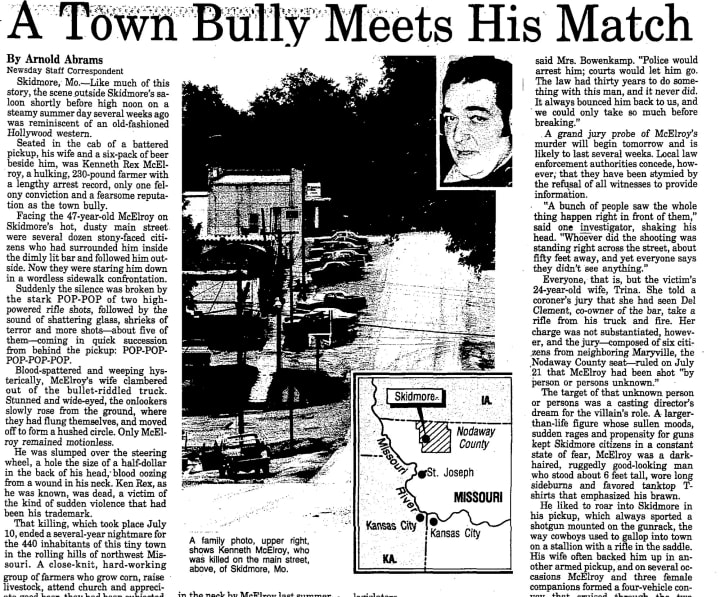
When officers arrived later, the streets were deserted. Only McElroy’s smoking truck remained. The town understood that what happened was murder. But the residents also understood something else. For the first time in decades, Skidmore felt safe. Bo and Lois Bowenkamp and their children finally slept without fear.
The identity of McElroy’s killer has never been revealed.
The Butcher of Plainfield
Plainfield was a quiet rural town shaped by farmland, woodland, and familiar routines. Life moved slowly, and most people believed they knew their neighbours. That illusion collapsed in November 1957, when police began searching for missing hardware store owner Bernice Worden.
The trail led investigators to a deteriorating farmhouse on the outskirts of town. Inside the home of Ed Gein, they made a discovery so disturbing it would become one of the most notorious crime scenes in American history. Worden’s body was found decapitated and hanging upside down in a shed behind the house.
That alone was horrifying. But it was only the beginning.
As officers searched deeper, they uncovered skulls repurposed into bowls and containers, bedposts lined with human heads, a lampshade fashioned from human skin, and furniture upholstered with skin taken from corpses. Among the most disturbing discoveries were masks made from faces and a suit stitched together from human remains, created in an attempt to fashion a "woman suit."
Until that moment, Ed Gein had been seen as little more than a strange local loner. He lived alone on a secluded farm after the deaths of most of his family. He supported himself through odd jobs and handyman work. To neighbours, he appeared awkward, quiet, and socially isolated.
No one suspected what waited inside his home.
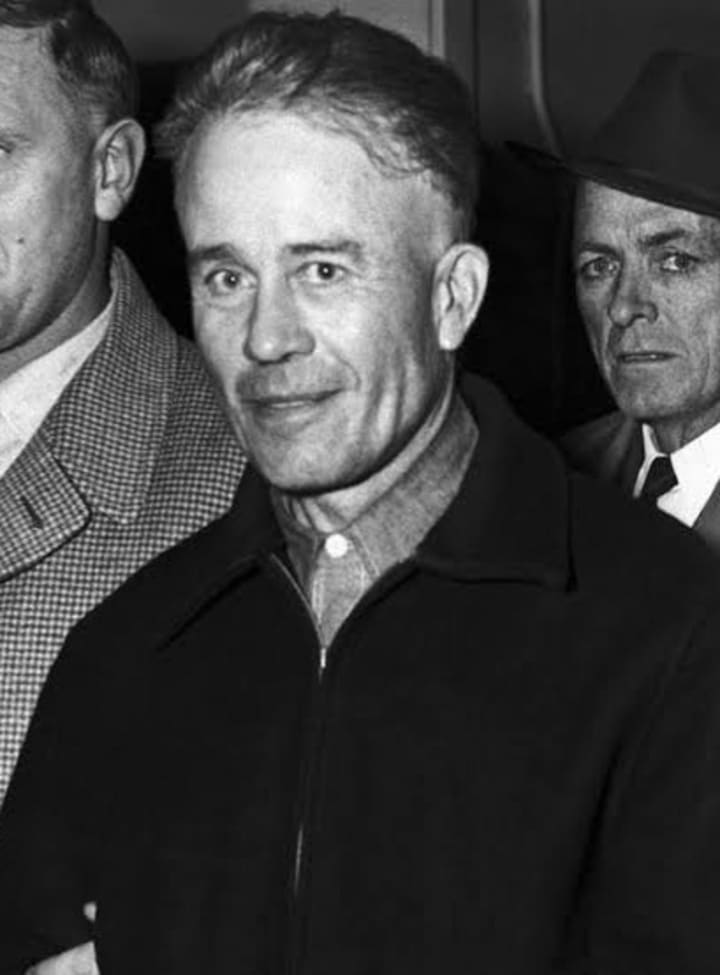
You see, under the cover of night, he robbed graves from local cemeteries, taking bodies back to his farmhouse where he dismembered them and preserved selected remains. Investigators later confirmed multiple grave exhumations based on his own admissions and physical evidence recovered from his property.
Despite the scale of the discoveries, only two murders were ever officially confirmed.
The first being Bernice Worden, and the second victim identified as Mary Hogan, a divorced tavern owner who disappeared in 1954. He was suspected in other disappearances over the years, but no conclusive evidence ever supported additional murder charges.
After his arrest, Gein was declared mentally incompetent to stand trial and committed to a state psychiatric institution. Years later, in 1968, he was deemed competent to stand trial, found guilty of Worden’s murder, and returned to institutional confinement, where he remained until he died in 1984.
Plainfield was permanently marked by what was uncovered. Just months after authorities seized Gein’s property, his farmhouse was destroyed in a fire shortly before it was scheduled to be auctioned. While many locals believed the blaze was deliberately set to prevent the site from becoming a tourist attraction, the fire was never officially ruled arson.
Over time, the horrors discovered inside that farmhouse echoed far beyond Wisconsin. Gein’s crimes became a foundation for modern horror mythology. Films such as Psycho, The Texas Chain Saw Massacre, and The Silence of the Lambs all drew elements from his life and crimes.
About the Creator
Chelsea Rose
I never met a problem I couldn't make worst.
Keep reading
More stories from Chelsea Rose and writers in Criminal and other communities.
Betrayal Behind The Badge
In a story that caused quite a stir in the quiet streets of Bedfordshire and damaged the reputation of the local police force, Officer Gareth Suffling's fall from grace revealed a tale of blackmail, abuse of power and further eroded public confidence in the authorities.
By Chelsea Rose2 years ago in Criminal
The $23,000-a-Day Question: Ephrata spends $8.5 million a year for police. What are we actually buying?
The Invoice Arrives Every year, Ephrata property owners receive a tax bill. A massive chunk of that bill goes to one place: The Police Department. We are told this is the price of safety. We are told that we have a "Gold Standard" department that warrants premium funding.
By Sunshine Firecracker2 days ago in Criminal


Comments
There are no comments for this story
Be the first to respond and start the conversation.