
"Sarah Boone's Legal Drama: From Eight Public Defenders to a 'Help Wanted' Ad Amid Murder Charge"
The Suitcase Killer's Struggle for Legal Representation
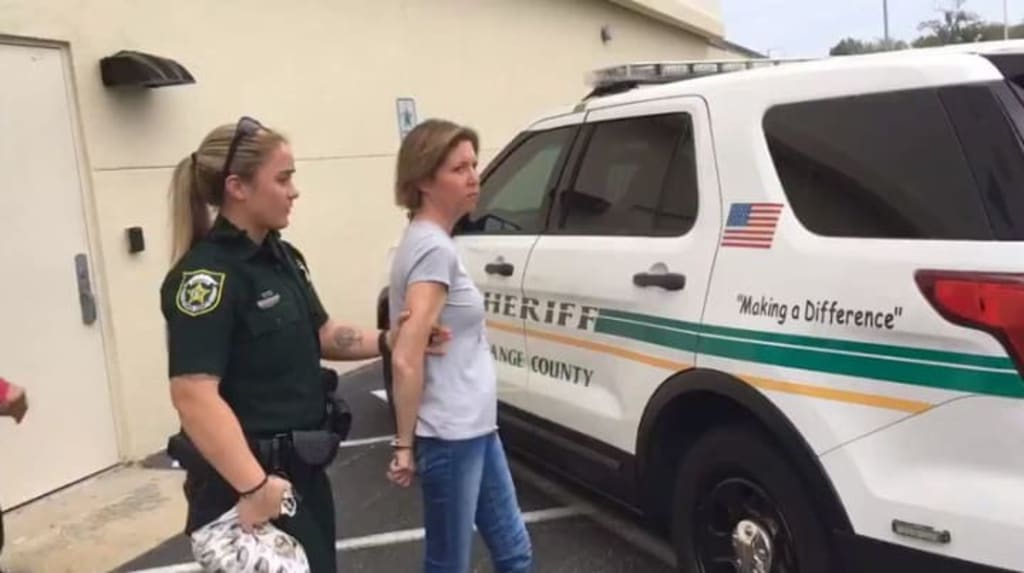
Sarah Boone is charged with second-degree murder in Winter Park, Florida, a city north of Orlando.
According to police, Boone and George had been in a relationship for several years when Boone allegedly zipped George into a suitcase during a game of hide and seek while they were drinking.
Boone claimed she forgot he was inside and discovered him the next morning. However, the investigation revealed a cell phone video, allegedly recorded by Boone, in which she appears to taunt George as he pleads for help.
Sarah Boone, who was arrested in 2020 for the murder of her boyfriend George Torres Jr., has cycled through eight public defenders and attorneys, many of whom have left her case due to "irreconcilable differences."
Boone has been vocal about her dissatisfaction with her legal representation, referring to various attorneys in court correspondence as "snotty," "duds," and "buffoons."
One attorney even noted in his motion to withdraw that "no attorney can satisfy her."
In June, the latest attorney, Patricia Cashman, known for her ability to handle challenging clients, requested to withdraw from Boone's case.
In response, Boone took an unconventional approach by drafting a "help wanted" ad for a new attorney.
The ad, which might be seen as almost comical if not for the gravity of the situation, called for a candidate with "original creativity," "extraordinary expertise," and "confident ingenuity." It read: "Looking for a prosperous challenge?
Ready for your closeup on National Television? Are you zealous with a side of keen? Show the world who you are." Unsurprisingly, there have been no takers.
Patricia Cashman, the latest attorney on Sarah Boone's case, is renowned for her skill in managing difficult clients. However, she recently requested to withdraw from the case.
In a unique response, Boone took an unconventional route: she created a "help wanted" ad for a new attorney.
If this situation weren’t so serious, the ad might almost seem humorous. It called for an attorney with "original creativity," "extraordinary expertise," and "confident ingenuity," and read:
"Looking for a prosperous challenge? Ready for your closeup on National Television?
Are you zealous with a side of keen? Show the world who you are." Unsurprisingly, no one has responded to the ad.
Boone faces a second-degree murder charge in Winter Park, Florida, located north of Orlando.
According to police, Boone and her boyfriend George Torres Jr. had been in a relationship for several years.
Boone admitted to intentionally zipping George into a suitcase during a game of hide and seek while they were drinking.
She claimed she forgot about him and found him the next morning.
However, the investigation revealed a troubling cell phone video, allegedly recorded by Boone, in which she appears to taunt George as he begs for help.
Sarah Boone’s interrogation has provided some chilling insights. During questioning, Boone described George Torres Jr. as an alcoholic who had been abusive toward her, noting that both of them had prior arrests related to domestic violence.
Boone asserted that while she might have made a grave mistake with George, she didn’t kill him intentionally.
In her own words, she claimed to have known George better than anyone and insisted she tried to help him in every possible way, expressing deep remorse and sleepless nights over his loss.
However, Boone's statements raise significant questions.
She mentioned that George was heard saying, "I can't breathe," and questioned why there appeared to be no visible signs of distress, such as holes or fingers trying to escape.
Since her arrest in 2020, Boone has been held in jail without a hearing on her bond status. Despite her belief that a high bond might be offset by donations from her "fans," she remains in custody.
Recently, Judge Michael Cranck reviewed four motions that Boone filed from jail.
In her distinctive handwriting, Boone requested "immediate relief" by appointing effective standby counsel to assist her with her case preparation.
She also designated herself as a pro se defendant, meaning she is representing herself.
Sarah Boone, an indigent defendant, meaning she cannot afford private counsel, has been assigned public defenders by the court.
Currently representing herself pro se, Boone argues for the appointment of standby counsel.
She cites several legal precedents to support her request, contending that the court's refusal to provide effective standby counsel could negatively impact her defense, putting her at a disadvantage as she navigates her case alone.
Despite having had eight public defenders, Boone has expressed dissatisfaction with all of them. Now, she questions why the court is forcing her to represent herself.
On Monday, Christian Lake from the Justice Administrative Commission (JAAC) clarified the role of standby counsel.
He noted that Boone seems to misunderstand this role. Standby counsel is not meant to act as co-counsel or assist her directly throughout the case.
Instead, standby counsel is available to step in if Boone decides she wants legal representation at some point during the proceedings, ensuring that the court can provide an attorney if needed.
At that point, standby counsel functions as a safety mechanism.
It ensures that if a defendant who initially chose to represent themselves later decides they want legal representation, a lawyer is already in place to prevent delays in the proceedings.
Standby counsel is not meant to assist or act as co-counsel; their role is limited to stepping in only if the defendant decides to abandon their pro se representation.
The court reviewed case law on this issue and determined that there is no constitutional right to standby counsel, as established by Paul v. State, 152 So. 3d 635 (Fla. 4th DCA 2014), referencing the Florida Supreme Court case Jones v. State, 449 So. 2d 253 (Fla. 1984).
The court concluded that Boone, by her actions, has forfeited or waived the right to court-appointed counsel. Additionally, Brown v. State, 457 So. 3d 1110 (Fla. 1st DCA 2010), also cites Jones v. State, indicating that there is no Sixth Amendment right to simultaneous legal representation and self-representation.
This was further supported by Shepard v. State, 177 So. 3d 275 (Fla. 2009).
Therefore, based on these precedents and the detailed 16-page order previously issued, Boone's request for standby counsel was denied.
In response, Boone argued that she did not forfeit her right to counsel, as the court had judged.
She expressed that she should have had an evidentiary hearing to better explain her position and to allow the court to understand her situation more thoroughly.
Boone stated that, despite the explanation provided by the standby counsel, she does not want to continue representing herself and feels that the denial of an evidentiary hearing was unlawful and prevented her from seeking a remedy.
Sarah Boone expressed uncertainty about whether she is wasting the court's time or if her concerns are even valid.
The judge informed her that the trial is scheduled to start on October 7th, and the court has extended the trial period from two weeks to three weeks.
This will give Boone an opportunity to review the evidence that the state plans to present next month.
However, Boone raised concerns about the expedited timeline and the limited preparation time available to her.
With today being August 5th, Boone is expected to complete her case preparation by September 26th in order to proceed to trial on October 7th.
She expressed frustration at having only two days to review the discovery materials, especially since she only has access to her laptop from 8 AM to 4 PM and lacks hard copies of the evidence.
Boone pointed out that she has 62 days to prepare for trial, but the constraints on her access to evidence and time to review it are problematic.
During the unannounced hearing on June 28, 2024, Boone argued that she was unaware of the court hearing and was unexpectedly brought to the courthouse.
As a result, she has not had the opportunity to review the discovery or case-related materials submitted by her former attorney.
Boone raised these concerns with Judge Cranck, emphasizing her lack of access to essential resources.
She explained that she does not have access to a regular phone for communication or research, is unsure if she has internet access, and lacks a phone book.
Without these basic tools, she is struggling to provide the necessary information and effectively prepare her case.
About the Creator
Keep reading
More stories from Meri B Torres and writers in Criminal and other communities.
"Tragic Case of Abuse and Death: Christopher Gregory's Trial Unfolds Amidst Emotional Testimonies and Legal Complexities"
Christopher Gregory has been charged with the murder of his 6-year-old son, Corey. Corey died in April 2021 due to blunt force trauma to his chest and abdomen.
By Meri B Torresabout a year ago in Criminal
Two Teens, One Bus, and a Nation Watching
Hello, and welcome to “The True Crime Reader,” where we dig beneath the headlines to unravel the stories that shape our understanding of crime, justice, and society. Today’s episode takes us to Oakland, California, for the story behind Dashka Slater’s powerful nonfiction book, “The 57 Bus”—a case that stunned the Bay Area and reverberated across the country.
By Kristen Barenthaler5 days ago in Criminal
Robert William Fisher: The Unresolved Mystery Behind One of America’s Most Notorious Fugitives
Few criminal cases in the United States have remained as haunting and unresolved as that of Robert William Fisher. More than two decades after his disappearance, Fisher’s name continues to appear on the FBI’s Most Wanted list, symbolizing both a tragic family crime and one of the longest-running manhunts in modern American history. His case blends elements of domestic violence, psychological profiling, forensic investigation, and unanswered questions that still trouble law enforcement and the public alike.
By Salaar Jamali2 days ago in Criminal


Comments (3)
So so amazing .i love your content and subscribed. Kindly reciprocate by subscribing to me also . thank you and keep it up
Thanks for sharing
Superb one.