
Richard Cottingham: The Torso Killer
Richard Cottingham, the "Torso Killer," terrorized New York and New Jersey in the late 1970s and early 1980s. His brutal murders, often involving prostitutes, shocked the public.
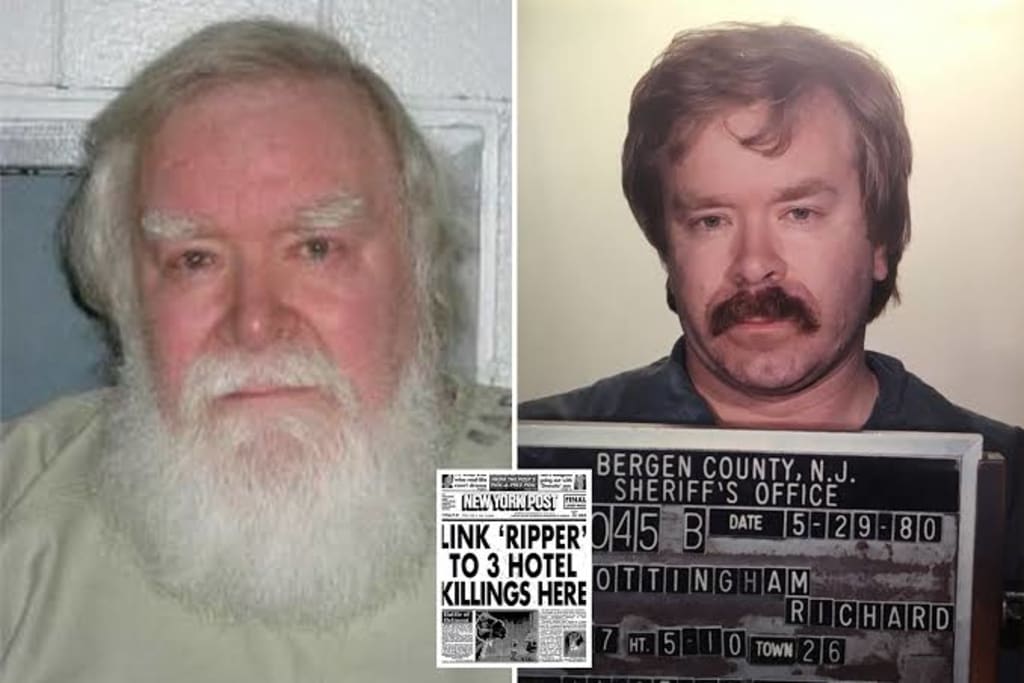
Richard Cottingham, known as the "Torso Killer," was a notorious American serial killer who terrorized the New York and New Jersey areas during the late 1970s and early 1980s. His gruesome crimes and the shocking details of his case left a lasting impact on both law enforcement and the public.
Cottingham's reign of terror began in the late 1970s when he started murdering and dismembering his victims, earning him the grim nickname "Torso Killer." He targeted women, often engaging in prostitution, and his modus operandi included strangulation, dismemberment, and sometimes mutilation of the bodies. He showed a disturbing pattern of brutality and callousness, displaying a complete lack of empathy for his victims.
One of the most chilling aspects of Cottingham's crimes was his apparent enjoyment of the suffering he inflicted on his victims. He would sometimes keep body parts as gruesome trophies and engage in acts of necrophilia. These heinous acts shocked the public and law enforcement alike, leading to a widespread sense of fear and panic in the communities he targeted.
Cottingham managed to evade capture for a significant period, using his wits to avoid leaving behind concrete evidence that could link him to the crimes. However, his luck began to run out when he was finally arrested in 1980. He had been spotted leaving a motel where the body of his most recent victim was discovered. This arrest marked a turning point in the investigation, as law enforcement finally had a chance to put an end to his reign of terror.
During his trial, Cottingham's heinous acts and lack of remorse became evident. He was found guilty of multiple counts of murder, and in 1981, he was sentenced to 200 years in prison. His conviction brought a sense of closure to the families of his victims and a sense of relief to the communities he had terrorized.
The case of Richard Cottingham highlighted the challenges law enforcement faced in the pursuit of justice. His ability to evade capture for an extended period showcased the need for improved communication and coordination between different police departments and agencies. His arrest served as a catalyst for reevaluating investigative techniques and cooperation among law enforcement entities.
Cottingham's case also drew attention to the broader issue of serial killers and the psychology behind their actions. Experts and researchers examined his background, childhood experiences, and psychological makeup in an attempt to understand what drove him to commit such horrific acts. His case contributed to the growing body of knowledge about the motivations and behaviors of serial killers, helping law enforcement and mental health professionals to identify potential warning signs and patterns.
While Cottingham's reign of terror may have ended, the impact of his actions continues to be felt. His case remains a stark reminder of the darkness that can exist within individuals and the importance of remaining vigilant to prevent such atrocities from happening again. The "Torso Killer" left a chilling legacy that serves as a cautionary tale for both law enforcement and society as a whole.
In conclusion, Richard Cottingham, the "Torso Killer," was a notorious serial killer whose brutal and heinous crimes shocked the New York and New Jersey areas during the late 1970s and early 1980s. His pattern of murdering and dismembering victims, along with his lack of remorse, left a lasting impact on the communities he targeted. His eventual arrest and conviction marked a turning point in the investigation and shed light on the challenges of pursuing justice in cases involving serial killers. Cottingham's case also contributed to the understanding of the psychology and motivations behind such gruesome acts, aiding law enforcement and mental health professionals in their efforts to prevent similar tragedies in the future.
About the Creator
Keep reading
More stories from Kure Garba and writers in Criminal and other communities.
Robert Berdella: Torture and Terror
Robert Berdella, dubbed the "Kansas City Butcher," earned a reputation as a serial killer that instilled terror throughout Kansas City, Missouri, during the 1980s. His grisly deeds and merciless disposition astounded the nation and left a deep-rooted impression on those residing in the locality. Berdella's violations spanned the abduction, torment, and homicide of at least six innocent males, putting him among the most notorious serial killers in American history.
By Kure Garba3 years ago in Criminal
He Confessed to Murder in My DMs: The Dark Side of Going Viral
When your most-liked story becomes someone else's confession booth The message came in at 2:13 a.m. I saw the notification glow on my nightstand, that soft blue light that usually means spam, or a heart emoji, or someone asking, “Did this really happen?”
By abualyaanart7 days ago in Criminal
The 1995 Oklahoma City Bombing
Terrorism and mass shootings no longer shock most Americans. We've heard and seen it all before, more than a few times. Nowadays, we scroll past the post or flip the TV channel without much thought. Perhaps terror attacks are so common that we expect them. We aren't surprised. It hasn't always been this way. There was a time when terror attacks and mass shootings rarely happened. Those rare events shocked people to their core. It left them fearful, yet communal, ready to come together for the betterment of our country.
By Criminal Matters7 days ago in Criminal




Comments
There are no comments for this story
Be the first to respond and start the conversation.