
Revisiting Jeffrey Epstein's "Demise": Here's What We Know Now
A Personal Look at the Inconsistencies, Vanishing Evidence, and Political Evasion That Keep the Epstein Mystery Alive

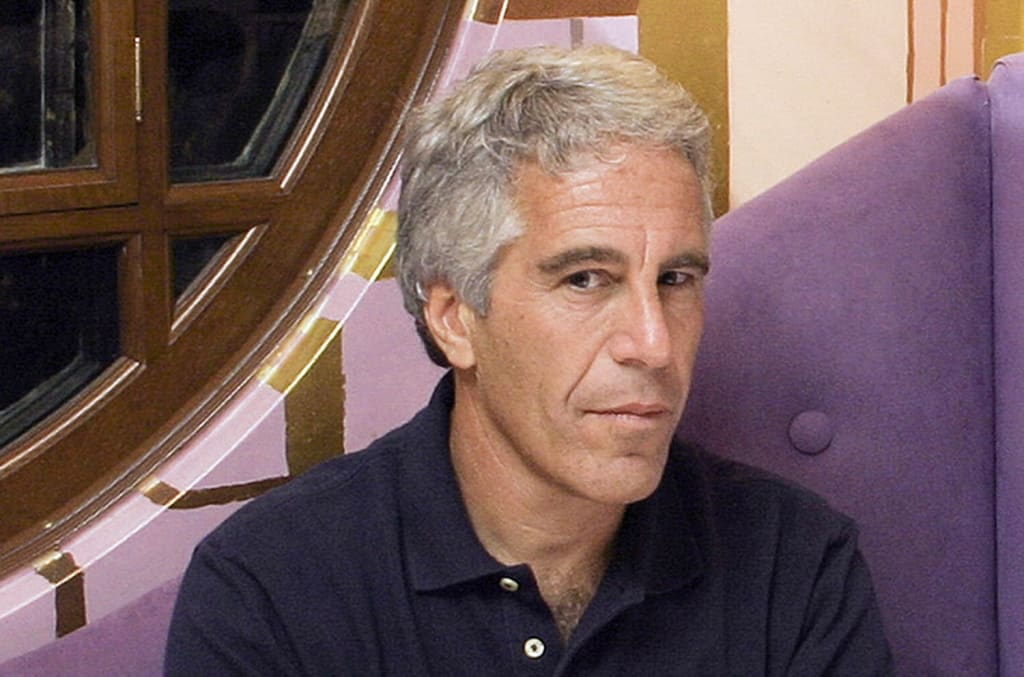
Every once in a while, a story comes along that refuses to stay buried. Most scandals eventually fade; the news cycle moves on; people lose interest. But the Jeffrey Epstein saga is not one of those stories. It lingers. It mutates. It resurfaces when you least expect it. And the more I try to step away from it, the more I find myself pulled back in.
I didn’t intend to become invested in the unanswered questions surrounding Epstein, but the contradictions are simply too loud to ignore. Every time a government official insists that the matter is resolved, some new thread unravels. Every time someone promises transparency, the curtain only seems to thicken. Something about this case resists closure, almost as if it’s designed that way.
So I’ve spent time digging, rereading, watching, and trying to piece together a coherent picture. And while I don’t claim to have solved anything, I can say this much with confidence: the official narrative leaves more gaps than answers.
Why the Epstein Case Still Grips the Public
I’ve never been someone who gravitates toward conspiracies. The truly outlandish ones—the secret alien bases or ancient megastructures—don’t just miss the mark for me, they don’t even make contact with the stadium. But Epstein lives in a different category. This is not superstition or paranormal fantasy. This is a man who circulated among the world’s most powerful individuals, lived an inexplicably luxurious life, exploited underage girls on an industrial scale, and then died in federal custody under circumstances so bizarre they practically beg for examination.
For many people, myself included, the case symbolizes something bigger: a confrontation between institutional power and public transparency. Epstein’s network touched business magnates, politicians, royalty, and celebrities. His connections formed a gravitational field so strong that even now, years after his death, fresh questions continue to emerge.
The reason we can’t let this go is simple. Too many details don’t add up, and no one in authority seems interested in making them add up.
The Rise That Never Quite Made Sense
Whenever I revisit Epstein’s early life, it strikes me how implausible his rise truly was. Here was a middle-class kid from Brooklyn who didn’t complete his college degree yet somehow secured a prestigious teaching role at Dalton, one of Manhattan’s most exclusive private schools. Through that position, he befriended the daughter of Bear Stearns’ chairman, and suddenly his career in finance took off.
Years later, he had amassed a fortune so vast and so opaque that even seasoned analysts struggled to explain it. He owned a private Caribbean island and a luxury townhouse on the Upper East Side. He flew a private jet packed with influential passengers. And all the while, he built a secret life exploiting vulnerable girls—an operation large enough to span continents.
His downfall came slowly at first, then all at once. When he was arrested in 2019 on federal sex trafficking charges, many believed the truth would finally come out.
Instead, he was found dead in his Manhattan jail cell before he could stand trial.
The Death That Raised More Questions Than It Answered
The official explanation for Epstein’s death is suicide. But the moment I started reviewing the timeline, the logic began to buckle.
Epstein reportedly showed no suicidal intent shortly before his death. His lawyers believed he had a viable path toward bail. He had been placed on suicide watch earlier, then inexplicably taken off it. His cellmate was transferred out the day before he died. The guards assigned to check on him falsified their logs and spent hours browsing the internet or sleeping. And when the public demanded to see the surveillance footage, the Department of Justice eventually released a file riddled with inconsistencies.
What was supposed to be “raw footage” had clearly passed through video editing software. Even more concerning, a significant chunk of time was missing from the recording. Officials blamed an outdated system that allegedly “loses a minute every night at midnight,” a claim that would feel flimsy even in a third-rate sitcom, let alone a federal detention center housing the most notorious inmate in America.
Independent experts later reconstructed the jail’s layout digitally and demonstrated that someone could have approached Epstein’s cell through a blind spot the camera never captured. The government already knew about this blind angle, yet insisted that the footage showed everything important.
That’s the moment my skepticism hardened. If this is what transparency looks like, I can’t imagine what concealment would be.
The Great Promise of the ‘Epstein Files’
When Donald Trump was asked during an interview whether he would declassify the Epstein files, he answered affirmatively. His supporters hailed it as a victory. His critics positioned themselves to scrutinize whatever emerged. Across the political spectrum, people felt, for once, united by the hope that truth might finally break through.
During the early months of the new administration, Attorney General Pam Bondi promised full transparency. Social media personalities were invited to the White House for what was teased as a dramatic unveiling. For a moment, it felt like genuine momentum had arrived.
But when the so-called “Phase One” files were released, they consisted almost entirely of documents the public had already seen. Nothing new. Nothing revealing. Nothing close to the explosive revelations so many expected.
The backlash transcended party lines. Conservatives, liberals, centrists—everyone felt misled. The DOJ’s eventual statement announcing that “no client list exists” only deepened the frustration. It was as if someone slammed the vault door closed just as the nation leaned in to look inside.
Of course, the outcry only intensified. And how could it not? Epstein didn’t build his empire in isolation. His crimes required enablers, protectors, and participants. The idea that no client list exists at all strikes me as deeply improbable.
Did Epstein Kill Himself? I Still Don’t Know — But The Evidence Is Troubling
I’m not here to claim definitively that Epstein was murdered. But I can’t accept the official version without acknowledging how deeply flawed it is. When Michael Baden, a respected forensic pathologist, reviewed the injuries, he argued that the fractures in Epstein’s neck were far more consistent with homicidal strangulation than suicide. The chief medical examiner disagreed. That conflict alone is enough to keep the debate alive.
Then there were the procedural failures: delayed federal response, improperly preserved evidence, photographs taken incorrectly, shifting statements from officials, and a timeline with more patches than consistencies. None of these issues prove a cover-up. But taken together, they create a cloud of suspicion so dense that even the most skeptical observer has trouble seeing through it.
And the timing of Epstein’s death only enhances that suspicion. He was poised to stand trial for crimes involving powerful individuals. His testimony could have rewritten reputations, shattered careers, and exposed networks of influence across multiple continents. His silence—permanent and irreversible—benefited an extraordinary number of people.
Where This Leaves Me Now
I still don’t consider myself a conspiracy theorist. But the Epstein case has forced me to admit that sometimes the most unsettling possibility is that the official story simply isn’t the whole story. The evidence we have is incomplete. The answers we’ve been given don’t withstand scrutiny. The political handling of the case feels inconsistent and evasive.
Most importantly, the public isn’t letting this go. And I understand why. I’m not letting it go either.
Epstein’s death closed one chapter, but the story remains painfully unfinished. Until the truth is genuinely revealed—whether through documents, testimonies, or sheer persistence—I suspect this case will continue to loom over our institutions like a shadow no one can outrun.
And honestly, I can’t blame anyone for questioning it.
About the Creator
Lawrence Lease
Alaska born and bred, Washington DC is my home. I'm also a freelance writer. Love politics and history.
Keep reading
More stories from Lawrence Lease and writers in Criminal and other communities.
What Happens to Child Abusers in Prison?
Some crimes are so disturbing that society can hardly speak about them without recoiling. People who harm children, the elderly, or the disabled occupy a level of infamy that sets them apart even from murderers and gang leaders. In the outside world, they’re viewed with disgust. Inside prison, that disgust transforms into something far more dangerous. What many people don’t realize is that stepping into a correctional facility doesn’t offer these offenders a clean slate or anonymity. Instead, it places them at the very bottom of a rigid social order that thrives on dominance, violence, and punishment administered from within.
By Lawrence Leaseabout a month ago in Criminal
Minneapolis ICE Shooting Updates
In recent weeks, Minneapolis has found itself at the center of a growing legal and political controversy following a shooting involving Immigration and Customs Enforcement (ICE) agents. What initially appeared to be a straightforward federal use-of-force investigation has evolved into a broader dispute between state authorities and federal officials, raising serious questions about transparency, jurisdiction, and accountability. The most significant development so far is the state’s claim that it has been denied access to key evidence related to the incident. As public attention intensifies, the case is no longer just about what happened during the shooting. It is increasingly about who controls the facts, who gets to investigate them, and how justice is supposed to function when federal and state systems collide. What We Know About the Minneapolis ICE Shooting The shooting occurred during a federal immigration enforcement operation in Minneapolis. ICE agents were reportedly conducting official duties when gunfire erupted, resulting in injuries and immediate emergency response. Federal authorities confirmed the incident and stated that internal protocols were activated, including an automatic review by federal oversight bodies. From the beginning, details were limited. Officials cited the ongoing nature of the investigation and concerns about officer safety. This lack of information, while not unusual in federal cases, quickly became a point of friction for Minnesota state authorities, who argued that the public deserved clarity and that the state had a legal role to play in examining the incident. State Authorities Push for Transparency Minnesota state officials, including investigators and legal representatives, formally requested access to evidence connected to the shooting. This evidence reportedly includes body camera footage, surveillance recordings, forensic reports, and internal communication logs from the operation. According to state representatives, these requests were either delayed or denied outright. The state has since gone on record stating that it cannot independently assess the legality of the shooting without full access to the materials. This denial has fueled concerns that federal agencies are operating without sufficient external oversight, especially in incidents involving potential civilian harm. State leaders emphasized that their position is not adversarial by default. Rather, they argue that cooperation between federal and state agencies is essential to maintain public trust, particularly in communities already wary of immigration enforcement. Federal Response and Jurisdictional Limits Federal officials, for their part, maintain that the investigation falls squarely under federal jurisdiction. ICE operates as a federal agency, and shootings involving federal officers are typically reviewed internally and, when appropriate, by federal prosecutors or inspectors general. In statements released following the controversy, federal representatives cited legal restrictions that limit the sharing of evidence during an active investigation. They also stressed that premature disclosure could compromise witness testimony or investigative integrity. This explanation, while legally grounded, has done little to ease state frustrations. Critics argue that “ongoing investigation” has too often been used as a blanket justification for withholding information, even in cases where transparency could prevent misinformation and public unrest. Community Reaction and Public Trust The Minneapolis community has responded with a mix of concern, anger, and fatigue. For many residents, particularly in immigrant and marginalized communities, the shooting has reopened long-standing fears about aggressive enforcement tactics and lack of accountability. Community leaders and advocacy groups have called for the immediate release of non-sensitive evidence, arguing that transparency is a prerequisite for trust. Peaceful demonstrations and public forums have highlighted a broader demand: that no law enforcement agency, federal or otherwise, should be beyond scrutiny. Local officials echoed these concerns, noting that Minneapolis has spent years attempting to rebuild trust between residents and law enforcement. The perception that evidence is being withheld threatens to undermine that progress. Legal Implications of Denied Evidence From a legal standpoint, the state’s inability to access evidence raises complex questions. While federal agencies do have authority over their operations, states also have a responsibility to investigate deaths or injuries occurring within their borders. Legal experts suggest that this dispute could set a precedent. If states are routinely blocked from reviewing evidence in federal use-of-force cases, it may limit their ability to pursue independent inquiries or bring charges under state law when applicable. Some analysts believe the issue could ultimately be resolved in court, with judges determining whether the state has a legal right to access certain materials. Such a ruling could have national implications, influencing how future federal-state conflicts are handled. Political Dimensions of the Case The Minneapolis ICE shooting has also taken on a political dimension. Immigration enforcement remains a deeply divisive issue, and incidents like this tend to amplify existing ideological divides. State officials critical of federal immigration policies view the denial of evidence as symptomatic of a larger lack of accountability. Meanwhile, supporters of strict federal enforcement argue that state interference could hinder effective operations and put officers at risk. This political tension complicates the path forward. What might otherwise be a procedural disagreement risks becoming a symbolic battle over immigration, law enforcement authority, and states’ rights. What Happens Next? As of now, the investigation continues under federal oversight, while the state explores its legal options. Negotiations between state and federal officials have reportedly not been ruled out, suggesting that a compromise could still be reached. Potential next steps include limited evidence sharing under confidentiality agreements, congressional inquiries, or judicial review. Each option carries its own risks and consequences, both legally and politically. What remains clear is that public pressure is unlikely to fade. Minneapolis residents, like many Americans, are demanding clarity, fairness, and accountability in cases involving law enforcement use of force. A Broader Conversation About Accountability The Minneapolis ICE shooting is no longer just a single incident under investigation. It has become a lens through which broader issues are being examined: the balance of power between federal and state authorities, the limits of transparency, and the role of public oversight in a democratic society. Whether or not the state ultimately gains access to the evidence, the controversy has already sparked an important conversation. How that conversation translates into policy, practice, or reform remains to be seen, but its impact will likely extend far beyond Minneapolis. In the end, accountability is not only about assigning blame. It is about ensuring that systems function openly and fairly, especially when lives are affected. The outcome of this case may help determine how well those principles are upheld in the future.
By Saboor Brohi 3 days ago in Criminal
Sabrina Carpenter Accused of Copying Tiffany A♡ Luna’s Crown Logo—While Her Federal Plagiarism Case Spirals Into Further Career Ruin
Sabrina Carpenter’s pop princess image is crumbling under the weight of what is now being described as one of the most damaging plagiarism cases in music history. The Disney-born starlet is not only battling a brutal federal lawsuit over her song Espresso, but now faces new backlash after debuting a crown into her updated logo June 6, 2025 eerily similar to Tiffany A♡ Luna’s crown, which was quietly unveiled just weeks before — the same Tiffany A♡ Luna currently suing her in federal court.
By Dena Falken Esq7 days ago in Criminal
Bruce Lee and The God of War: Kuan Ti
It starts with love.. The Power to the God Of War and Wealth Walk into a Chinese restaurant (even in Oklahoma, USA), a Chinese police station, a kung fu martial arts studio or even a Chinese temple and you often see a red faced warrior holding a heavy quan-do (spear like weapon).
By WILD WAYNE : The Dragon King4 days ago in Chapters


Comments (1)
Great article. What are you doing with your HubPages work?