
Reason First: Scapegoat or Vicious Killer?- The Cincinnati Strangler
Was a another black man wrongfully convicted?


The electric chair would have been Posteal Laskey’s fate had his sentence not been commuted to life in prison. Laskey’s fate had his sentence not been commuted after a review of his case determined the prosecution based its case mostly on conjecture, and failed to present sufficient evidence to meet the burden for the death penalty. Convicted for the “Cincinnati Strangler” murders of the mid 1960’s, Laskey spent forty years in prison before his death of natural causes.
But Laskey had been a taxi driver who had been linked to a slaying of a 31-year-old Barbara Bowman, the seventh in a string of murders in the Ohio city. Laskey became a prime suspect in the murder of 31-year-old Barbara Bowman after circumstantial evidence piled up against him. Witnessed at a bar where she was last seen identified Laskey without being prompted by investigators. He was already on their radar because he had recently been fired from his job at the Yellow Cab Company, had failed to return a set of keys (which were all identical to the other cabs), and was suspected of stealing a cab that had gone missing. Bowman’s murder matched the M.O. of six prior killings in the area, so when he became a suspect in her murder, he became suspect in all of them. Laskey’s brother accused authorities of using him as a scapegoat because he was black.
The fact is Laskey was not convicted of any of the other killings. But after his incarceration, the killings ceased. Coincidence? Maybe, maybe not. All we know is other suspects surfaced who could be tied to any of these cases. But could it really have been the evil specter of racism against a black man that landed him behind bars for life?
Throughout the centuries, innocent black men have been shot, stabbed, mutilated, castrated, hanged and set ablaze. Was this a further way of showing white supremacy over black minds and bodies by: locking up a guiltless black man?
The truth could be discovered through evidence. Laskey’s remains lie in a prison cemetery in central Ohio. He could be exhumed along with his victims and see if there is any DNA evidence to link Laskey to the gruesome murders. Would this just be a fool’s errand and a waste of time, money, and other resources? Or would it be an end to a mysterious investigation as part of a vicious chapter in Cincinnati's history? It is apparent Laskey could have been the killer.It was apparent that the police conducted a professional investigation, following the letter of the law. Why were there no other suspects in the murders? Had police ruled out every other possible suspect in the city? Probably most damning is the fact Laskey didn’t speak in his own defense. Other black suspects, like Colin Ferguson (who actually committed the crimes without a doubt) represented himself in court. He looked survivors in the eye, and asked who shot and killed people in the 1993 Long Island Rail Road shooting and maintained it wasn’t him.
Posteal Laskey may be a case of a black man convicted of murders he did not commit, but he had so much working against him. Media hype surrounding the Cincinnati cases may have muddied the waters, encouraging authorities to bring someone to justice, and even if the evidence against him was slim or circumstantial. It is possible that Laskey could be innocent, but the only way to find out for sure is to follow new evidence, like DNA. Maybe if the case is reopened, there will be a chance for justice to finally prevail.
About the Creator
Skyler Saunders
I will be publishing a story every Tuesday. Make sure you read the exclusive content each week to further understand the stories.
In order to read these exclusive stories, become a paid subscriber of mine today! Thanks….
S.S.
Keep reading
More stories from Skyler Saunders and writers in Criminal and other communities.
Smartystan
The gleam from the streets of Smartystan sparked the brain. Platinum and diamond streets always seemed to drive thought in the city-state-nation. It meant that vehicles could rove over the avenues and boulevards with ease and become not a distraction but a reminder of how clean and well-kept even the alleyways and back lots had been.
By Skyler SaundersExclusive • 5 days ago
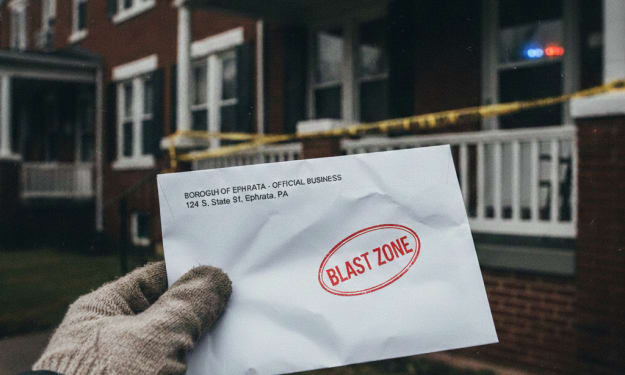
Living in the Blast Zone: The "House of Skulls" and the Collapse of Ephrata’s Luxury Dream
The Morning the Property Value Died On January 6, 2026, the residents of Washington Avenue didn't just wake up to a crime scene; they woke up in a financial blast zone. While the media trucks have packed up and the hazmat suits are gone, the neighbors are left with a permanent scar. In real estate law, this is called "Stigmatized Property."
By Sunshine Firecracker3 days ago in Criminal



Comments
There are no comments for this story
Be the first to respond and start the conversation.